

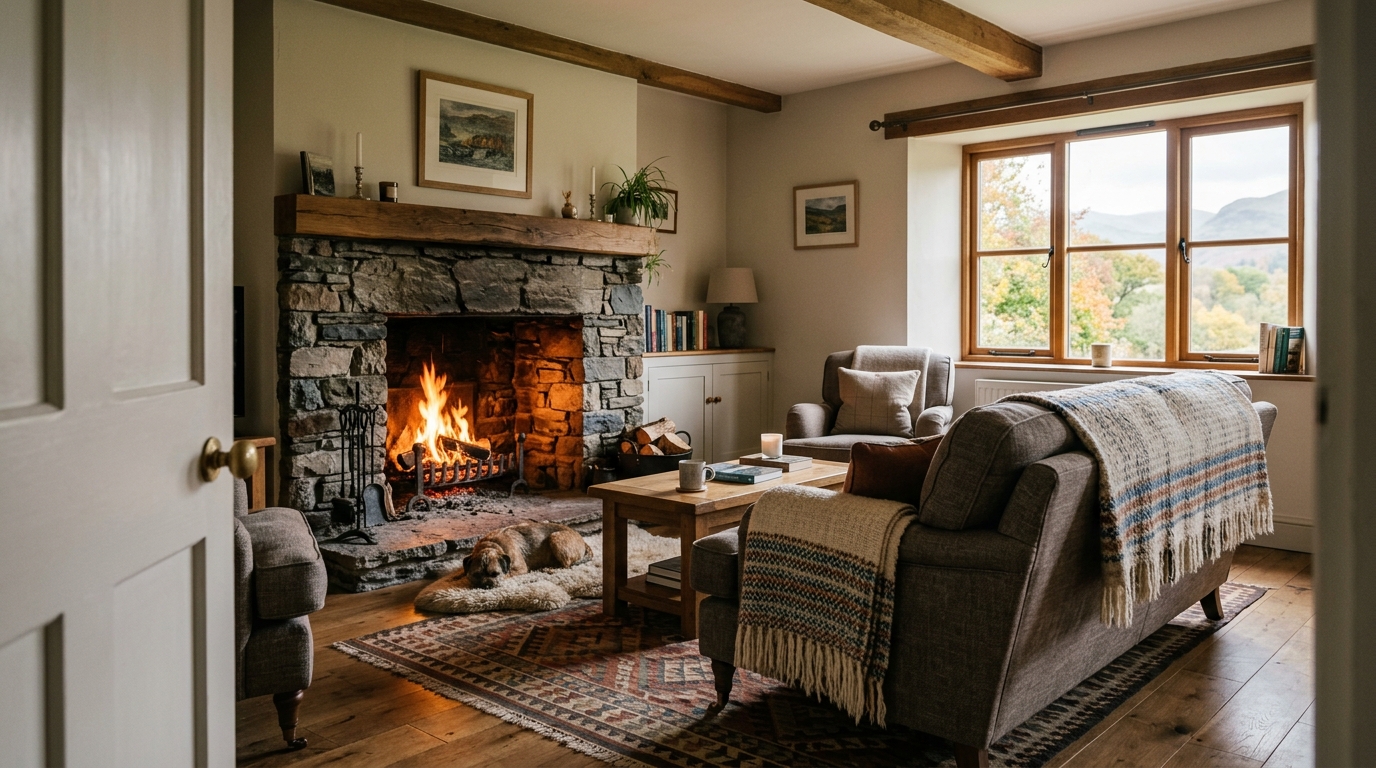
Why Lake District 2-Bed Airbnb Rates in September 2026 Tell a Half-Term Story
If you're pricing a Lake District 2-bedroom property for September 2026, the market is already speaking: £218 average daily rate, 63% occupancy, and a RevPAR of £144 across South Lakeland (AirROI market data, October 2026). But those numbers hide the real opportunity. September isn't just shoulder season in the Lakes. It's the quiet battleground for autumn half-term family bookings, and most hosts are leaving calendar gaps because they don't understand the window.
The mistake? Treating September as flat demand. The reality is a sharp peak in the final week when families search for half-term breaks, followed by soft weekdays that drag your monthly occupancy down if you price them identically. Hosts who capture the half-term surge without weekend-only gaps are the ones hitting 70%+ occupancy and £160+ RevPAR. Here's how the September 2026 data breaks down, and what it means for your pricing strategy.
The Lake District September 2026 Market Snapshot: What the Numbers Say
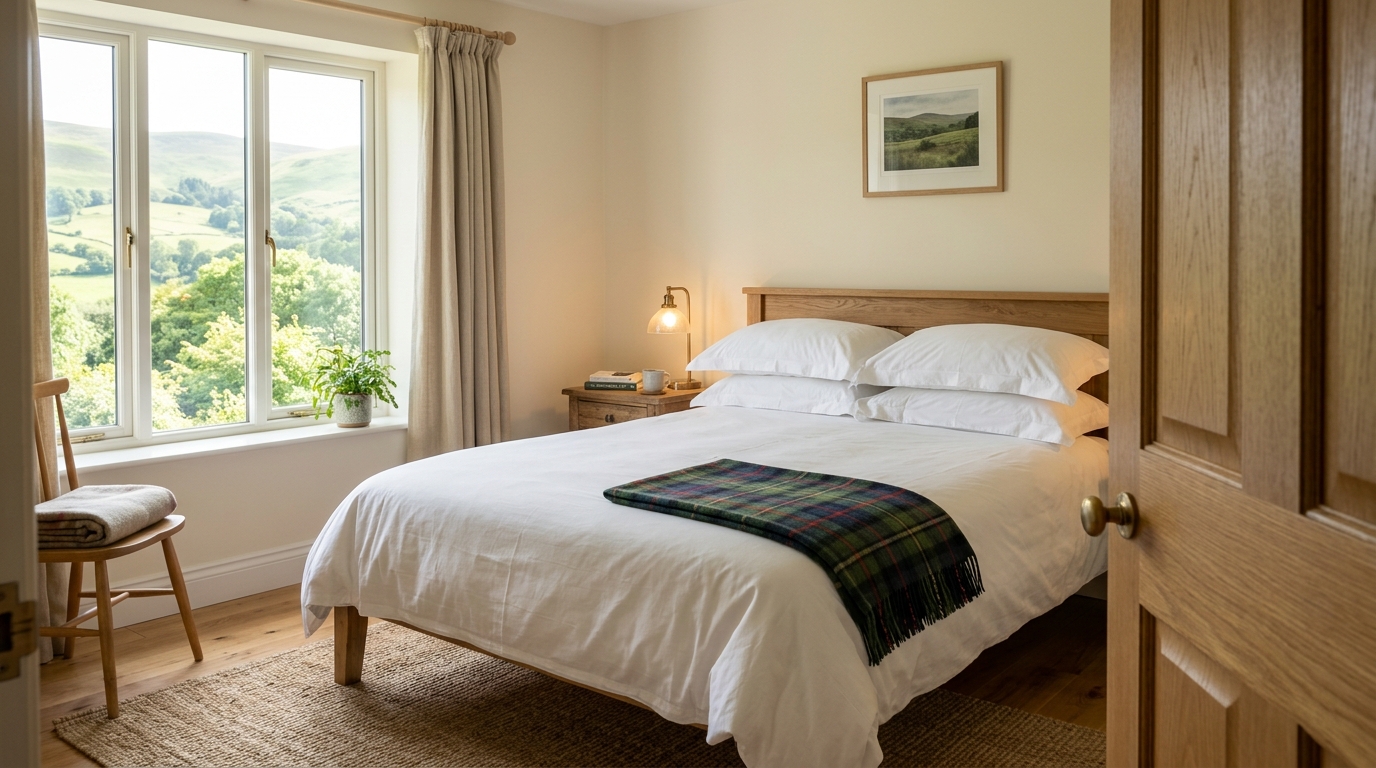
Across 2 active 2-bedroom entire-home listings in South Lakeland, the September 2026 market shows stable autumn demand with a family-friendly booking profile (AirROI market data, October 2026):
- Average daily rate: £218
- Occupancy: 63%
- RevPAR: £144
- Average booking lead time: 34 days
- Average length of stay: 5.3 nights
That 5.3-night average is the headline. It's longer than the UK short-break norm (3-4 nights) and points directly to families booking week-long escapes around the September half-term, which in 2026 falls in the final week of the month for most English schools. The 34-day lead time tells you guests are planning ahead, not snapping up last-minute deals. If you're adjusting your calendar in late August, you're already too late for peak-rate bookings.
What this means for your pricing: September is not a single-rate month. You need a calendar with elevated pricing for the half-term window (roughly 20-28 September 2026) and competitive weekday rates for the quieter first three weeks to avoid empty nights. The £218 ADR is a blended average, meaning some hosts are charging £180 early-month and £260+ for half-term Fridays and Saturdays. If you're running a flat £220 all month, you're overpriced when demand is soft and underpriced when families are searching.
Lake District Airbnb Occupancy in September: The Half-Term Divide
63% occupancy in September sounds respectable, but it masks a split calendar. Early September (1-15) typically runs 50-55% occupancy in the Lakes as summer tourists thin out and schools restart. The final week surges to 80-90% as families book half-term breaks. The middle fortnight sits somewhere between, depending on weekend weather forecasts and late-summer sun.
The trap for hosts is pricing the entire month at summer rates and watching the first half sit empty, then scrambling with last-minute discounts that crater your ADR. By the time half-term arrives, you've already lost £500-£800 in potential revenue from those early-September gaps.
The fix: tiered weekly pricing. Open September with competitive weekday rates (£160-180 for Monday-Thursday) to capture couples and retirees chasing off-peak value. Lift weekend rates to £200-220 to hold margin. Then, from 18 September onwards, switch to half-term pricing: £240-280 for Friday and Saturday check-ins, £200-220 for midweek. You'll fill the soft weeks without discounting your peak nights.
If manual calendar adjustments feel like guesswork, Zugrow's Autonomous Pricing agent runs nightly rate updates based on local demand patterns, competitor availability, and your occupancy targets. It's designed for exactly this scenario: capturing high-value half-term bookings while keeping your early-September calendar full.
What the £144 RevPAR Tells You About Revenue Strategy

Revenue per available night (RevPAR) is the only metric that matters for monthly income. The £144 figure for September 2026 is solid for shoulder season, but it's a lagging average. Top-performing 2-bed listings in the Lakes will hit £160-175 RevPAR by splitting their calendar into demand zones rather than running a single rate.
Here's the maths: if you price at a flat £218 and achieve 63% occupancy, your RevPAR is £137. But if you drop early-September weekdays to £170 (boosting occupancy to 70% for those nights) and raise half-term weekends to £260 (still hitting 90% occupancy because demand is there), your blended RevPAR climbs to £155-160. That's an extra £450-500 over the month for a 2-bedroom property, purely from smarter calendar segmentation.
The September pricing window works like this:
- 1-15 September: off-peak pricing, prioritise occupancy. £160-180 weekdays, £200-220 weekends.
- 16-19 September: transition zone. Lift rates slightly (£180-200 weekdays, £220-240 weekends) as half-term searches begin.
- 20-28 September: half-term peak. £240-280 for Friday/Saturday check-ins, £210-230 midweek. Minimum 3-night stay to avoid single-night gaps.
- 29-30 September: drop back to shoulder rates (£180-200) to capture early-October spillover.
This isn't theoretical. Hosts running dynamic pricing calendars in the Lakes consistently outperform flat-rate competitors by 15-25% RevPAR in transitional months like September. The difference is treating your calendar as a revenue instrument, not a static rate card.
The 34-Day Lead Time: Why Your Calendar Needs to Be Live by Mid-August
The average 34-day booking window means guests searching for half-term breaks (20-28 September) are booking around mid-to-late August. If your September calendar isn't fully priced and available by 15 August, you're invisible to the highest-intent searchers. They'll book a competitor whose calendar is open, even if your property is better.
This is where last-minute hosts lose thousands. By waiting until early September to finalise pricing, you've already missed the 34-day lead-time window for peak demand. The bookings that do come through are lower-value, shorter stays from guests who couldn't secure their first choice.
Action step: by 10 August 2026, your entire September calendar should be priced, available, and optimised for search visibility. That means minimum-stay rules in place (3 nights for half-term weekend check-ins to avoid orphan nights), tiered pricing live, and your listing description updated with autumn-relevant copy (log fires, cosy retreats, woodland walks, family-friendly amenities).
For context, the Lake District tourist market runs on seasonal search patterns: families book school holidays 4-6 weeks ahead, couples book spontaneously 7-14 days out. If you're chasing both segments, your calendar strategy has to serve both windows. Zugrow's channel manager syncs your Airbnb and Booking.com calendars in real time, so you can open early without double-booking risk.
How September 2026 Compares to Other UK Markets
The Lake District's £218 ADR and 63% occupancy sit comfortably above most UK markets in September 2026. For comparison, Bristol 2-bed properties run slightly lower ADRs post-Harbour Festival, while Manchester 1-bed rates spike around university move-in dates. The Lakes benefit from perennial family demand, fewer event-driven swings, and a longer average stay (5.3 nights vs 3-4 in urban markets).
That longer stay is your pricing leverage. A family booking 5-7 nights will pay a 10-15% premium over a 2-night city break because the per-night cost feels lower when amortised across a week. You can charge £240 for a Friday check-in and still convert at 80%+ occupancy if your listing delivers on the family-friendly promise: travel cot, highchair, secure garden, parking, local walk guides.
If you're competing across multiple UK markets, September in the Lakes is one of the highest-RevPAR opportunities for 2-bed properties. The combination of stable demand, long stays, and minimal event competition makes it a reliable income month, provided you don't flatten your pricing.
Common Mistakes Lake District Hosts Make in September Pricing
1. Flat pricing all month. As covered, treating September as a single demand zone leaves money on the table. Early-month gaps and underpriced half-term nights are the result.
2. Weekend-only availability. Some hosts block weekdays to avoid short stays, assuming only weekends will book. But the 5.3-night average stay means families want Monday or Tuesday check-ins for a full week. If you're only open Friday-Sunday, you're invisible to 60% of your target market.
3. Ignoring minimum-stay rules. Without a 3-night minimum on half-term weekend check-ins, you'll get single-night bookings that create unbookable Thursday or Sunday gaps. Your occupancy crashes, and you end up with a Swiss-cheese calendar.
4. Last-minute calendar updates. Waiting until September to finalise pricing misses the 34-day booking window. By then, high-intent guests have booked competitors.
5. Listing descriptions stuck in summer mode. If your description still highlights "sunny terraces" and "barbecue facilities" in September, you're missing the autumn narrative families are searching for: log fires, cosy evenings, rainy-day games, woodland walks. Seasonal copy updates are free revenue.
Want to see where your listing stands before September arrives? Zugrow's free listing score analyses your title, photos, amenities, and pricing strategy in about 60 seconds, with prioritised fixes you can action immediately. No card, no account, just a 100-point audit of what's costing you bookings.
What 2-Bedroom Hosts Should Optimise Before September 2026
The 5.3-night average stay and family booking profile mean your listing needs to answer the family-friendly question in the first three photos and the opening paragraph of your description. Here's what to check:
- Photos: lead with the living space (families want to see where they'll spend rainy afternoons), then bedrooms, kitchen, outdoor space. If you have a log fire, wood burner, or cosy reading nook, that photo belongs in positions 2-4. Parking and secure garden access should appear in the top 10.
- Amenities: travel cot, highchair, children's books/toys, Wi-Fi, free parking, washing machine. These are table stakes for family bookings. If you don't list them (and they're available), you're losing searches.
- Title: front-load "family-friendly", "dog-friendly" (if applicable), "parking", and location. "Family-Friendly 2-Bed Retreat with Parking, Ambleside" outperforms "Charming Lakeland Cottage" in September search.
- Description: first paragraph should confirm suitability (sleeps 4-5, travel cot available, secure garden, parking, 10 mins to Windermere). Second paragraph covers the cosy autumn angle (log fire, games, books, local walk routes). Third paragraph handles practical family logistics (highchair, washing machine, local shops).
If your listing ticks these boxes but you're still underperforming, the issue is likely pricing strategy or calendar gaps. For a deeper dive, the £24 expert review includes pricing and competitor analysis, a 30-day follow-up audit, and a rewritten SEO title and description tailored to your market. It's a one-off, no subscription, delivered as a PDF action plan.
How to Use the September Data to Plan October and Beyond
The September 2026 figures give you a baseline for autumn pricing across the Lakes. October half-term (late October 2026) will mirror the same pattern: soft early-month demand, a sharp half-term spike, and a 4-6 week booking window. The ADR may drop slightly (£200-210 average) as weather turns, but occupancy often holds or improves because October half-term is the last family break before Christmas.
Use September's 63% occupancy as your floor. If you're consistently below that in autumn months, the issue is either pricing (too high for off-peak nights) or listing quality (photos, description, amenities not matching family search intent). If you're above 70%, you have pricing power: test a 5-10% rate increase on peak nights and watch conversion.
For hosts managing multiple properties or juggling Airbnb and Booking.com calendars, manual updates across transitional months become unmanageable. Zugrow's Pro plan (£19.95 per property per month, or £16.60 billed annually with 2 months free) includes the Autonomous Pricing agent, which runs nightly rate adjustments based on your occupancy targets, local competitor pricing, and demand signals. It's designed for exactly this scenario: capturing high-value peak nights while keeping your shoulder calendar full. There's a 2-week free trial, and you can cancel anytime.
Why Lake District Pricing Differs from Urban Markets Like Glasgow or Manchester
The 5.3-night average stay in the Lakes is the key differentiator. In urban markets like Glasgow or Manchester, September demand is driven by conferences, university term starts, and weekend city breaks. Stays average 2-3 nights, and pricing volatility is higher because supply swings daily.
In the Lakes, September demand is steadier, longer, and more predictable. Families book 4-7 nights, often 30+ days ahead, and they're less price-sensitive per night because the total booking value is spread across a week. That gives you more pricing power and lower cancellation risk, but it also means you need to be visible 4-6 weeks before arrival. Urban markets can recover with last-minute discounts; rural family markets cannot.
The trade-off is lower weekday occupancy outside school holidays. Where Manchester might hit 75% occupancy on a random Tuesday (business travel, couples, events), the Lakes drop to 40-50% midweek in early September. Your pricing strategy has to account for that divide: discount early-month weekdays to capture off-peak guests, then lift rates aggressively for half-term.
Final Thoughts: Treat September as Two Distinct Markets
The September 2026 Lake District market is stable, family-focused, and profitable if you price it correctly. The £218 ADR, 63% occupancy, and £144 RevPAR are market averages, not revenue ceilings. Hosts who segment their calendar into off-peak and half-term windows, open availability 4-6 weeks ahead, and optimise their listing for family search intent will consistently outperform flat-rate competitors by 15-25% RevPAR.
The data tells the story: 34-day lead time, 5.3-night stays, and a clear half-term spike in the final week. Your pricing strategy should reflect that split. If you're treating September as a single-rate month, you're leaving £500-£800 on the table for a 2-bedroom property.
Ready to see how your Lake District listing measures up? Get your free Airbnb performance score at Zugrow and see exactly where you're losing bookings, with prioritised fixes you can action today.
Frequently Asked Questions
What is the average Airbnb rate for a 2-bed property in the Lake District in September 2026?
The average daily rate for 2-bedroom entire-home listings in South Lakeland in September 2026 is £218, with 63% occupancy and a RevPAR of £144 (AirROI market data, October 2026). However, top-performing hosts segment their calendar, charging £160-180 for early-month weekdays and £240-280 for half-term weekends, achieving higher overall RevPAR through dynamic pricing rather than flat monthly rates.
When should I open my September 2026 calendar to capture half-term bookings?
The average booking lead time for Lake District properties in September is 34 days, meaning families searching for half-term breaks (20-28 September) are booking in mid-to-late August. Your September calendar should be fully priced and available by 15 August 2026 to capture the highest-intent searchers. Waiting until September to finalise pricing means you've already missed the peak booking window.
How long do guests typically stay in Lake District 2-bed properties in September?
The average length of stay is 5.3 nights (AirROI market data, October 2026), significantly longer than the UK short-break norm of 3-4 nights. This reflects family bookings around autumn half-term, where guests book week-long escapes rather than weekend city breaks. Longer stays give hosts pricing power and lower turnover costs, but require calendar availability that accommodates midweek check-ins, not just weekends.
Should I use minimum-stay rules for September half-term in the Lake District?
Yes. A 3-night minimum stay for weekend check-ins during the half-term window (20-28 September) prevents single-night bookings that create unbookable gaps in your calendar. Without minimum-stay rules, you risk a fragmented calendar with orphan Thursday or Sunday nights that sit empty, dragging your monthly occupancy down. The 5.3-night average stay shows guests are already booking longer, so a 3-night minimum won't hurt conversion.
How does Lake District September pricing compare to other UK markets?
The Lake District's £218 ADR and 63% occupancy in September 2026 sit comfortably above most UK urban markets, which experience more event-driven volatility. The Lakes benefit from steady family demand, longer average stays (5.3 nights vs 2-3 in cities), and fewer supply swings. However, weekday occupancy outside school holidays is lower than business-travel markets like Manchester or Glasgow, requiring hosts to discount early-month weekdays to fill gaps.
What should I optimise in my listing to attract September family bookings in the Lake District?
Lead with family-friendly amenities (travel cot, highchair, secure garden, parking, Wi-Fi) in your title and first description paragraph. Update your photos to show cosy autumn spaces (log fire, living room, kitchen) in the top five positions, and rewrite seasonal copy to highlight rainy-day appeal (games, books, woodland walks). The 5.3-night average stay and 34-day booking window mean families are planning ahead and searching for listings that explicitly confirm suitability for children, pets, and longer stays.