


September in Glasgow is a landlord's chess match. The Scottish Event Campus (SEC) calendar fills up, conference delegates need beds within walking distance, and the host who plans ahead fills weeknights at a premium while competitors scramble for last-minute bookings. If you run a 1-bed flat near Cowcaddens or Finnieston, your nightly rate this September shouldn't look anything like your summer calendar.
According to AirROI market data for September 2026, 1-bedroom entire homes in the Cowcaddens area are commanding an average daily rate of £167, with occupancy running at 63% and revenue per available night (RevPAR) at £114. These figures are drawn from 2 active listings in the market radius, so they reflect what a small, competitive sample is charging and earning in the heart of Glasgow's conference district.
This article breaks down exactly how conference-driven demand reshapes your September pricing strategy, where the occupancy gaps appear, and how to structure your calendar so every booking window ties back to what's happening at the SEC. If you'd like an assessment of your listing with specific suggestions to improve, Zugrow's free listing score shows you exactly where you stand.
What the September 2026 Data Tells Glasgow Hosts
The market snapshot for Cowcaddens in September 2026 offers a clear picture of how conference proximity and autumn demand intersect. Here's what AirROI's data reveals:
- Average daily rate: £167
- Occupancy: 63%
- RevPAR: £114
- Average booking lead time: 27 days
- Average length of stay: 3.2 nights
- Active listings in sample: 2
Source: AirROI market data, September 2026, Cowcaddens, Glasgow, 1-bedroom entire homes.
That £167 average daily rate is significantly higher than typical shoulder-season pricing for many UK cities, and the 63% occupancy figure suggests demand is strong but not saturated. The 27-day average lead time is particularly important: it means conference attendees and business travellers are booking nearly a month in advance, giving hosts a clear window to optimise titles, refresh photos, and adjust pricing before the bulk of reservations lock in.
The 3.2-night average stay tells you that guests aren't popping in for a single night. Multi-day conferences, training sessions, and extended business trips dominate the calendar, which means your pricing strategy should reward longer stays without eroding your nightly rate on weekends when leisure travellers might still book.
How the Scottish Event Campus Drives September Demand
The SEC sits less than a mile from Cowcaddens, and its September calendar is the single biggest driver of weeknight occupancy for 1-bed flats in the area. Corporate conferences, trade shows, industry expos, and large-scale training events fill the venue Monday through Thursday, and delegates overwhelmingly prefer walking distance over taxis or public transport after a long day of panels and networking.
Conference attendees book differently from leisure guests: they confirm further out (hence that 27-day lead time from AirROI), they stay multiple nights, they value workspace amenities and reliable Wi-Fi, and they're less price-sensitive because their employer is footing the bill. If your listing title doesn't mention the SEC, SECC, or Hydro proximity, you're invisible to the traveller who types 'Airbnb near Scottish Event Campus' into the search bar.
To see how your listing compares to competitors who are already optimised for conference demand, get your free Airbnb performance score and spot the gaps before September bookings open.
Why £167 Average Daily Rate Doesn't Mean You Should Charge £167 Every Night
The £167 figure from AirROI is a monthly average across all days, but smart hosts don't price every night the same. Conference demand is heavily weighted toward weeknights (Monday to Thursday), while weekends in September often see a dip unless a major event or Old Firm match fills the city.
Here's the tactical breakdown:
- Weeknights (Mon, Thu): Charge a premium. If the market average is £167 and that includes lower weekend nights, your Monday through Thursday rate should sit closer to £180 to £195 when the SEC has a major event on the calendar.
- Weekends (Fri, Sun): Unless there's a concert at the Hydro or a home match at Celtic Park or Ibrox, weekend demand in September is softer. Drop your Friday and Saturday rates to £140 to £155 to attract leisure couples, and consider offering a two-night minimum to fill the gap without taking single-night bookings that block higher-value midweek stays.
- Post-conference Sundays: Many events wrap up late Friday or Saturday, meaning Sunday nights often sit empty. Offer a steep discount (£110 to £125) or open instant booking to capture the overspill from hotels or the last-minute traveller extending a weekend trip.
Flat pricing across the month leaves money on the table during peak weeknights and blocks off your weekend calendar with rates that are too high for leisure demand. Understanding how occupancy rate changes your price helps you balance yield and fill throughout the month.
The 63% Occupancy Figure: What It Means for Your Calendar
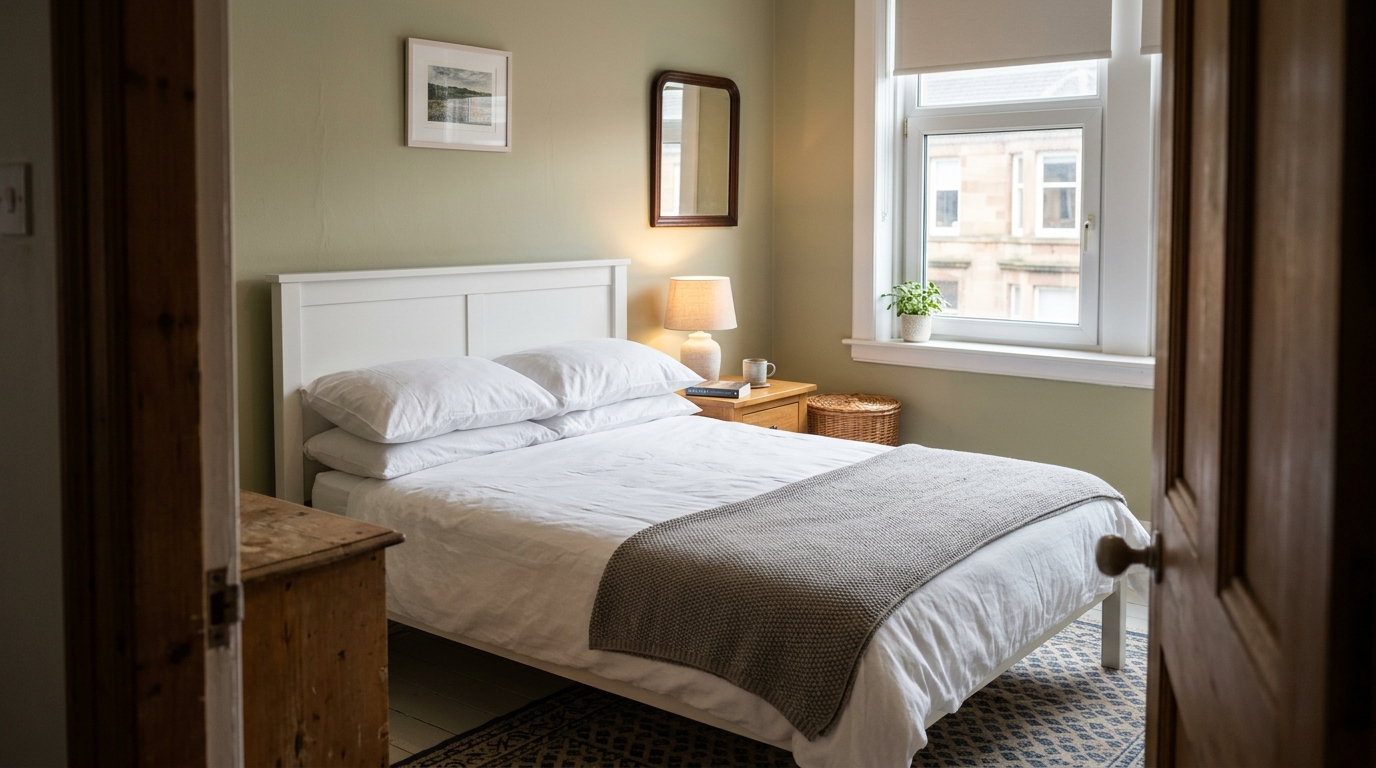
Sixty-three per cent occupancy in September, as reported by AirROI, translates to roughly 19 nights booked out of 30. That's solid for shoulder season, but it also means the average listing in this sample sits empty for 11 nights. Where do those gaps fall, and how do you close them?
Gap patterns in conference markets:
- Weekend holes: Friday and Saturday nights often remain vacant if your pricing is calibrated for weeknight business travel. Lower your weekend rate and open a two-night minimum to attract couples or friends visiting for the day.
- Early-month lulls: The first week of September sometimes sees a dip as schools return and families wrap up summer holidays. If your calendar shows white space in the first ten days, consider a limited-time discount or enable instant booking to capture stragglers.
- Mid-week single-night blocks: A guest checks out Tuesday morning, and your Wednesday night sits empty because you've set a two-night minimum. During high-demand conference weeks, remove the minimum and let single-night bookings fill the gaps at full price.
The goal isn't 100% occupancy at any cost. It's maximising RevPAR (revenue per available night), which the AirROI data shows at £114 for the market. If you can push your weeknight rate higher during SEC events and still maintain 60 to 65% occupancy, your RevPAR will outperform the average. Not sure how you compare? Zugrow analyses your title, photos, pricing, and amenities for free, with no obligation and actionable insights you can implement today.
The 27-Day Booking Lead Time: Why Your Listing Must Be Ready by Mid-August
If the average guest is booking 27 days ahead, that means the bulk of your September reservations are locking in during the last week of August and the first week of September. By the time September 15th arrives, most of your month is already spoken for.
What this means for your listing optimisation:
- Refresh your photos by mid-August. If your hero image is a grainy shot of an empty sofa, you're losing clicks to competitors with bright, well-composed interiors. Retake your photos on a sunny morning, open the curtains, clear clutter, and make sure your first five images show the living room, bedroom, workspace (if you have one), kitchen, and any view or balcony.
- Rewrite your title to mention the SEC. A title like 'Cosy 1-Bed Flat in Glasgow' is invisible to the conference delegate. Try 'Modern 1-Bed Near SEC & Hydro, Walk to City Centre' instead. The geographic keyword pulls you into filtered searches for event proximity.
- Open your September calendar early. Airbnb's algorithm favours listings with open, flexible availability. If your calendar is blocked or only shows scattered nights available, the platform assumes you're not serious and pushes you down the search results.
- Audit your amenities checklist. Business travellers filter by Wi-Fi, workspace, coffee maker, and TV. If you have a desk and chair but haven't ticked 'Dedicated workspace' in your amenities, you're excluded from thousands of searches. If you don't have a coffee maker, a £12 cafetière from Argos counts as 'Coffee maker' on Airbnb's checklist and gets you into filtered results.
Want a professional eye on your listing before bookings open? Zugrow's free listing score identifies exactly where your title, photos, pricing, and amenities fall short, with instant fixes you can action today.
3.2-Night Average Stay: How to Structure Discounts Without Eroding Yield
The 3.2-night average stay, according to AirROI, reflects the typical conference or business trip: arrive Sunday or Monday, leave Wednesday or Thursday. This longer booking window is a gift for hosts, because multi-night stays reduce turnover costs, lower cleaning frequency, and stabilise your calendar.
But many hosts make the mistake of offering blanket weekly or monthly discounts that erode their nightly rate even during high-demand weeks. Here's a smarter structure:
- No discount for 2 to 4 nights during conference weeks. If the SEC has a major event Monday to Wednesday, those nights will fill at full price. A 10% discount for a three-night stay is pure revenue leakage.
- Offer 5 to 10% off for 5 to 6 nights during low-demand periods. Early September or the final week of the month, when conference activity is lighter, a modest discount for a longer stay can lock in a booking that would otherwise sit empty.
- Use weekly discounts (7+ nights) cautiously. September is short-stay season. A 15% weekly discount might attract a relocating professional or a contractor, but it will also apply to the rare guest who books a full week during peak demand. Set your weekly discount low (5 to 8%) or disable it entirely during conference-heavy months.
The goal is to reward length of stay when it fills a gap, not when it cannibalises your best nights. For a deeper dive into how occupancy and pricing intersect, read how occupancy rate changes your price.
How to Map Your Pricing to the SEC Event Calendar
The single most valuable exercise a Glasgow host can do in August is print the SEC event calendar for September and mark the high-demand dates. Large-scale conferences (1,000+ attendees), multi-day trade shows, and sold-out concerts at the OVO Hydro all drive demand for nearby accommodation, and your nightly rate should flex accordingly.
Step-by-step calendar pricing:
- Visit the SEC and Hydro websites and note every event running Monday through Thursday in September.
- Identify the big hitters: corporate conferences, industry expos, training summits. These fill hotels first, then Airbnbs within a mile radius.
- Raise your weeknight rate by 15 to 20% for those specific dates. If your baseline Monday rate is £160, push it to £185 to £195 during a three-day pharmaceutical conference or a fintech summit.
- Lower your weekend rate by 10 to 15% if there's no major event. A quiet Saturday in September won't fill at £170 when the Travelodge down the road is offering £89.
- Monitor your competitors. If similar 1-beds near the SEC are charging £175 to £200 during peak weeks, you have room to move. If they're stuck at £140, the market is softer than the AirROI average suggests, and you may need to match or undercut to fill your calendar.
Dynamic pricing tools can help, but they often lag behind hyper-local event intelligence. A host who manually adjusts rates based on the SEC calendar will outperform an algorithm that only looks at historical occupancy trends. For a comparison of pricing tools UK hosts trust, see what Reddit recommended in September 2026.
Common Mistakes Glasgow Hosts Make in September
Even experienced hosts stumble when conference season arrives. Here are the three most expensive errors we see in Glasgow listings every autumn:
1. Pricing Every Night the Same
Flat pricing is the fastest way to lose money in a conference market. Your Monday night during a 2,000-attendee expo is worth £190. Your Sunday night with no events is worth £120. Treat them the same, and you either leave £70 on the table or sit empty all weekend.
2. Setting a Blanket Two-Night Minimum
Two-night minimums protect you from constant turnover, but they also block lucrative single-night bookings during peak demand. If a delegate needs a bed for Tuesday night only and you've locked in a two-night minimum, they book elsewhere. Use minimums selectively: weekends and low-demand periods, yes; high-demand weeknights, no.
3. Ignoring the SEC in Your Title and Description
Airbnb's search algorithm and Google both index your title and first 100 words of your description. If you don't mention the Scottish Event Campus, SECC, OVO Hydro, or Finnieston, you're invisible to the traveller typing those exact keywords. A title like 'Stylish 1-Bed, 5 Min Walk to SEC & Hydro, City Views' pulls traffic. 'Beautiful Glasgow Apartment' doesn't.
What to Do This Week if You're Hosting in Glasgow This September
If you're reading this in August or early September, you still have time to optimise before the booking window closes. Here's your seven-day action plan:
- Day 1: Open the SEC and Hydro event calendars. Mark every multi-day conference, trade show, or concert in September. Highlight weeknights with high-attendance events.
- Day 2: Log into your Airbnb calendar and raise your weeknight rate by 15 to 20% for the dates you highlighted. Lower your weekend rate by 10 to 15% if no major events are scheduled.
- Day 3: Rewrite your listing title to include 'SEC', 'Hydro', or 'Finnieston'. Keep it under 50 characters so it displays fully in search results.
- Day 4: Audit your amenities. Tick 'Dedicated workspace' if you have a desk and chair. Tick 'Coffee maker' if you have a cafetière or machine. Tick 'Laptop-friendly workspace' if the desk has good lighting and a plug socket nearby.
- Day 5: Retake your hero photo. Shoot from the doorway looking into the living room, curtains open, lights on, cushions plumped. Make sure the first five photos show living room, bedroom, workspace (if applicable), kitchen, and any view or outdoor space.
- Day 6: Remove your two-night minimum for weeknights during peak conference weeks. Leave it in place for weekends to avoid single-night churn.
- Day 7: Enable instant booking if you're comfortable with it. Airbnb gives instant-book listings a visibility boost, and business travellers booking at the last minute heavily favour properties they can confirm immediately.
If you'd rather have software handle the heavy lifting, Zugrow's autonomous hosting platform runs your calendar and channels (Airbnb and Booking.com) in one place, and its Autonomous Pricing agent sets nightly prices for you to approve. Start with the free score, then decide if you want the full platform (new hosts join a waitlist and are onboarded in waves).
Looking Beyond September: What Autumn Holds for Glasgow Hosts
September is just the start of conference season in Glasgow. October and November bring another wave of corporate events, training summits, and industry gatherings, and the same pricing principles apply: map your rates to the SEC calendar, charge a premium for weeknights with high-demand events, discount weekends when leisure travel is soft, and keep your title and amenities optimised for business travellers.
The AirROI data shows that hosts who plan ahead, adjust dynamically, and treat every night as a distinct pricing opportunity consistently outperform the market average. Sixty-three per cent occupancy at £167 average daily rate is a strong baseline, but the hosts pulling 70% occupancy at £180+ are the ones who've mapped their calendar to the event schedule, rewritten their titles for conference proximity, and removed the friction points that send guests to the next listing down the page.
Ready to see how your listing measures up? Get your free score at Zugrow and find out exactly where you're losing bookings, what to fix first, and how much revenue you're leaving on the table. No obligation, no sales call, just actionable insights you can implement today.
Frequently Asked Questions
What is the average Airbnb rate for a 1-bed flat in Glasgow in September 2026?
According to AirROI market data for Cowcaddens, the average daily rate for 1-bedroom entire homes in September 2026 is £167, with 63% occupancy and £114 RevPAR. These figures reflect a small sample of 2 active listings in the market radius near the Scottish Event Campus.
How far in advance do conference guests book Airbnbs in Glasgow?
AirROI data shows the average booking lead time for 1-bed properties in the Cowcaddens area is 27 days in September 2026. This means most conference and business travellers are securing accommodation nearly a month ahead, giving hosts a clear window to optimise listings before bookings lock in.
Should I charge the same rate every night in September?
No. Conference demand in Glasgow is heavily weighted toward weeknights when the SEC has events. Charge a premium (15 to 20% above your baseline) Monday through Thursday during high-demand weeks, and lower your weekend rate by 10 to 15% to attract leisure travellers when business demand drops.
How long do guests typically stay in Glasgow Airbnbs during conference season?
The average length of stay in September 2026, according to AirROI, is 3.2 nights. This reflects multi-day conferences, training sessions, and business trips. Structure your discounts to reward longer stays during low-demand periods, but avoid blanket weekly discounts that erode revenue during peak weeks.
What amenities do business travellers look for in Glasgow Airbnbs?
Conference and corporate guests filter searches by Wi-Fi, dedicated workspace, coffee maker, and TV. If your listing has a desk and chair but you haven't ticked 'Dedicated workspace' in your amenities, you're excluded from thousands of searches. A £12 cafetière counts as a 'Coffee maker' and gets you into filtered results.
How can I tell which weeks in September will have the highest demand?
Visit the Scottish Event Campus and OVO Hydro websites and note every multi-day conference, trade show, or large-scale event scheduled for September. Mark weeknights with high-attendance events on your calendar, then raise your nightly rate by 15 to 20% for those specific dates. This manual approach outperforms generic dynamic pricing tools that don't account for hyper-local event intelligence.