

Quora threads on Airbnb welcome books reveal a pattern: hosts asking the same questions again and again, searching for the setup that actually works. These aren't idle curiosities. They're the questions you ask when you've lost a booking because a guest couldn't work the heating, or when your phone lights up at midnight with a question already answered in a PDF nobody opened.
The hosts asking these questions on Quora aren't beginners fumbling in the dark. They're self-managing professionals trying to balance guest experience, review scores, and their own sanity. The answers they give each other cut through the noise faster than any marketing page ever could.
This article unpacks the real Airbnb welcome book questions hosts ask on Quora, the answers that surface most often, and the practical lessons you can apply to your own listing today.
What Are the Most Common Airbnb Welcome Book Questions on Quora?
The most common Airbnb welcome book questions on Quora centre on format choice (digital vs. physical), what information to include, how to ensure guests actually read it, and whether free or paid tools deliver better results. Hosts also ask frequently about automating delivery and updating content without duplicating effort.
Quora threads reveal a clear divide. Newer hosts ask "Do I really need a welcome book?" Experienced hosts ask "How do I stop guests ignoring mine?" That shift in question quality tells you everything about where the real challenge lies.
The recurring themes:
- Format anxiety: Should you print a binder, email a PDF, use a QR code, or invest in a paid app?
- Content scope: How much is too much? What genuinely prevents support messages at 11pm?
- Guest engagement: Why do guests skip the welcome book entirely, then message you with questions it already answers?
- Maintenance burden: How do you keep information current across multiple platforms without rebuilding everything every season?
- ROI doubt: Does a polished guidebook actually improve reviews, or is it just another host task that eats time?
These questions aren't abstract. They reflect the daily friction points of self-managing a short-term rental. If you've ever rewritten the same heating instructions in three different places, you're asking the same question Quora hosts are.
Digital vs. Physical Welcome Books: What Do Quora Hosts Recommend?
Quora hosts overwhelmingly favour digital guidebooks for ease of updating, instant guest access via smartphone, and lower maintenance. Physical binders still appear in luxury or rural properties where they reinforce a premium feel, but most self-managing hosts report that printed books gather dust while guests reach for their phones.
The pattern in the threads is stark. Hosts who started with laminated binders describe the same arc: initial pride, followed by the realisation that guests photograph the WiFi password page and ignore the rest. One host summarised it perfectly: "I spent two evenings designing a beautiful welcome folder. Guests flipped to the WiFi page, took a photo, and left it on the coffee table unopened."
Why digital wins for most hosts:
- Instant updates: Change the lockbox code once, and every current and future guest sees the new version. No reprinting, no crossing out old information in biro.
- Always accessible: Guests check their phone at the bus stop, in the taxi, before they even arrive. A binder on the hallway shelf only helps once they're inside.
- Searchable: A guest looking for the nearest pharmacy can search a digital guide in seconds. A printed booklet means flipping pages.
- Analytics (sometimes): Some platforms show whether a guest opened the guide, which sections they viewed, and when. Useful if you're diagnosing why certain questions still come through.
When physical still makes sense:
- High-end properties where tactile presentation reinforces the luxury positioning.
- Remote cottages with patchy mobile signal, where a laminated emergency contact sheet on the fridge is a safety net.
- Older guest demographics less comfortable navigating apps or QR codes.
One recurring piece of advice from Quora hosts: don't do both unless you commit to keeping them identical. Maintaining two versions means twice the work and twice the risk of conflicting information. If you'd like an assessment of how your current listing setup compares to local competitors, Zugrow's free listing score analyses your title, photos, pricing, and amenities with specific suggestions to improve.
What Information Should Actually Go in Your Airbnb Welcome Book?
Your Airbnb welcome book should cover WiFi and access codes, appliance instructions (especially heating, TV, and anything with a non-standard control), house rules with context, emergency contacts, and a curated shortlist of local recommendations. The goal is to pre-empt the questions that wake you up, not to write a neighbourhood encyclopedia.
Quora hosts repeatedly warn against the "everything and the kitchen sink" approach. A 40-page guide to every restaurant in town might feel helpful, but it overwhelms guests and buries the critical information they actually need at 10pm when the boiler won't start.
The non-negotiables (always include these):
- WiFi network name and password: The single most-asked question, every time.
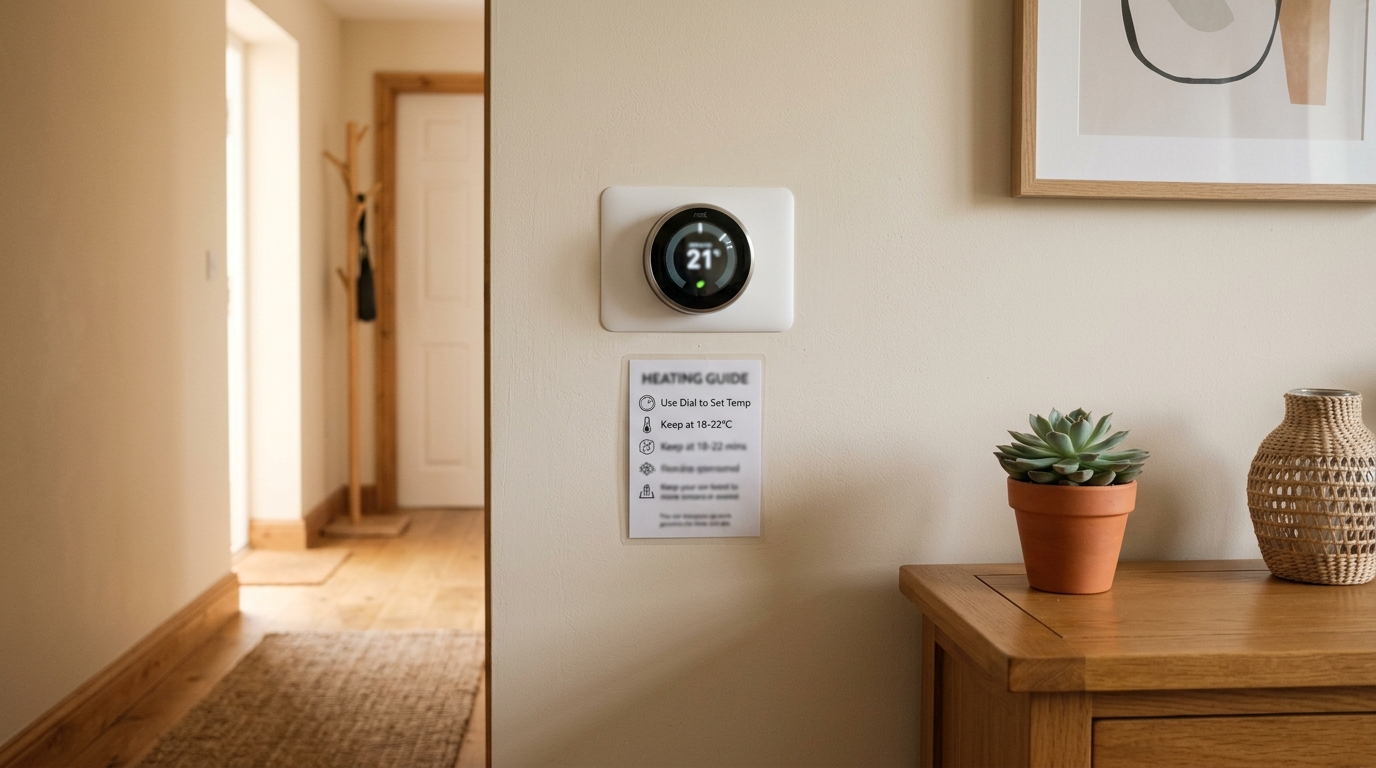
- Heating and hot water controls: Written as if for someone who has never seen your specific model. Include photos of the thermostat and any override buttons.
- TV and entertainment setup: Which remote does what, how to switch inputs, how to log out of your Netflix before they leave.
- Bin day and recycling rules: Where the bins live, what goes in which colour, when collection happens. Prevents passive-aggressive neighbours and mess left for your cleaner.
- Check-out instructions: Explicit list. Strip the beds or leave them? Put the bins out? Lock which doors? Removes guesswork and improves turnover consistency.
- Emergency contacts: Your number (and when to use it), your cleaner or co-host if applicable, and local emergency services if abroad.
The valuable extras (include if relevant to your property or location):
- Parking specifics: Permit zones, overnight restrictions, the exact bay number if allocated. Car park ticket machines that only take coins. The pedestrian gate code if it's different from the main entry.
- Quirks and workarounds: The shower tap that needs a firm pull, the bedroom door that sticks in humid weather, the trick to the temperamental coffee machine. Transparency here prevents frustration and protects your review score.
- Local recommendations (curated, not exhaustive): Three breakfast spots, two dinner options, the nearest supermarket, one rainy-day activity. Guests want decision-making taken off their plate, not a TripAdvisor clone.
- Transport links: Nearest bus stop or Tube station, whether Uber operates reliably in the area, the name of the local taxi firm with a phone number that actually answers.
One Quora host offered this filter: "If I've been asked the question twice, it goes in the guidebook. If I've been asked it five times, it goes on page one." That's the clearest editorial policy you'll find.
For step-by-step guidance on setting up messages that deliver this information automatically before guests arrive, see our guide on how to set up automated welcome messages for Airbnb guests.
How Do You Actually Get Guests to Read Your Welcome Book?
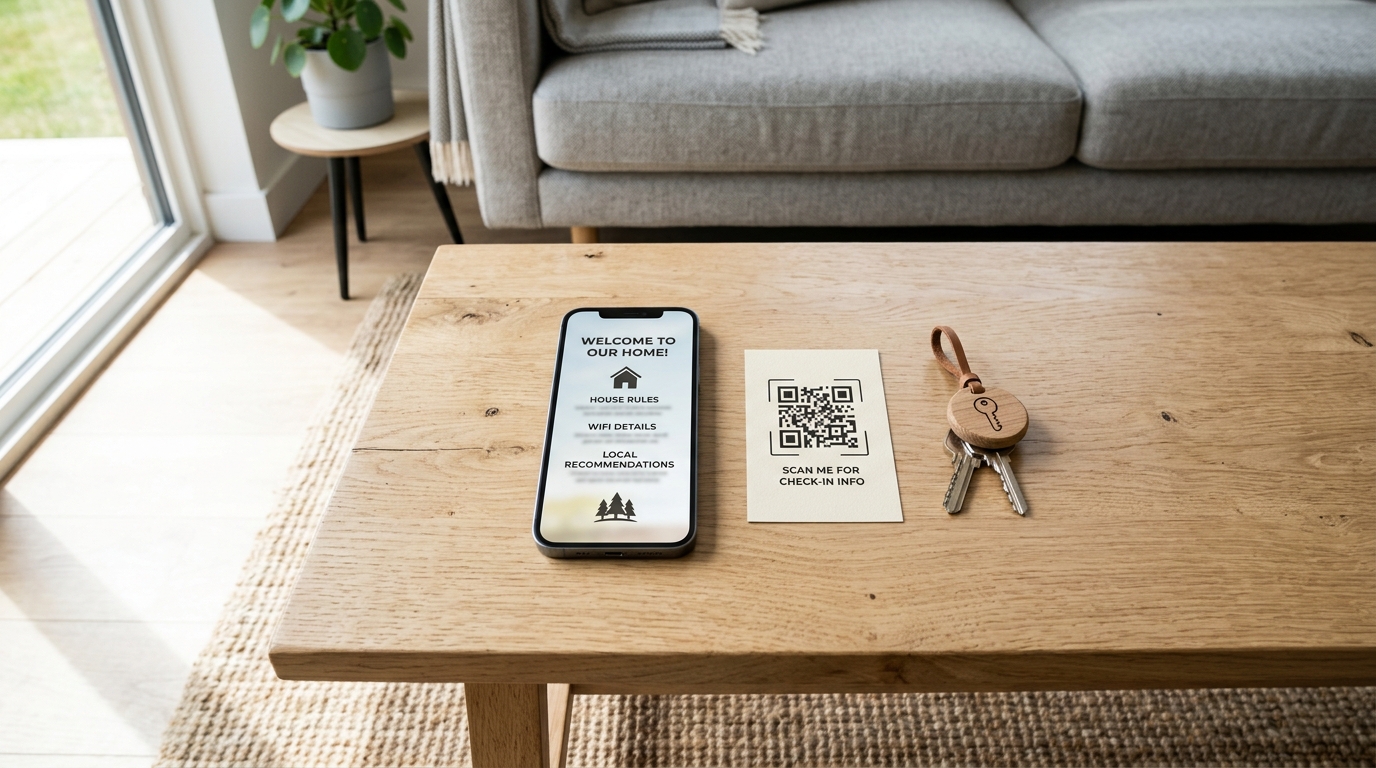
To get guests to read your welcome book, send it before arrival with a clear subject line, keep the landing page simple with the essentials above the fold, and reference it in your automated messages. Quora hosts report that a QR code on the coffee table plus a pre-arrival message linking the digital guide delivers the highest engagement.
The frustration in Quora threads is palpable. Hosts invest hours crafting detailed guides, only to field the same WiFi password question within minutes of check-in. The problem isn't laziness. It's friction, timing, and information architecture.
Tactics Quora hosts say actually work:
- Send it twice: Once in the booking confirmation (for planners), once the day before arrival (for everyone else). The second message has a higher open rate because it's timely.
- Lead with value, not rules: A subject line like "Your access code + WiFi password inside" gets opened. "Please read our house rules" gets ignored.
- Put critical info in the first screen: WiFi, door code, parking. If a guest has to scroll to find these, they'll message you instead.
- Use a QR code as a fallback: Print a small card with a QR code linking to the digital guide. Stick it to the WiFi router, the fridge, or the inside of the front door. Guests who didn't read the pre-arrival message will scan it when they need it.
- Reference it in context: Your check-in message says "The heating guide is in section 3 of your welcome book (link)" rather than expecting them to remember a URL they saw two weeks ago.
Several Quora hosts noted a counter-intuitive truth: shorter guides get read more often. A five-section mobile-friendly page outperforms a comprehensive PDF every time. Guests are scanning for an answer, not settling in for a read.
If you're weighing up different platforms and formats, our roundup of best Airbnb welcome book alternatives compares PDFs, apps, and smart guidebooks with specific pros and cons for each.
Free vs. Paid Airbnb Guidebook Tools: What Do Hosts on Quora Actually Use?
Quora hosts mention free tools like Google Docs, Canva PDFs, and Notion pages for single-property portfolios, but report switching to paid platforms like Zugrow's digital guidebook, Touch Stay, or Hostfully as they scale to multiple listings or want branded, mobile-optimised delivery. The tipping point is usually the second property or the third time they rebuild a guide from scratch after a local business closes.
The free vs. paid debate on Quora follows a predictable pattern. Hosts defend their Google Doc setup with pride until someone asks, "How do you update the restaurant list across four listings without copying and pasting four times?" Silence follows.
Free options Quora hosts recommend:
- Google Docs: Easy to edit, shareable link, accessible on any device. Works well if you have one property and don't mind the bland presentation.
- Canva: Create a visually appealing PDF with your branding. Looks polished but requires manual re-sending every time you update it.
- Notion: Clean, modern, mobile-friendly. Some hosts love it; others report guests finding the interface confusing if they've never used Notion before.
Paid tools that appear repeatedly in Quora threads:
- Zugrow digital guidebook (£2.95/month): Hosts mention the low entry price, mobile-first design, and that it is AI-built from your Airbnb listing link in a few minutes. You build once, share a link or QR code, and update centrally. For more on what makes a guidebook app worth paying for, see our breakdown of what Quora hosts recommend in guidebook apps.
- Touch Stay: Often cited as the premium option. Polished, feature-rich, higher price point. Quora hosts describe it as excellent for larger portfolios or professional management companies.
- Hostfully: Another name that surfaces in threads about scaling. Combines guidebook with basic property management features.
The recurring theme: free works until it doesn't. One host wrote, "I used a Google Doc for two years. Then I added a second property and realised I was copying house rules between two documents. Paid for a guidebook tool that afternoon."
If you're exploring alternatives to the market leader, our guide to Airbnb welcome guide alternatives beyond Touch Stay walks through feature sets, pricing, and typical use cases.
Do Airbnb Welcome Books Actually Improve Reviews and Reduce Messages?
Quora hosts consistently report that a well-structured welcome book reduces repetitive guest messages and prevents negative reviews stemming from confusion about heating, parking, or check-out procedures. The correlation isn't automatic, though. A guidebook only helps if guests can find it, navigate it, and trust that the information is current.
The sceptics on Quora aren't wrong to ask. Plenty of hosts have built elaborate guides that made zero difference to their message volume or star rating. The difference lies in execution and distribution, not just existence.
What Quora hosts say makes the difference:
- Proactive delivery: Sending the guide before arrival means fewer "How do I get in?" messages at the airport.
- Findable at the moment of need: A QR code by the thermostat that links directly to the heating section solves the problem faster than a search through a PDF.
- Accurate and current: Nothing erodes trust faster than a guide that lists a closed café or an outdated door code. Guests stop consulting it and start messaging you instead.
- Tone and clarity: Instructions written with empathy ("The shower tap needs a firm pull, it's stiffer than most") prevent frustration. Instructions written like a legal disclaimer get ignored.
One experienced host summarised it: "My guidebook didn't reduce messages until I moved the WiFi password to the very top and added photos to the heating instructions. Small changes, massive impact."
If you're not sure where your listing could improve, Zugrow analyses your title, photos, pricing, and amenities for free and shows you exactly where you stand against local competitors. No obligation, just actionable insights.
What Mistakes Do Quora Hosts Warn Against When Creating Welcome Books?
Quora hosts warn against information overload, burying critical details beneath lengthy local histories, failing to update contact numbers or codes, using jargon or brand names guests won't recognise (like calling the boiler by its model number), and forgetting to test the guide on a mobile screen. Several threads also caution against lecturing tone in house rules, which guests perceive as hostile and occasionally mention in reviews.
The mistakes that appear again and again:
- Too much, too soon: A 30-page PDF attached to the first message is a wall of text nobody opens. Guests want WiFi and entry instructions up front, not your thoughts on the neighbourhood's architectural heritage.
- Outdated information: A guidebook that still lists your old cleaner's number or last year's door code becomes worse than useless. It actively misleads and forces guests to contact you anyway.
- Desktop formatting on a mobile screen: Tiny text, landscape-oriented PDFs, multi-column layouts. Guests are reading on phones. If your guide doesn't work on a 6-inch screen, it doesn't work.
- Assuming knowledge: "Turn the valve to the summer setting" means nothing to a guest who doesn't know which valve or what the symbols mean. Photos and step-by-step instructions prevent confusion.
- Rules without reasons: "No shoes indoors" feels like an order. "We have underfloor heating, so shoes can damage the surface" explains the why and increases compliance.
- Forgetting to link it: You built the perfect guide, uploaded it... and never sent the link. Guests don't go hunting. If it's not in their inbox or on a visible QR code, it doesn't exist.
One Quora host put it bluntly: "I wrote my first guidebook for me, to show off how much I knew about the area. I rewrote it for my guests, to answer the questions they actually ask. The second version is half the length and twice as useful."
For real-world examples and templates hosts are actually using, our article on Airbnb welcome book examples from Reddit hosts includes screenshots and downloadable structures you can adapt.
How Often Should You Update Your Airbnb Welcome Book?
Quora hosts recommend reviewing your welcome book every season or whenever a guest asks a question it should have answered. Immediate updates are essential for access codes, WiFi passwords, emergency contacts, and any local business you've recommended that has closed or changed hours. A quarterly calendar reminder ensures nothing drifts too far out of date.
The trap is obvious: you launch a guidebook, it works beautifully, and you forget it exists. Six months later a guest complains that the café you recommended is now a vape shop, and your five-star streak takes a hit.
Triggers that should prompt an immediate update:
- You change the WiFi password, door code, or lockbox location.
- A guest messages you with a question the guidebook should have prevented.
- A local business you recommended closes, moves, or changes its offering.
- You add or remove an amenity (new coffee machine, broken toaster).
- Council changes bin collection days or parking permit rules.
Scheduled reviews that keep things current:
- Quarterly check: Walk through the guide as if you're a guest. Do the links still work? Are the phone numbers current? Is the seasonal advice still relevant?
- After every few bookings: Scan your message history. If you've answered the same question three times, it needs to go in the guide or be made clearer.
- When you update your listing: New photos, new amenities, new pricing? Check the guidebook reflects the same reality.
Digital guidebooks win here because the update propagates instantly. Edit once, and every guest sees the new version. Physical binders require reprinting or those sad little post-it notes that scream "I haven't updated this properly."
Can You Automate Welcome Book Delivery on Airbnb?
You can automate welcome book delivery on Airbnb using scheduled messages in the platform's messaging settings or by integrating a third-party tool that triggers based on booking events. Quora hosts recommend sending the guidebook link automatically one day before check-in, paired with another message on arrival day that highlights the most urgent sections like access codes and WiFi.
Automation removes the risk of forgetting to send the guide during a busy changeover day. It also ensures consistency. Every guest gets the same information at the same time, regardless of whether you're awake, on holiday, or managing five turnovers in one afternoon.
Airbnb's native options:
- Scheduled messages: Set up a template that fires automatically at a specific interval before check-in (e.g. 24 hours). Include your guidebook link in the message body.
- Saved messages: Not fully automated, but you can save a template and send it with two clicks rather than rewriting every time.
Third-party tools Quora hosts mention:
- Channel managers and messaging platforms (Hospitable, Hostfully, etc.) that integrate with Airbnb and send guidebook links based on booking triggers.
- Platforms that pair guest messaging with a guidebook, like Zugrow (a unified inbox and Inbox agent across Airbnb and Booking.com, plus a digital guidebook at £2.95/month billed annually, included on the Max plan; new hosts join a waitlist and are onboarded in waves).
The consensus: automate the delivery, not the content. The message should feel timely and relevant, not like a mail-merge. Use the guest's name, reference their check-in date, and keep the tone warm.
Not sure how your listing setup compares to other local hosts? Get your free Airbnb performance score and see where you can improve your rankings, bookings, and guest communication.
Frequently Asked Questions
Do I need both a physical and digital welcome book for my Airbnb?
You don't need both. Most Quora hosts recommend choosing one and maintaining it well rather than duplicating effort. Digital works best for ease of updates and mobile access; physical suits high-end or remote properties where it reinforces the guest experience. If you do keep both, ensure the information matches exactly to avoid confusion.
What's the single most important thing to include in an Airbnb welcome book?
WiFi credentials and clear entry instructions. These are the two pieces of information every guest needs immediately upon arrival. Everything else is valuable but secondary. If a guest can get online and get inside without messaging you, your guidebook has done its primary job.
How long should an Airbnb welcome book be?
Short enough to read on a phone in under five minutes. Quora hosts report better engagement with concise, scannable guides that prioritise essentials over exhaustive neighbourhood histories. Aim for clarity and structure rather than word count. If a section isn't preventing a guest question or improving their stay, cut it.
Can a good welcome book improve my Airbnb review scores?
Yes, indirectly. A clear, accessible guidebook prevents guest confusion about heating, parking, checkout, and house rules. Those are common sources of frustration that appear in negative reviews. Solving problems before they happen protects your rating, even if guests don't explicitly praise the guidebook itself.
Should I charge extra for a really detailed welcome book or local recommendations?
No. Quora hosts universally advise against itemising guest communication or treating local tips as an upsell. A helpful guidebook is part of good hosting, not a premium add-on. It benefits you as much as the guest by reducing message volume and preventing easily avoidable issues.
How do I know if guests are actually reading my welcome book?
Track repeat questions in your message inbox. If guests still ask about WiFi, parking, or heating despite those topics being covered, either they're not finding the guide or the instructions aren't clear enough. Some digital guidebook platforms offer basic analytics showing open rates and page views, which helps diagnose engagement.
Conclusion
The Airbnb welcome book questions hosts ask on Quora aren't about novelty or over-engineering. They're about solving real friction: the midnight heating question, the forgotten WiFi password, the one-star review that mentions confusion about checkout. A guidebook that actually works is short, mobile-friendly, sent proactively, and updated the moment anything changes.
Whether you choose a free Google Doc or a paid platform matters less than whether your guests can find the answer they need before they reach for the message button. Build for them, not for your own sense of completeness, and your review score will reflect it.
Ready to see how your listing measures up? Get your free score at Zugrow and find out exactly where to focus your effort for better bookings and happier guests.