

The Airbnb Booking You Keep Losing at 11pm
Somewhere tonight a parent is scrolling your listing one-handed with a baby asleep on their chest. They are not looking for a rain shower or a log burner. They are looking for proof that a week in your place will not wreck them.
Families are one of the least demanding guest groups you will ever host and one of the easiest to lose. They book longer stays, they travel in term-time gaps and shoulder season, they rebook the same property year after year, and they will scroll straight past a genuinely lovely home because nothing on the page answered one simple question about a travel cot.
A family friendly Airbnb setup is not a renovation. It is a short list of cheap, boring kit, one honest paragraph in your listing, and about twenty minutes of thinking like someone who has not slept properly since March. Here is what parents actually check, roughly in the order they check it.
What Parents Are Really Checking Before They Book
Ask any parent how they choose a holiday let and you get the same three questions, every time.
Will the baby sleep? This is the whole trip. A family who lose the nights lose the days as well, and they will tell the internet about it in a review that mentions light coming through the curtains.
What do we have to bring? Every item you do not provide is another thing wedged into a car that already contains a buggy. A host who supplies a cot and a high chair is buying back a parent's boot space, and parents know exactly what that is worth.
Is anything going to hurt them? Open stairs, a glass coffee table, a pond at the bottom of the garden. Parents are not asking you to child-proof the world. They are asking you to tell them the truth so they can plan.
Answer those three in your listing and you have already beaten most of the properties in your area, because most of them say nothing at all. If you are not sure how your listing reads to a family right now, Zugrow's free listing score shows you where the gaps sit and which fixes move the needle first.
Question One: How Dark Is the Room, Really?
Nothing in a holiday let costs a host more goodwill than a bedroom that goes bright at half four in June. Adults roll over and cope. A seven-month-old does not, and neither do their parents, and by night three the whole holiday has soured.
Most hosts think they have this covered because they hung lined curtains. Go and stand in the room at 6am in midsummer and you will usually find the same three leaks: light spilling over the top of the pole, a bright gap down each side, and a glow along the bottom of the sill. A baby only needs one of them.
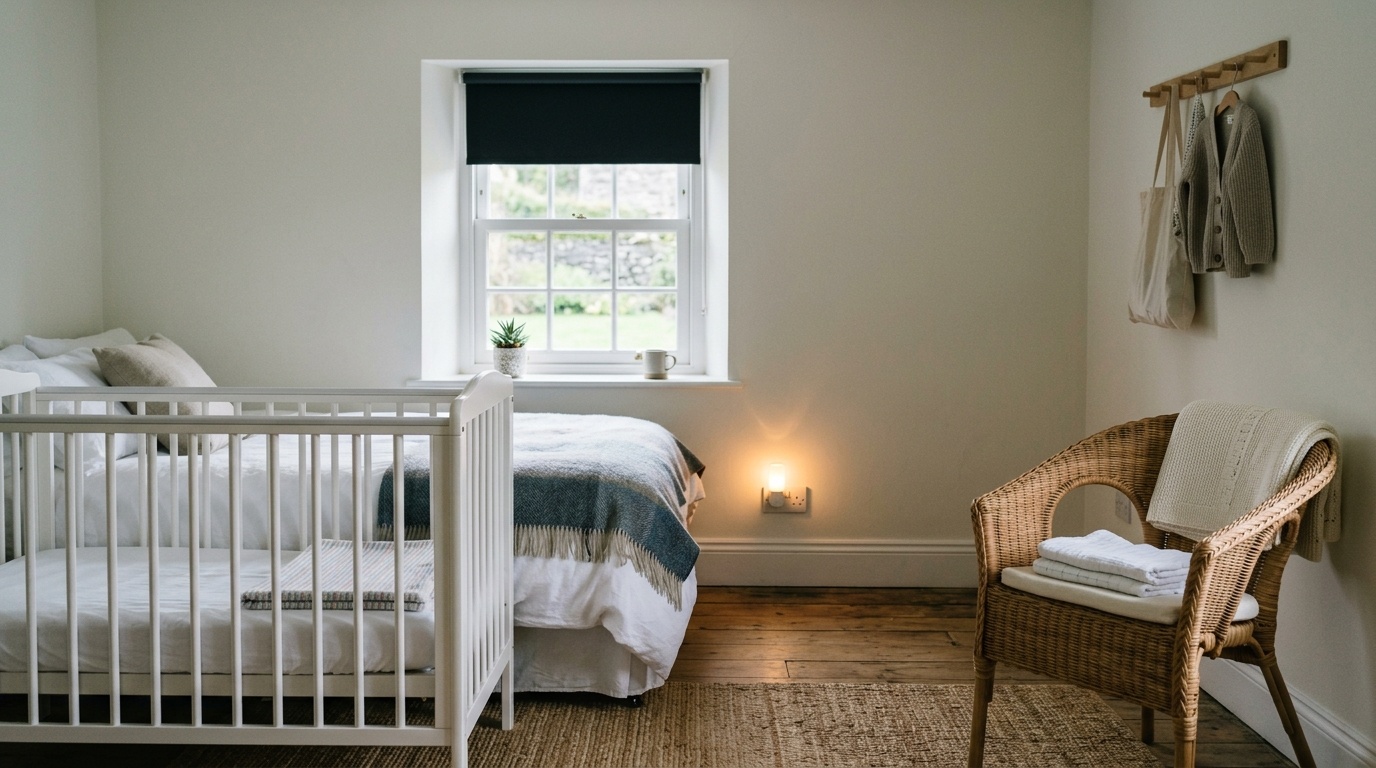
The fix is a proper blackout blind fitted inside the recess, with curtains over the top if you want the room to look soft. Blackout thermal fabric is the version worth paying for, because it works on temperature as well as light. The Auckland blind manufacturer Home Vision Blinds makes the point neatly in their guide to nursery blinds and baby sleep: the blackout layer limits the daylight getting in, while the thermal backing holds heat in through cold months and keeps it out in warm ones, so the room stays steadier across the seasons. They also point out that heavier fabric is not soundproofing, but it does soften echo inside the room and take some of the edge off noise from outside.
That second half matters more than hosts expect. A nursery, or a holiday bedroom being used as one, is shaped by sound as much as light. Sudden noises are what break a nap: a door, a boiler firing, a car on the gravel. You cannot silence a house you do not live in, but you can leave a small white noise machine in the drawer with a note saying where it is, and you can be honest in your listing about which bedroom faces the road.
The cheap test: shut yourself in the darkest bedroom at midday with the blind down. If you can read the small print on your phone case, a baby can see the whole room.
Question Two: The Kit List That Earns Its Storage Space
You do not need a nursery. You need about eight items, most of which live flat in a cupboard for fifty weeks a year.
The sleep kit
- A travel cot with a proper mattress. The mattress is the bit hosts skip and parents notice. The thin mat that comes in the bag is survivable for one night and miserable for seven.
- Two sets of cot bedding, because the first set will not make it to the end of the week.
- A blackout blind in at least one bedroom, as above.
- A plug-in night light on the landing and in the hallway, so nobody has to put the big light on at 3am.
The daytime kit
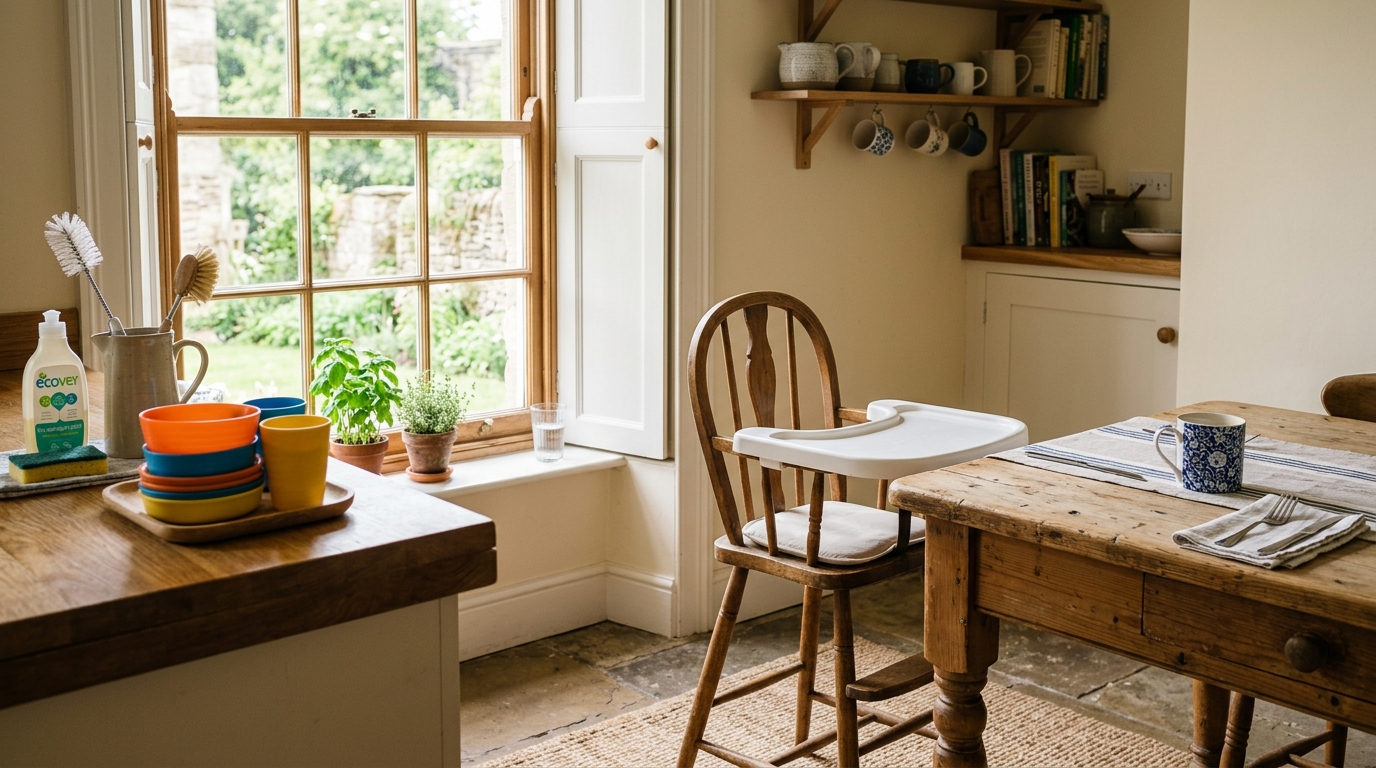
- A high chair that wipes clean. Fabric straps are a false economy in a holiday let.
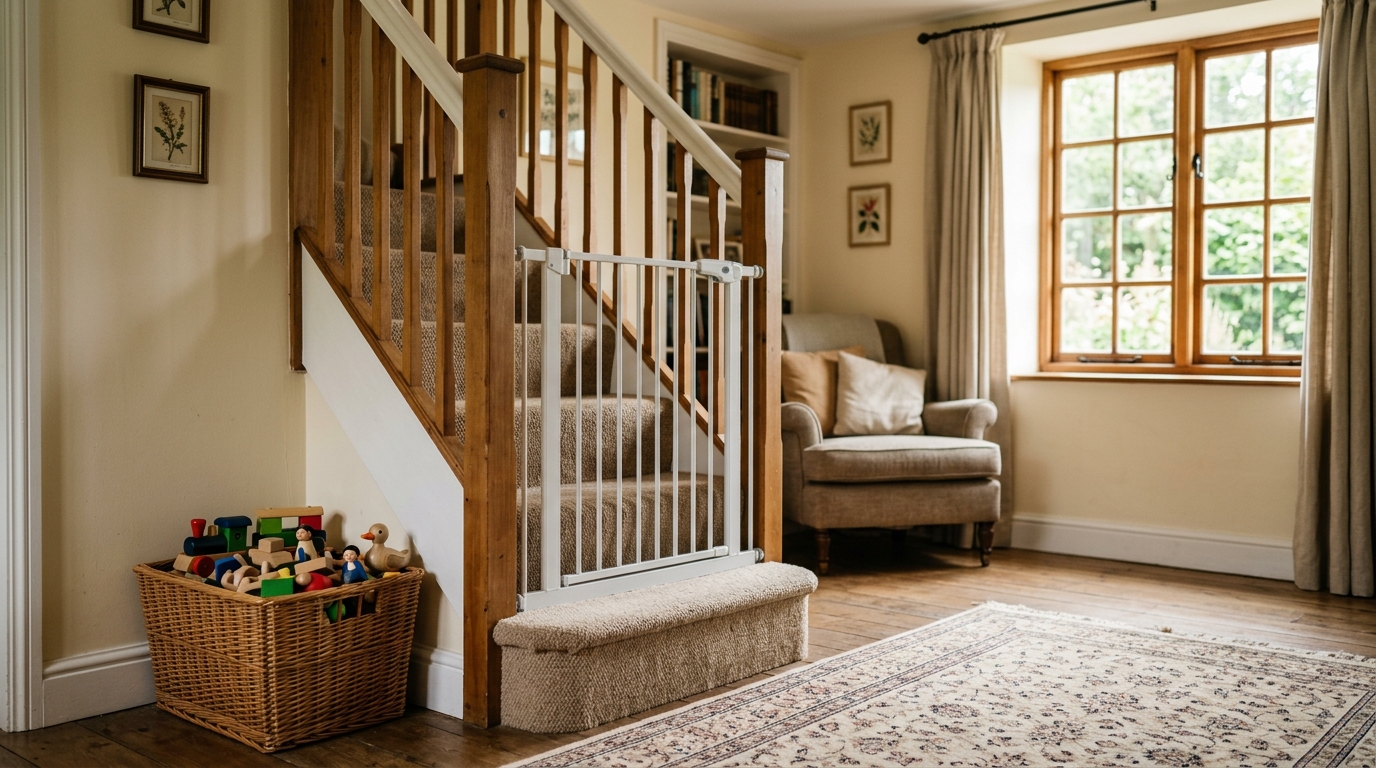
- A stair gate, already fitted if your staircase is open, or in the cupboard with the fittings taped to it if it is not.
- Unbreakable bowls, plates and beakers, plus a bottle brush. Small, cheap, and they save a supermarket run on day one.
- A baby bath or a non-slip bath mat. A slippery enamel bath is the thing parents worry about and hosts never think of.
None of that is glamorous and none of it photographs like a copper bath. It is also the difference between a family choosing you and a family choosing the place down the road that listed a cot. For the wider view of what guests look for beyond the family angle, our Airbnb amenities checklist covers the rest of it.
Question Three: The Safety Sweep Most Hosts Skip
Do this once, on your hands and knees, at toddler height. It takes fifteen minutes and it changes what you see.
- Trailing cords. Looped blind and curtain cords are the most serious hazard in a holiday bedroom. Use cleats, tension devices or cordless blinds, and check them at every changeover.
- Anything that tips. Bookcases, tall chests of drawers, the wobbly floor lamp. Wall fixings cost pennies.
- Low glass. Glass coffee tables and glass-fronted units are fine for couples and a genuine worry with a crawler in the room. If you are keeping them, say so.
- Water. Ponds, hot tubs, unfenced streams and steep garden drops all belong in the listing, not in the surprise on arrival.
- The medicine and cleaning cupboard. High, or latched, or empty.
You are not signing a guarantee. You are giving parents what they need to judge whether your place works for a fifteen-month-old, and being straight about a pond loses you one booking and saves you three bad reviews.
How to Say It So Parents Actually Find You
This is where most hosts leave money on the table. They own the cot, the high chair and the stair gate, and none of it appears anywhere a parent will look.
Tick every relevant amenity box. Airbnb filters on them. If travel cot is not ticked, a family filtering for one will never see your listing at all, however good it is.
Put it in the first two lines of the description. Not paragraph six. Something as plain as: travel cot, high chair and stair gate provided, blackout blind in the double bedroom, and there is a pond in the garden so it suits families with older children better.
Photograph the cot set up. One image of a made-up travel cot beside the bed does more for family bookings than another shot of the kitchen. Parents are hunting for evidence, and a photo is evidence.
Say what you do not have. Honesty filters out the stays that were going to end badly anyway. That is a feature, not a cost.
Family kit is also one of the cleanest routes into a stronger rate, because it removes real cost from the guest's trip rather than adding a luxury to yours. We went into that logic in more detail in our piece on the amenities that justify premium pricing.
The Arrival Hour Decides the Whole Stay
Families arrive frazzled. They have driven three hours, stopped twice, and at least one person is crying. What happens in the first sixty minutes sets the tone for the week and, quietly, for the review.
Three things make that hour easier and all of them are free.
Tell them where the baby things are before they arrive. A cot in a loft nobody mentioned is not a cot. A short message the day before, listing what is provided and which cupboard it lives in, lands better than anything you can put on a welcome tray.
Leave the cot out, made up, when you know a baby is coming. It takes four minutes and it is the single most-mentioned kindness in family reviews.
Answer the boring questions in writing. Where the nearest pharmacy is, whether the supermarket delivers, which bin the nappies go in, how the heating works in the child's room. A digital welcome guide handles all of it without you being on the end of a phone at bedtime. The Zugrow digital guidebook builds one from your listing in a couple of minutes, and it is the same place parents will look for the wifi password at 2am. If you would rather start from scratch, our guest welcome guide template covers what to include.
What Turns a Family Stay Into a Five Star Review
Families review differently. They are generous when a place worked and very specific when it did not, and their reviews are read closely by the next family, because nobody trusts a listing description the way they trust another parent.
The reviews that win you future family bookings tend to mention the same handful of things: the room was properly dark, the cot was already up, there was a high chair, the host warned us about the steps. None of those are luxuries. All of them are details.
The flip side is that a family who lost three nights of sleep will say so, and that review sits on your page for years as the most useful paragraph on it for every other parent who reads it. Getting the boring details right is review management done in advance, which is a great deal cheaper than the alternative. We covered the wider version of that in how to get more 5 star Airbnb reviews.
What to Do This Week
If you only do four things, do these.
- Stand in your darkest bedroom at midday with the blind down and be honest about what you can see.
- Buy a travel cot with a real mattress, a wipe-clean high chair and a stair gate. That is the whole shopping list.
- Tick every family amenity box on your listing and put the same information in the first two lines of the description.
- Write one short message that tells arriving families what is provided and where it lives.
That is a weekend of effort for a guest group that books longer, travels off-peak and comes back.
Frequently Asked Questions
What baby equipment should I provide in my Airbnb?
A travel cot with a decent mattress, cot bedding, a wipe-clean high chair and a stair gate cover most family stays. Add a non-slip bath mat or baby bath, unbreakable bowls and beakers, a bottle brush and a plug-in night light. Almost all of it stores flat and costs less than one cancelled booking.
Do blackout blinds really matter for family bookings?
Yes, more than almost any other single item. Babies and toddlers wake with the light, and a bright bedroom at 4am in June ruins the stay for the family and the review for you. A blackout blind fitted inside the window recess, ideally with a thermal backing, closes the light leaks that lined curtains on their own do not.
Should I say if my property is not suitable for young children?
Always. Open stairs, a pond, a mezzanine with a low rail or a steep garden are all fair reasons for a family to book elsewhere, and telling them costs you one booking instead of a poor review. Put it plainly in the description rather than burying it in the house rules.
Can I charge more for a family friendly Airbnb?
Sometimes, though the bigger gain is usually occupancy rather than nightly rate. Family kit removes real cost and hassle from the guest's trip, which widens the pool of people who can book you at all and pulls in longer stays outside peak weekends. Check how your rates and listing compare locally with a free Airbnb listing score before you change your pricing.
How do I attract more family bookings on Airbnb?
Tick every relevant amenity filter, name the baby equipment in the first two lines of your description, add one photograph of the travel cot made up, and mention nearby practicalities such as a playground, a pharmacy or a supermarket that delivers. Families search with filters and skim with their eyes, so the information has to sit in both places.
Are cordless blinds necessary in a holiday let?
They are the safest option in any room a small child sleeps or plays in. Looped blind and curtain cords are a recognised strangulation hazard, so if you keep corded blinds, fit cleats or tension devices, keep the cords high and out of reach, and check them at every changeover.
Final Thoughts
Catering for guests with babies and children is the rare hosting upgrade that costs almost nothing and pays back in the numbers that matter: longer stays, off-peak bookings, repeat guests and reviews written by people who felt looked after. A dark bedroom, a cot that is already up and one honest paragraph will out-perform a hot tub with this audience every single time.
Want to know how your listing reads to a family right now? Get your free listing score at Zugrow and see exactly which details are missing before the next parent scrolls past.