

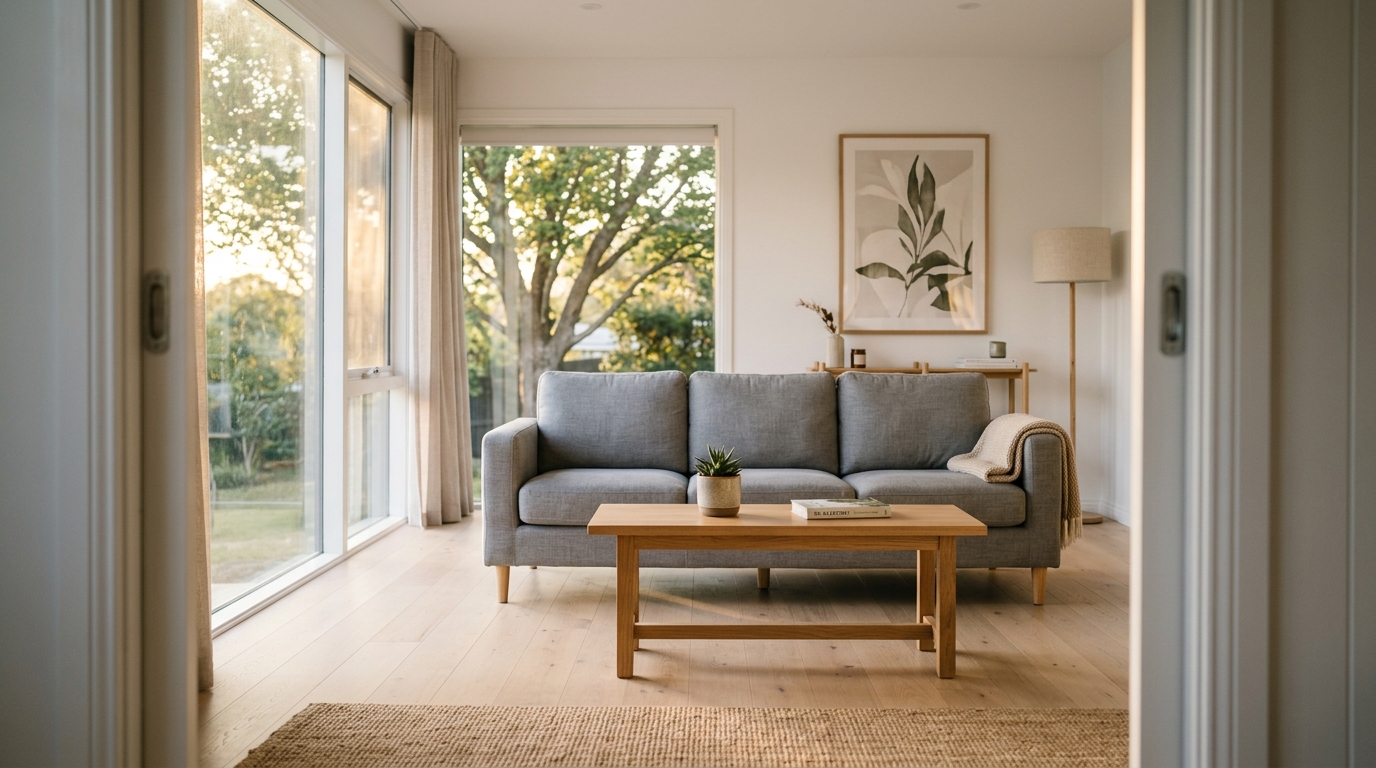
Most Airbnb hosts write descriptions the same way they'd write a property listing on Rightmove: everything the space has, every room, every appliance, every transport link, all in one sprawling paragraph. It feels thorough. It feels professional. And it quietly costs you bookings.
Guest attention on Airbnb drops sharply once a description passes a certain length. The sweet spot sits around 180 words, structured in three tight paragraphs that answer the questions a guest actually asks when deciding whether to enquire. Anything longer and you're not adding value: you're adding friction.
This guide explains why the Airbnb description word count ideal is shorter than you think, how to structure those 180 words for maximum conversion, and what to leave out without losing bookings.
Why Shorter Descriptions Convert Better
Airbnb is not a property portal. Guests aren't comparing square footage and council tax bands: they're scrolling dozens of listings on a phone, usually during a commute or a lunch break, looking for a feeling more than a fact sheet.
A long description creates three problems that directly harm your conversion rate:
- Cognitive load: Dense blocks of text require effort. Effort creates hesitation. Hesitation sends the guest to the next listing.
- Buried selling points: If your best feature (the private terrace, the allocated parking, the five-minute walk to the station) sits halfway through paragraph three, half your readers will never see it.
- Mobile readability: Most Airbnb browsing happens on a phone. A 400-word description becomes a thumb-numbing scroll, and listings we score with descriptions over 250 words consistently show lower enquiry rates than comparable properties with tighter copy.
The goal is not to tell the guest everything. The goal is to tell them enough to click 'Request to Book', then let your photos, reviews, and amenities list do the rest.
The 180-Word Ceiling: Where It Comes From
The 180-word benchmark is not arbitrary. It reflects the attention budget of a guest in browse mode, scrolling through search results on the Airbnb app.
Airbnb's mobile interface truncates descriptions at around 500 characters (roughly 80 words) and hides the rest behind a 'Read more' link. That means half your guests never expand the description at all. They skim the visible snippet, glance at the photos, check the price, and decide.
For those who do tap 'Read more', you have one more scroll before they lose patience. That second scroll buys you another 100 words, bringing you to roughly 180 total. Beyond that, you're writing for an audience that has already shrunk twice.
The lesson: front-load the first 80 words with your strongest hooks, then use the next 100 to close the deal. Anything after word 180 is invisible to most guests.
The Three-Paragraph Structure That Converts
The best-performing Airbnb descriptions follow a simple three-act structure. Each paragraph has a single job. No sprawl, no tangents, no filler.
Paragraph One: The Hook (50-60 words)
Open with the one thing that makes your listing worth clicking. Not a list of amenities. Not a generic welcome. A vivid, specific image that paints the experience:
Wake up to sunrise over the canal, five minutes' walk from King's Cross. This bright one-bedroom flat has floor-to-ceiling windows, a fully equipped kitchen, and a sofa bed for an extra guest. Perfect for couples or solo travellers exploring London.
Notice what this does: it gives you location, view, layout, and guest profile in three sentences. It creates a picture. It answers the question: Why this place?
Avoid opening lines like 'Welcome to our lovely home' or 'We're excited to host you'. They waste the most valuable real estate in your description on words that could apply to any listing.
Paragraph Two: The Practical Sell (60-80 words)
Now that you've hooked them, answer the logistical questions: what's here, what's nearby, and why it matters.
The flat has super-fast WiFi, a Smart TV, and a Nespresso machine. The bedroom has a king-size bed with blackout blinds. There's a lift to the second floor and allocated parking in the basement. You're a two-minute walk from St Pancras, with direct Eurostar connections and six Tube lines. Tesco Metro and dozens of cafés and restaurants are on your doorstep.
This paragraph should feel like a checklist, but written in sentences. Hit the amenities that matter (WiFi, coffee, parking, transport), and keep it concrete. 'Close to public transport' is vague. 'Two-minute walk from St Pancras' is a fact a guest can verify.
If your listing has a standout unique selling point, this is where you reinforce it. Private entrance. Roof terrace. Workspace with a monitor. Sound-proofed walls. Whatever sets you apart from the fifteen other listings in your postcode.
Paragraph Three: The Close (40-50 words)
End with a soft invitation that reassures the guest and removes friction:
I'm a Superhost with five years' experience and hundreds of five-star reviews. Check-in is flexible from 3pm, and I'm always available by message if you need anything during your stay. I look forward to hosting you.
This paragraph answers the final hesitation: Can I trust this host? Mention your Superhost status if you have it, your response time, your check-in flexibility, or any personal touches (a welcome pack, local tips, early check-in available). Keep it warm but professional.
Avoid ending with house rules (those belong in the House Rules section) or a laundry list of what's not included. Finish on a positive, confident note.
What to Leave Out (Without Losing Bookings)
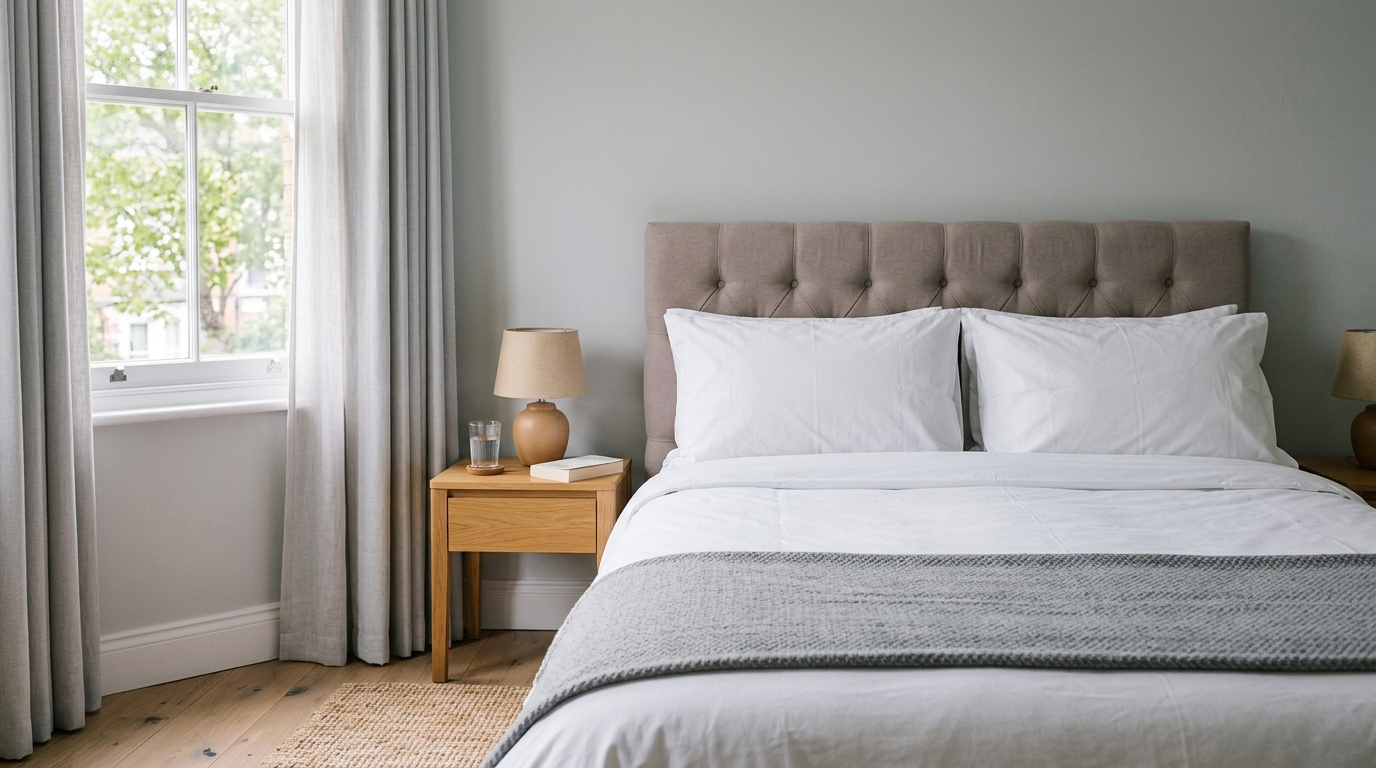
Hosts padding their descriptions usually include information that either belongs elsewhere on the listing page or doesn't need saying at all. Here's what you can cut:
Amenities Already Listed in the Amenities Section
If you've ticked 'Hair dryer', 'Iron', 'Washing machine', and 'Dishwasher' in your amenities list, you don't need to repeat them in the description. Airbnb's search filters rely on the amenities section, not your prose.
Exception: If an amenity is a genuine differentiator (a coffee machine in a market where most hosts don't provide one, or allocated parking in a city-centre flat), mention it in paragraph two for emphasis. Otherwise, let the amenity icons do the work.
Detailed Transport Instructions
You don't need turn-by-turn directions from Heathrow or a list of every bus route within a mile. A single line in paragraph two ('ten-minute walk from Clapham Common Tube, Zone 2') gives the guest enough to judge convenience. Save the detailed transport guide for your digital welcome book, where it's useful after they've booked.
House Rules and Policies
Check-out time, smoking policy, pet policy, party rules, and guest limits all have dedicated sections on your listing page. Repeating them in the description wastes words and makes you sound defensive. The only exception: if you allow something unusual (pets welcome, late checkout available), mention it as a benefit in paragraph three.
Generic Neighbourhood Descriptions
Hosts often write things like: 'Camden is a vibrant area known for its markets, music venues, and alternative culture.' The guest already knows this. They searched for Camden. Instead, give them proximity: 'You're 200 metres from Camden Market and a five-minute walk from Regent's Canal.'
If your neighbourhood is less famous, one sentence of context is fine, but keep it specific: 'Clapton is an up-and-coming area in East London, popular with young professionals, with independent coffee shops, vintage pubs, and quick links to the City.' That's 25 words. Don't write a TripAdvisor essay.
Airbnb Description Length Best Practice: How to Audit Yours
Open your Airbnb listing in a private browser window (so you see it as a guest does) and read your description on your phone. Then ask yourself:
- Can I summarise the unique appeal of this listing in one sentence? If not, your hook is buried.
- Is there anything in paragraph two that's already covered in the amenities list? Cut it.
- Does the description answer why this listing and why this location, or does it just list features?
- If I only read the first 80 words (before 'Read more'), would I know what makes this place special?
A quick way to test Airbnb description length best practice: paste your current description into a word processor and check the count. If you're over 250 words, you're losing attention. If you're under 120, you're probably too vague. The 150-200 range is the conversion sweet spot.
If you'd like a professional review of your description structure, Zugrow's free listing score analyses your title, description, and photos, and shows you exactly where you're losing bookings.
How to Rewrite a Long Description (Step-by-Step)
If your current description is 400 words of stream-of-consciousness property detail, here's how to trim it without losing impact:
Step One: Highlight Your Best Line
Read through your existing description and find the one sentence that would make you want to book if you were the guest. It might be 'The flat has a private rooftop terrace with views over the Thames' or 'You're a two-minute walk from the beach'. That sentence becomes your opening hook.
Step Two: List the Five Most Important Facts
Imagine a guest has thirty seconds to decide. What five things do they need to know? Usually: location, layout (bedrooms/beds), standout amenity, transport link, and guest suitability (couples, families, business travellers). Those five facts form paragraph two.
Step Three: Cut Everything Else
Be ruthless. If a sentence doesn't answer 'Why this listing?' or 'Why this location?', delete it. If it duplicates an amenity already ticked, delete it. If it's a generic nicety ('We hope you enjoy your stay'), delete it.
You'll likely cut 40-50% of your original description. That's the point. What's left should feel tight, confident, and impossible to skim past.
Step Four: Reorder for Mobile
Put your strongest hook in the first sentence. Then structure the rest so that the visible snippet (the first 80 words, before 'Read more') tells a complete micro-story. A guest who never taps 'Read more' should still know what you're offering and why it matters.
For more worked examples of effective structures, see our guide to Airbnb description length that converts.
Does a Shorter Description Hurt Your Airbnb SEO?
No. Airbnb's search algorithm prioritises relevance, booking history, and guest satisfaction, not word count. A 180-word description that accurately reflects your space and includes your key location and amenity terms will rank just as well (often better) than a 500-word essay.
What does hurt your ranking: descriptions stuffed with keyword spam ('luxury luxury luxury central London central'), or descriptions so vague that guests book and then leave disappointed reviews because the listing didn't match the copy.
The algorithm rewards conversion. If your tight, focused description gets more enquiries and bookings than a competitor's novel-length version, Airbnb will show your listing higher. The length itself is neutral: it's the clarity and relevance that matter.
For more on optimising your listing copy for both human readers and the algorithm, read our A/B testing guide to words that convert.
Real Example: Before and After
Here's a real description (anonymised) that we rewrote during a listing audit. The original was 320 words. The rewrite was 165.
Before (320 words)
Welcome to our beautiful two-bedroom apartment in the heart of Manchester! We are so excited to be able to offer this wonderful space to guests visiting this amazing city. The apartment is located in a fantastic area close to all the best restaurants, bars, shops, and attractions. It has been recently renovated to a very high standard and we have tried to think of everything you might need during your stay. The living room has a comfortable sofa, a large flat-screen TV, and plenty of natural light. The kitchen is fully equipped with an oven, hob, microwave, fridge-freezer, dishwasher, washing machine, toaster, kettle, and all the pots, pans, and utensils you might need. There is also a Nespresso coffee machine. The master bedroom has a king-size bed with luxurious bedding and the second bedroom has two single beds, perfect for children or friends travelling together. Both bedrooms have blackout blinds. The bathroom has a walk-in shower, toilet, and sink, with complimentary toiletries provided. We provide fresh towels and bed linen for all guests. The apartment is within walking distance of Manchester Piccadilly train station, the Northern Quarter, the Arndale shopping centre, and many other attractions. There are excellent transport links to all areas of the city. We are Superhosts with over 200 five-star reviews and we pride ourselves on offering a warm welcome and being available to help with anything you need during your stay. Check-in is from 3pm and checkout is at 11am. Please note that this is a non-smoking apartment and we cannot accept pets. We look forward to hosting you!
After (165 words)
Stay in a bright, newly renovated two-bedroom flat in Manchester city centre, a five-minute walk from Piccadilly station and the Northern Quarter. Perfect for families, friends, or colleagues visiting Manchester. The flat sleeps four: a king-size bed in the master bedroom and two singles in the second bedroom, both with blackout blinds. The open-plan living area has a sofa, Smart TV, and a fully equipped kitchen with dishwasher, washing machine, and Nespresso machine. Super-fast WiFi throughout. The bathroom has a walk-in shower with complimentary toiletries. You're a ten-minute walk from the Arndale Centre, Manchester Arena, and dozens of restaurants and bars. Piccadilly Gardens and tram stops are on your doorstep, with direct links to Old Trafford, the Etihad, and MediaCityUK. I'm a Superhost with over 200 five-star reviews. Check-in is flexible from 3pm, and I'm always available by message. I look forward to welcoming you.
The rewrite is half the length, but it conveys the same essential information in a structure that's scannable, mobile-friendly, and focused on the guest's decision-making priorities. It opens with a vivid image (bright, newly renovated, city centre, walking distance from transport and nightlife), moves through the practical details (layout, amenities, location), and closes with trust signals (Superhost, reviews, availability).
The original version wastes 60 words on pleasantries ('We are so excited', 'We look forward to hosting you', 'We have tried to think of everything') and another 40 words repeating information already in the amenities section (toaster, kettle, pots and pans). The rewrite cuts all of that and uses the freed-up space to be specific: five-minute walk, king-size bed, direct tram links to Old Trafford.
How Airbnb Description Structure Affects Conversion Rate
A well-structured description doesn't just inform: it persuades. Every paragraph should move the guest closer to clicking 'Request to Book'.
The three-paragraph model works because it mirrors the guest's mental checklist:
- Paragraph one answers: Is this the vibe I'm looking for? (The emotional hook.)
- Paragraph two answers: Does it have what I need? (The practical validation.)
- Paragraph three answers: Can I trust this host? (The final reassurance.)
If your description is a single 300-word block, the guest has to hunt for the answers to those three questions, and friction kills conversion. Break it into clear acts, and you make it effortless to say yes.
For a deeper look at how specific words and phrases drive clicks, read our analysis of real Airbnb descriptions from Reddit hosts.
Common Mistakes That Inflate Word Count
Most long descriptions suffer from one or more of these padding habits:
Repeating Yourself
Hosts often mention the same feature twice: once in the overview, once in a detailed room-by-room breakdown. Pick one. If you've said 'The flat has super-fast WiFi' in paragraph two, you don't need 'The living room has WiFi' later.
Over-Describing Ordinary Features
You don't need a sentence about the fridge-freezer, the kettle, or the coat hooks. These are baseline expectations. Save your words for the things that differentiate your listing: the parking space, the balcony, the workspace, the coffee machine.
Writing for Yourself, Not the Guest
Hosts sometimes include backstory ('We renovated this flat in 2019 and chose every fixture with care') or personal philosophy ('We believe travel should be about authentic local experiences'). The guest doesn't care. They care whether the bed is comfortable and the WiFi is fast.
Defensive Disclaimers
Long descriptions often include lines like 'Please note there is some street noise' or 'The shower pressure is not as strong as a hotel'. If something is a genuine limitation, mention it once in the description or house rules. Don't apologise for it three times. Confidence converts better than hedging.
Tools to Help You Write Tighter Copy
If you struggle to self-edit, try these techniques:
- Paste your description into Hemingway Editor (hemingwayapp.com, free). It highlights long sentences and suggests simpler alternatives. Aim for Grade 8 readability or lower.
- Read it aloud. If you run out of breath mid-sentence, it's too long. Break it up.
- Print it and cross out every word that doesn't answer a guest's question. You'll be surprised how much survives the red pen.
- Compare yours to the top three listings in your area. Open them in a private window, count their description word counts, and note their structure. If they're all under 200 words and you're at 400, you've found your problem.
If you want expert feedback on your specific listing, Zugrow's free listing audit scores your description structure, keyword usage, and clarity, and gives you a rewrite template tailored to your property type and location.
When a Longer Description Might Make Sense
There are exceptions. A few property types benefit from slightly more detail:
- Unique or unconventional spaces: A houseboat, a converted church, or a treehouse may need an extra paragraph to explain layout, access, or quirks that aren't obvious from photos.
- Rural or remote listings: If your cottage is down a single-track lane with no street address, you'll need more space to explain how to find it and what facilities are (or aren't) nearby.
- Luxury or high-end properties: Guests paying premium prices sometimes expect more detailed descriptions of finishes, brands, and bespoke features (the Sonos sound system, the underfloor heating, the rainfall shower). But even then, aim for 250 words maximum.
In every case, the principle holds: every word should earn its place. If a sentence doesn't make the guest more likely to book, cut it.
How to Test Whether Your New Description Works
After you shorten your description, monitor your listing conversion rate (views to enquiries and bookings) over the next two to four weeks. Airbnb doesn't surface this metric directly, but you can infer it from your listing dashboard:
- Did your enquiry rate go up after the rewrite?
- Did your average response time to enquiries stay the same (meaning guests weren't confused and asking clarifying questions)?
- Did your booking rate improve?
If you see a lift in any of those metrics, your tighter description is working. If bookings stay flat or drop, revisit your rewrite: you may have cut too much, or removed a key detail guests were using to make their decision.
For a data-driven view of what's working, Zugrow's free listing score gives your live listing a 100-point score with prioritised fixes, so you can re-score after each change and see whether it is moving the needle.
Final Checklist: Is Your Description Ready?
Before you hit save, run through this final checklist:
- Is it under 200 words?
- Does the first sentence paint a vivid picture of the experience?
- Can a guest skim it in 20 seconds and know what makes your listing different?
- Have you cut anything that's already in the amenities section?
- Does it answer why this listing and why this location?
- Does it end on a confident, welcoming note?
- Is it readable on a phone without scrolling three times?
If you can tick all seven, you've nailed the Airbnb description word count ideal.
Frequently Asked Questions
What is the ideal word count for an Airbnb description?
The ideal Airbnb description is between 150 and 200 words, structured in three tight paragraphs. This length gives guests enough detail to make a booking decision without overwhelming them. Descriptions over 250 words see lower engagement, especially on mobile devices.
Does a longer Airbnb description improve SEO or search ranking?
No. Airbnb's search algorithm prioritises relevance, guest satisfaction, and booking conversion, not word count. A concise, accurate description that includes key location and amenity terms will rank just as well as (or better than) a lengthy one. Clarity and conversion matter more than length.
Should I repeat my amenities in the description if they're already listed?
Only if the amenity is a genuine differentiator that sets your listing apart (such as allocated parking in a city centre, or a workspace in a market where most flats don't have one). Otherwise, let the amenities section do the work. Repeating standard features like WiFi, hairdryer, or kettle wastes valuable description space.
How do I make my Airbnb description stand out in search results?
Open with a vivid, specific hook that paints the experience (not a generic welcome). Focus on what makes your listing unique: the view, the location, the layout, or a standout amenity. Use concrete details (walking distances, transport links, room sizes) instead of vague adjectives. Keep it under 200 words and structure it for mobile readability.
What should I leave out of my Airbnb description?
Leave out anything already covered in dedicated sections: amenities listed in the amenities checklist, house rules (smoking, pets, checkout time), and detailed transport directions. Cut generic neighbourhood descriptions the guest already knows, and avoid repeating the same feature multiple times. Every sentence should answer 'Why this listing?' or 'Why this location?'
How can I tell if my description is too long?
Open your listing on a mobile phone in a private browser window. If the description requires more than two scrolls to read, or if the 'Read more' link hides important selling points, it's too long. Paste your description into a word processor: anything over 250 words is likely losing guest attention. Aim for 150 to 200 words.
Conclusion
The hosts who convert browsers into bookings understand that less is more. A tight, focused description respects the guest's time, highlights what matters, and makes it effortless to say yes.
Cut the fluff. Front-load your hook. Structure for mobile. And remember: your description is not a sales brochure. It's the first conversation with a guest who's already interested. Make it count.
Ready to see how your listing measures up? Get your free Airbnb performance score at Zugrow and discover exactly where you're losing bookings.