


Your Airbnb listing appears in search results. A guest hovers over your title, scans your photos, and then clicks into the description. They scroll once, maybe twice, and either click 'Request to Book' or hit the back button. The difference between those two outcomes often comes down to your description length and structure, yet most hosts get it quietly wrong.
Too short, and guests assume you're hiding problems. Too long, and they skim past the details that would have closed the booking. The sweet spot isn't arbitrary: it's driven by how Airbnb's algorithm weighs completeness, how guests scan on mobile, and what information actually converts browsers into bookers.
This guide breaks down the Airbnb description length and word count that converts, the structural framework top-performing listings use, and the specific mistakes that send guests back to the search results.
Why Airbnb Description Length Matters for Bookings
Airbnb doesn't publish a character limit for listing descriptions, but the platform does truncate your text in search results and on mobile. Guests see roughly the first 250-300 characters before the 'Read more' link appears. If those opening sentences don't hook their attention, they won't expand the rest, and a rambling or incomplete description signals poor hosting standards before they've even considered your price.
Length matters for two distinct reasons: algorithmic completeness and guest psychology. Airbnb's search ranking algorithm favours listings with detailed, complete information. A sparse 50-word description suggests the host hasn't invested time in presenting the property, and the algorithm interprets that as a lower-quality listing. On the guest side, a thorough description builds trust, answers objections before they arise, and reduces the friction between 'interested' and 'booked'.
But more words don't automatically mean more bookings. A 1,500-word essay overwhelms mobile readers and buries the key selling points that drive decisions. The goal is comprehensive but scannable: enough detail to satisfy the algorithm and answer guest questions, structured so a time-pressed browser can extract the highlights in seconds.
The Optimal Airbnb Description Word Count
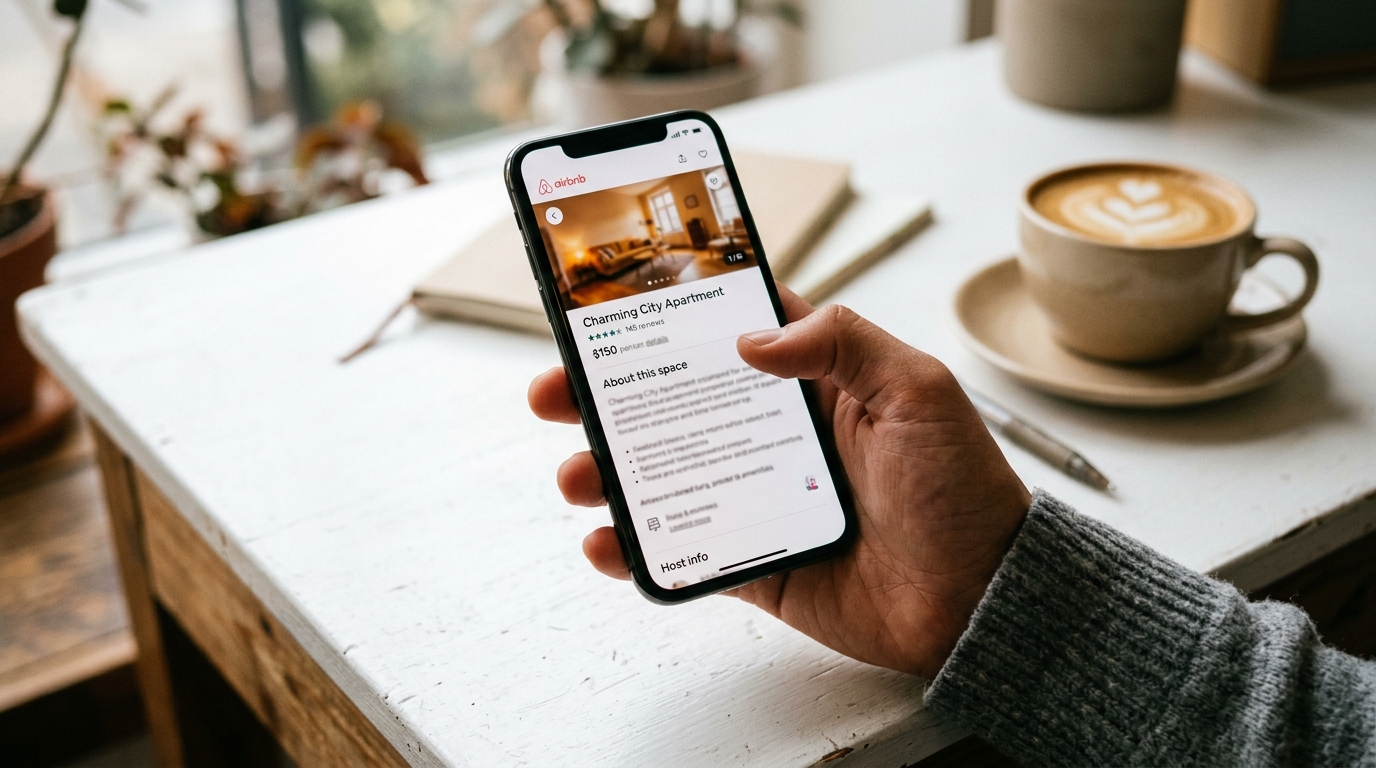
The description that converts sits between 300 and 600 words. This range gives you enough space to cover the essentials (sleeping arrangements, amenities, neighbourhood highlights, house rules) without losing the reader's attention.
Shorter than 300 words and you're likely skipping details that matter. You haven't explained why your location is convenient, you've glossed over the kitchen equipment business travellers need, or you've left ambiguity around parking. Guests interpret gaps as red flags, and they'll book the listing that answered their questions upfront.
Longer than 600 words and you're asking mobile users to scroll through paragraphs most won't finish. The conversion-critical information (proximity to transport, the workspace setup, the child-friendly features) ends up buried in the fourth or fifth paragraph, and the guest has already moved on.
Target 400-500 words as your baseline. That's a four-to-five-paragraph structure covering space, amenities, location, and guest experience, plus a brief house rules reminder at the end. If you're hosting a multi-bedroom property or a rural retreat with unique features, you can stretch toward 600. If you're listing a simple studio in a city centre, 350 well-chosen words will do the job.
If you'd like an expert assessment of your current description with specific suggestions to improve, Zugrow's free listing score analyses your title, description structure, amenities, and pricing against local competitors, and shows you exactly where you're losing bookings.
How to Structure Your Airbnb Description for Maximum Click-Through
Word count is only half the equation. A 500-word block of unbroken text performs no better than a 200-word bullet list. The structure determines whether guests actually read what you've written.
Opening Hook (50-80 Words)
Your first two sentences appear in search previews and above the fold on mobile. This is your only guaranteed impression, so open with your strongest selling point. The feature that separates your listing from the ten others the guest has open in tabs.
Weak opening: 'Welcome to our lovely flat in Manchester. We hope you enjoy your stay.'
Strong opening: 'Entire two-bed Victorian terrace with private garden, two minutes' walk from Old Trafford and the tram into town. Recently renovated kitchen, dedicated workspace with monitor, and free secure parking directly outside the front door.'
The second example front-loads location, property type, capacity, and the amenities that matter to the target guest. It tells the story in one breath and gives the reader a reason to keep going.
The Space (100-150 Words)
Next, describe what guests are actually booking. Cover:
- Sleeping arrangements: How many beds, what size, which rooms. Be specific. 'Sleeps four' could mean two doubles or a sofa bed in the lounge, and ambiguity kills bookings.
- Bathrooms: How many, ensuite or shared, bath or shower. Families and groups need to know.
- Living space: Smart TV with streaming, dining table that seats six, reading nook by the window. Paint the picture.
- Kitchen: If it's a full kitchen, say so. If you've stocked it with Nespresso, dishwasher, and a full-size fridge, list them. These are filtering criteria in search.
Don't assume guests will click through your amenities list. Reinforce your standout features in prose, because this is where you build the emotional case for booking.
Location & Access (80-120 Words)
Guests book locations as much as properties. Explain what's within walking distance, how long the commute into the city centre takes, and where they'll park or catch public transport. Be precise with travel times. 'Close to the station' is vague, 'four-minute walk to Piccadilly Station' is a fact they can verify on a map.
Mention nearby restaurants, shops, parks, or landmarks only if they're genuinely useful. A neighbourhood café the guest can walk to for breakfast matters. A tourist attraction thirty minutes away doesn't belong here.
If your listing is rural or remote, flip the angle: emphasise the peace, the views, the lack of light pollution. Guests booking countryside retreats want distance from the city, so sell the isolation as the feature.
Guest Experience & Extras (60-100 Words)
This is where you separate a booking from a shortlist save. What makes staying at your property easier, more comfortable, or more memorable than the alternative?
- Fast Wi-Fi with the speed stated (essential for remote workers)
- Contactless check-in with a smart lock (no waiting around for keys)
- Welcome basket with coffee, tea, and biscuits
- Comprehensive digital guidebook with local recommendations
- Child-friendly: high chair, travel cot, stair gates provided
- Pet-friendly: enclosed garden, dog bowls, nearby walking routes
These details answer the unspoken question every guest has: 'Will this host make my life easier or harder?' Show you've thought about their needs before they've even asked.
Want to impress guests before they arrive? Zugrow's digital guidebook (£2.95/month) gives your guests a mobile-friendly guide with check-in instructions, Wi-Fi codes, local recommendations, and house rules. All branded to your property.
House Rules & Essentials (40-60 Words)
Close with the practical details: check-in and check-out times, quiet hours if relevant, smoking policy, and any restrictions (no parties, no pets, no unregistered guests). Keep the tone friendly but clear. You're setting expectations, not writing a legal contract.
If you have unusual rules (shoes off indoors, no cooking with strong spices, fragile antiques in the lounge), state them upfront. Better a guest books elsewhere than leaves a one-star review because they felt ambushed.
Common Airbnb Description Length Mistakes That Kill Conversions
Even experienced hosts fall into structural traps that undermine an otherwise strong listing. Here are the patterns that send guests back to the search page.
Burying the Lead
Your parking space, your rooftop terrace, your walking distance to the beach. Whatever your standout feature is, it belongs in the opening paragraph. Guests scan, they don't read sequentially. If your unique selling point appears in paragraph four, most browsers will never see it.
Repeating the Amenities List
Airbnb already displays your amenities in a filterable checklist. Your description should highlight and contextualise the most important ones, not restate the full list. 'Fully equipped kitchen with dishwasher, Nespresso machine, and everything you need to cook a family meal' is better than 'Kitchen amenities: fridge, oven, hob, microwave, toaster, kettle…'
For more examples of how top-performing hosts handle this balance, see our guide to Airbnb description examples Reddit hosts actually use.
Walls of Text on Mobile
Paragraph breaks are your friend. A five-sentence paragraph on desktop becomes an intimidating block on a phone screen. Keep paragraphs to two or three sentences, use bullet points where natural, and give the reader's eye somewhere to rest.
Vague or Generic Language
'Cosy and comfortable' tells the guest nothing. 'Bright south-facing living room with two sofas, a wood-burning stove, and floor-to-ceiling windows overlooking the garden' creates a picture. Specificity builds trust and helps the guest imagine themselves in the space.
Ignoring the Target Guest
A city-centre studio appeals to solo business travellers and couples, so your description should emphasise the workspace, the fast Wi-Fi, the walk to the conference centre, and the quiet street. If you're instead talking about the travel cot and high chair, you're confusing your audience and diluting your message.
Match your description to the guest your property naturally attracts. A four-bed family house near a theme park needs a completely different tone and feature set than a boutique flat in Shoreditch.
Should You Write a Short or Long Airbnb Description?
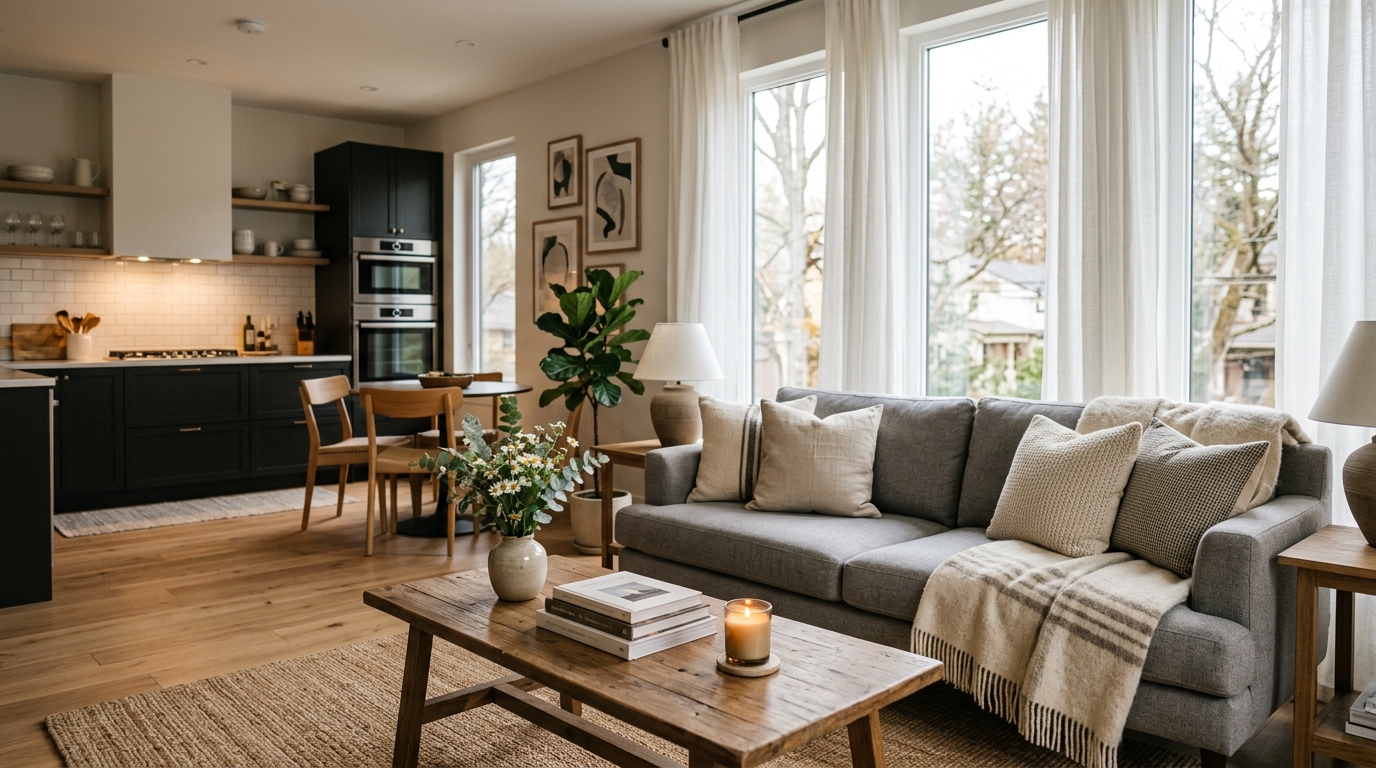
The answer depends on your property type, your location, and the guest questions you need to preempt.
Shorter descriptions (300-400 words) work well for:
- City-centre studios and one-beds with straightforward layouts
- Properties in well-known neighbourhoods where location sells itself
- Listings with strong photos that do most of the storytelling
- Guests booking on impulse (last-minute city breaks, festival accommodation)
Longer descriptions (500-600 words) suit:
- Multi-bedroom homes where sleeping arrangements need explaining
- Rural or remote properties where location context is essential
- Listings targeting families or groups (more logistics to cover)
- Properties with unique features or history worth highlighting
- Markets with high competition where detail differentiates you
The guiding principle is completeness without repetition. Every sentence should either answer a question, build trust, or move the guest closer to booking. If you're padding word count with filler ('We hope you enjoy your stay' or 'Please treat the property with respect') cut it. If you're leaving out information a guest would need to make a decision, add it.
Not sure where your listing sits? Get your free Airbnb performance score and see how your description length, structure, and keyword usage compare to local competitors.
How Airbnb's Algorithm Treats Description Length
Airbnb's search ranking algorithm evaluates listing quality as one of its core signals, and description completeness is part of that calculation. A detailed, well-structured description signals to the algorithm that you're a serious host who's invested time in presenting the property, and that correlates with better guest experiences, fewer cancellations, and higher review scores.
But the algorithm doesn't reward length for its own sake. A 1,000-word description stuffed with keywords or irrelevant detail won't outrank a 400-word description that's clear, specific, and aligned with guest intent. What matters is information density: how much useful, relevant detail you pack into the space you use.
The algorithm also pays attention to engagement signals. If guests are clicking into your listing but bouncing back to search without enquiring or booking, that's a negative signal. A strong description reduces bounce rate by answering questions upfront, setting accurate expectations, and building confidence in the booking decision.
In practice, this means your description works alongside your title, photos, pricing, and reviews to create a cohesive, trustworthy listing. Optimising one element in isolation won't move the needle. For a deeper dive into how your description affects click-through rate, read our guide on writing Airbnb descriptions that increase clicks.
Testing and Refining Your Airbnb Description Length
Your description isn't set in stone. The best-performing hosts treat it as a living document, refining it based on guest questions, booking patterns, and seasonal demand.
Start by auditing your current description:
- Open your listing on mobile and scroll through the description as a guest would. Does it feel scannable? Do the key selling points appear in the first screen?
- Read the last 20 guest messages or booking enquiries. Are guests asking questions your description should have answered? That's your revision checklist.
- Compare your description length to the top three listings in your area. Are they shorter, longer, more structured? What are they emphasising that you've missed?
Then make targeted changes:
- If guests are messaging to ask about parking, Wi-Fi speed, or check-in process, move that information higher in your description.
- If your booking rate drops after a description update, roll back and test a different approach. Sometimes less is more; sometimes guests need more detail to feel confident.
- If you're attracting the wrong guest type (groups when you want couples, families when the space isn't child-friendly), adjust your tone and featured amenities to better signal who the property suits.
For a structured approach to testing which description elements actually convert, see our guide to Airbnb description A/B testing.
What to Do If Your Description Is Too Long
If your current description runs past 700 words, you're likely overwhelming mobile readers and burying the conversion-critical details. Here's how to trim without losing impact:
Cut the preamble. Delete any sentences that don't communicate a fact or build a picture. 'Thank you for considering our property' and 'We're excited to host you' add warmth but no information. Save them for your welcome message.
Eliminate redundancy. If you've listed the Nespresso machine in both the kitchen paragraph and the amenities summary, pick one. If you've said 'quiet neighbourhood' three times, say it once with a concrete detail ('residential street with no through traffic').
Move granular details to your house manual. Instructions for the heating system, the quirk of the shower dial, or the best local pizza delivery belong in your digital guidebook, not your listing description. The description sells the booking; the guidebook delivers the experience.
Use tighter, more specific language. 'The flat is located within easy reach of excellent transport links' becomes 'Four-minute walk to the Tube'. Specificity is shorter and more persuasive.
If you're unsure what to cut, Zugrow's free listing audit highlights weak or redundant phrasing in your description and suggests sharper alternatives.
What to Do If Your Description Is Too Short
A 150-word description leaves too many questions unanswered. Guests will assume you're hiding something or that the listing isn't professionally managed. Expand strategically:
Add sleeping detail. Don't just say 'sleeps four'. Explain where those four people sleep. 'Master bedroom with king-size bed, second bedroom with two singles, plus a sofa bed in the lounge' removes all ambiguity.
Describe the neighbourhood. Walk out your front door and time the route to the nearest Tube, train station, supermarket, or landmark. That's your location paragraph. Guests booking from out of town need context you take for granted.
Highlight three guest experience features. What have past guests mentioned in reviews? Fast Wi-Fi? Great water pressure? Comfortable mattress? Quiet street? Pull those into your description. They're social proof and differentiation rolled into one.
Address common objections. If you're on a fourth floor with no lift, say so, and then reframe it ('peaceful and private, with lovely views over the rooftops'). If you're a fifteen-minute walk from the station, mention the reliable bus stop outside your door. Transparency builds trust; omission creates doubt.
For more tactics on emphasising what makes your listing different, read our guide to highlighting unique selling points that convert.
Final Checklist: Is Your Airbnb Description Length Optimised?
Before you save your next description update, run through this checklist:
- Word count sits between 300 and 600 words. Enough detail to inform, short enough to scan on mobile.
- Opening paragraph contains your strongest selling point: location, unique feature, or standout amenity.
- Sleeping arrangements are unambiguous. Guests know exactly where they'll sleep and how many beds.
- Location paragraph includes walk times to transport and key landmarks: specific, verifiable, useful.
- Guest experience features are highlighted. Wi-Fi speed, workspace, welcome extras, anything that makes life easier.
- House rules are clear and friendly. No surprises, no legalese.
- Paragraphs are short (2-3 sentences). Readable on mobile without intimidating blocks of text.
- No redundancy or filler. Every sentence earns its place.
If your description ticks every box and you're still not seeing the bookings you expect, the issue may lie elsewhere, in your photos, your pricing, your title, or your competitive positioning. Zugrow's free listing score audits every element of your listing and shows you exactly where to focus your optimisation effort.
Frequently Asked Questions
How many words should an Airbnb description be?
Aim for 300-600 words, with 400-500 as the sweet spot for most properties. This range gives you enough space to cover sleeping arrangements, amenities, location, and guest experience without overwhelming mobile readers. Shorter than 300 words leaves too many questions unanswered; longer than 600 risks burying your key selling points.
Does Airbnb description length affect search ranking?
Yes, indirectly. Airbnb's algorithm favours listings with complete, detailed information, and description length is part of that assessment. A thorough description signals listing quality and correlates with better guest experiences and higher engagement. However, the algorithm rewards information density and relevance, not word count alone. A concise, specific 400-word description will outperform a vague 800-word essay.
What should I include in the first paragraph of my Airbnb description?
Your opening 50-80 words should front-load your strongest selling point: property type, location, standout amenities, or unique features. This text appears in search previews and above the fold on mobile, so it's your only guaranteed impression. Be specific. 'Entire Victorian terrace with private garden, two minutes from the Tube, with free parking' beats 'Lovely home in London'.
How do I know if my Airbnb description is too long?
Open your listing on a mobile device and scroll through the description as a guest would. If it takes more than three or four swipes to reach the end, or if you're repeating information already visible in your amenities list or photos, it's too long. Descriptions over 700 words typically overwhelm readers and bury conversion-critical details. Trim redundancy, cut filler, and move granular instructions to your house manual.
Should I use bullet points in my Airbnb description?
Use bullet points sparingly and only where they genuinely aid scanning, for example, when listing specific amenities, transport links, or sleeping arrangements. Too many bullets fragment the narrative and make your listing feel impersonal. A mix of short paragraphs and occasional bullets creates the best balance of readability and warmth.
Can I change my Airbnb description length after publishing?
Yes, and you should. The best-performing hosts treat their descriptions as living documents, updating them based on guest questions, seasonal demand, and booking patterns. If guests repeatedly ask about parking or Wi-Fi, revise your description to answer upfront. If your booking rate changes after an update, test a different length or structure. Regular refinement keeps your listing competitive and relevant.
Conclusion
Your Airbnb description length and structure aren't cosmetic details. They're conversion mechanics. A well-crafted 400-word description that opens with your strongest selling point, answers questions before they're asked, and stays scannable on mobile will outperform a rambling 1,000-word essay or a sparse 150-word placeholder every time.
The goal isn't to hit an arbitrary word count. It's to give guests the information they need to book with confidence, in a format they'll actually read. Start with the framework in this guide (opening hook, space description, location, guest experience, house rules) and refine based on the questions your guests ask and the bookings you're not getting.
Ready to see how your listing measures up? Get your free Airbnb performance score at Zugrow and find out exactly where your description, photos, and pricing are costing you bookings.