

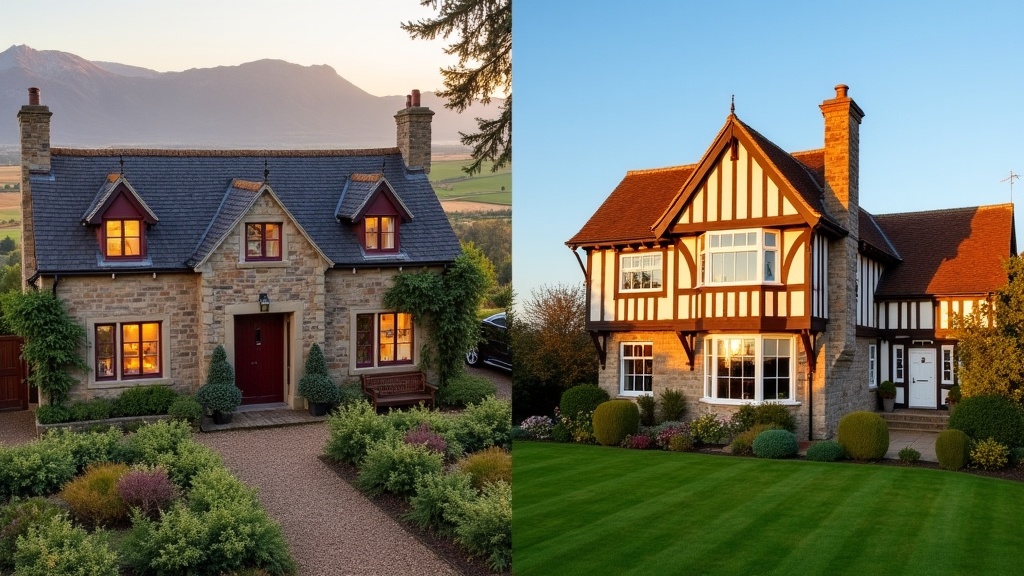
If you host in Scotland, you need a short-term let licence from your council before you take bookings, and in some areas you also need planning permission. In England there is no licence: planning is decided case by case, London caps whole home lets at 90 nights a year without permission, and a national register is on the way. This guide sets out the differences as they stand in October 2026.
What are the key differences between Scotland and England's Airbnb planning permission rules?
Scotland requires a licence for every short-term let, and planning permission in some cases. England has no licence and no national night limit outside London, but planning permission can still be needed if your letting changes how the property is used.
Scotland's licensing scheme comes from the Civic Government (Scotland) Act 1982 (Licensing of Short-term Lets) Order 2022. Councils opened their schemes on 1 October 2022, and hosts who were already operating had until 1 October 2023 to apply. Today every short-term let in Scotland needs a licence (or a valid application, for hosts covered by the transition) before taking bookings or receiving guests, whether it is a room in your home or a separate property.
England works differently. There is no licence, and the local planning authority decides whether your letting needs planning permission based on how the property is used and its impact on neighbours. The notable exception is London's 90-day rule for Airbnb hosting, which lets you rent out a whole home for up to 90 nights in a calendar year without planning permission.
Scottish licences come in four types: home sharing (letting part of your own home while you are there), home letting (letting your own home while you are away), home sharing and home letting, and secondary letting (a property that is not your main home). Each comes with mandatory safety, insurance and operating conditions that have no direct equivalent in England.
Do you need planning permission for Airbnb in Scotland?
You always need a short-term let licence. You need planning permission as well if your property is in a short-term let control area and is not your main home, or if your council decides the letting is a material change of use.
The Scottish Government's guidance says converting a dwelling to a short-term let may be a "material change of use" that needs planning permission, and that hosts must make sure they comply with planning rules as well as licensing. Outside control areas, councils judge this case by case.
Inside a control area the position is clearer. Councils can designate control areas with the approval of Scottish Ministers, and within one, using a dwelling that is not your principal home for secondary letting counts automatically as a material change of use, so you need planning permission. A mandatory licence condition ties your licence to having the planning permission you need. Control areas in force include the whole City of Edinburgh (since September 2022) and the Badenoch and Strathspey ward of Highland (since March 2024). Other councils have proposed more: Perth and Kinross has asked Scottish Ministers to approve one, and Highland has consulted on control areas for Inverness and rural Highland.
Licensing and planning are separate systems, so you deal with each one separately. Your licence shows you meet safety and operating standards; planning permission (where needed) deals with land use and the effect on the neighbourhood. You need both where both apply.
How do Scotland's short-term let licensing requirements work?

You apply to the council where the property is, pay the council's fee, display a public notice and meet a set of mandatory conditions. There is no single national fee: each council sets its own, and fees vary by licence type and, in some areas, by property size or guest numbers, so check your council's website.
The main steps:
- Apply with evidence. Councils publish their own forms and say which certificates and documents they want with the application.
- Display a site notice. You must put up a notice at or near the property for 21 days from the date you apply, then confirm to the council that you did. Neighbours and others can object, normally within 28 days of the notice.
- Wait for a decision. Councils have 9 months to decide an application.
The mandatory conditions include:
- Working smoke and carbon monoxide alarms, and upholstered furniture and mattresses that meet fire safety rules
- An annual gas safety inspection by a Gas Safe registered engineer, where there is a gas supply
- An electrical inspection at least every five years, plus portable appliance testing for appliances guests can use
- A Legionella risk assessment, and compliance with the rules on private water supplies where they apply
- Buildings insurance for the licence period and public liability insurance for every let
- Keeping to the maximum number of guests on the licence
- Showing the licence number, the maximum number of guests and (where you need an EPC) the EPC rating on every listing or advert
Councils can add their own conditions on top. Edinburgh's short-term let licence requirements are a good example of how one council applies the scheme locally.
Once licensed, councils can visit (announced or unannounced), serve notices requiring improvements, and vary, suspend or revoke a licence. Licences last for a period set by your council and must be renewed before they expire.
What planning permission rules apply to Airbnb hosting in England?
England has no short-term let licence. Planning permission depends on how you use the property, and London has a 90-night limit for whole home lets without permission.
Under English planning law, permission is needed for a "material change of use". Occasionally letting your own home is unlikely to count. Letting a property full time to a stream of short stays, with nobody living there, is more likely to be treated as a change of use. There is no fixed day count outside London, so the council makes the call based on the facts. If you are unsure, ask your council's planning department before you start.
In 2024 the previous government proposed a new planning use class for short-term lets in England. As of October 2026 it has not been introduced, so the case by case approach still applies.
Business rates work in a similar way on both sides of the border. In England, a property is rated as self-catering (and pays business rates instead of council tax) if it was available to let for at least 140 nights and actually let for at least 70 nights in the last 12 months, and you plan to make it available for at least 140 nights in the next 12 months. Scotland uses the same 140 and 70 day tests for non-domestic rates, counted over the financial year. Below those thresholds, council tax applies. Small business rate relief can reduce the bill in England, and the Small Business Bonus Scheme can do the same in Scotland, if you qualify.
From our own portfolio: we run about 24 short lets in Manchester, and the tax position is a mix. Some properties pay business rates (with small business rate relief) and some pay council tax. That is how it has worked out for our homes, not a template: check each property against the rules.
Are there regional variations within Scotland's planning rules?
Yes. The licensing framework is national, but each council sets its own fees and can add conditions, decide whether to offer temporary exemptions, and propose control areas.
Edinburgh is the most regulated area: the whole city is a control area, so secondary lets need planning permission as well as a licence. Edinburgh also became the first Scottish council to charge a visitor levy, at 5% of the accommodation cost for the first five consecutive nights, on stays from 24 July 2026 (for bookings made on or after 1 October 2025). Short-term lets are included.
Highland has a control area in the Badenoch and Strathspey ward, which covers Aviemore and the surrounding area. Elsewhere in Scotland, planning permission is decided case by case.
Glasgow has approved its own 5% visitor levy, due to start in January 2027. Other councils are considering their own schemes, so check your council's website before you take bookings for 2027.
How do enforcement approaches differ between Scotland and England?
Scotland's licensing scheme gives councils direct enforcement powers, while English enforcement runs through planning law and often starts with a complaint.
In Scotland, operating without a licence is a criminal offence with a fine of up to £2,500. Breaching licence conditions is also an offence, and councils can serve improvement notices, suspend or revoke a licence. If a licence is revoked, you cannot apply again for that property for a year.
In England there is no licence to revoke. If a council decides a property has changed use without permission, or a London home has gone over 90 nights, it can take planning enforcement action, such as an enforcement notice requiring the use to stop. In practice, many cases start with complaints from neighbours.
What compliance costs should hosts expect in each jurisdiction?
Scottish hosts pay a council licence fee and the cost of meeting the mandatory conditions. English hosts have no licence fee, but still need the same basic safety checks and insurance.
In Scotland, budget for:
- The licence fee, set by your council (and the renewal fee later)
- A gas safety inspection every year, an electrical inspection at least every five years, and portable appliance testing
- Smoke and carbon monoxide alarms and fire safe furnishings
- Buildings and public liability insurance
- A planning application, if your property is in a control area or the council says you need one
- Collecting the visitor levy, if your council has one
In England, you only pay for a planning application if you need one. You should still follow the government's guidance on gas, fire and electrical safety and hold insurance that covers short-term letting. Get insurance quotes before you work out your margins.
Should planning rules influence where you invest in short-term rental properties?
Yes. Licensing, planning and levies all affect what you can do with a property and what it costs to run, so check them before you buy.
In Scotland, find out whether the property is in a control area, whether your council has a visitor levy, and whether the title deeds or any factor arrangements restrict short-term letting. In Edinburgh, remember that a secondary let needs planning permission as well as a licence.
In England, the rules are lighter today but changing. A national registration scheme is expected to begin in March 2027, and councils can still take planning action against properties they think have changed use. Check your lease, your mortgage terms and your insurance as well as planning.
Market saturation often goes hand in hand with regulatory scrutiny, because areas under housing pressure tend to attract new rules. Want a second opinion on how your listing performs? Zugrow's free listing score rates your title, photos, description, amenities, trust signals and pricing in about a minute.
Wales is implementing its own registration system: the national register of visitor accommodation is now open, providers must register by 31 March 2027, and councils can charge a visitor levy from 1 April 2027 at the earliest.
What future regulatory changes should hosts expect?
The biggest changes on the way are England's national register, more visitor levies in Scotland and Wales, and possibly more control areas in Scotland.
- England: the government's guidance (updated 2 October 2026) says the mandatory national registration scheme for short-term lets is expected to begin in March 2027.
- Scotland: Edinburgh's visitor levy is live and Glasgow's starts in January 2027. More councils may propose control areas, as Perth and Kinross has done.
- Wales: registration is open now, with visitor levies possible from April 2027 where councils introduce them.
Tax has changed too. The furnished holiday lettings regime was abolished from 6 April 2025, so holiday let income is now taxed under the normal property income rules. Our guide to UK holiday let tax rules explains what that means.
How can hosts ensure compliance across different UK jurisdictions?
Keep a compliance file for each property, put every renewal date in a calendar, and check your council's website for changes at least once a year.
For each property, keep copies of certificates, licences, insurance documents and renewal dates in one place. Scottish properties need an annual gas safety inspection and an electrical inspection at least every five years under the licence conditions. English properties need the gas, fire and electrical checks set out in the government's guidance for self-catering holiday homes.
Local advisers who know your council can save time, because practice varies: an Edinburgh licensing specialist will know things a London planning consultant does not, and the other way round.
Industry bodies such as the UK Short Term Accommodation Association (STAA) and, in Scotland, the Association of Scotland's Self-Caterers publish updates on regulation.
Insurance needs to match the rules too. Scottish licences require buildings insurance and public liability insurance; in England, the government's guidance says short-term lets should have insurance suitable for short-term letting, including public liability cover.
Need help with your listings in different markets? Zugrow's free listing score shows where your listing is losing bookings and which fixes to make first, wherever the property is.
Frequently Asked Questions
Do I need planning permission for Airbnb in Scotland?
You always need a short-term let licence. You also need planning permission if the property is in a control area (such as all of Edinburgh, or the Badenoch and Strathspey ward of Highland) and is not your main home, or if your council decides the letting is a material change of use.
How much does a short-term let licence cost in Scotland?
Each council sets its own fees, and they vary by licence type and sometimes by property size or guest numbers. Check your council's website for current fees, including the renewal fee.
Can I host on Airbnb in England without any permissions?
There is no licence in England, but you may need planning permission if letting changes how the property is used, and London limits whole home lets to 90 nights a year without permission. A national registration scheme is expected from March 2027. Check your lease, mortgage and insurance as well.
What happens if I operate without a licence in Scotland?
Operating without a licence is a criminal offence with a fine of up to £2,500. If a licence is revoked, you cannot apply again for that property for a year.
Are planning rules the same across all English councils?
The law is the same, but each council decides case by case whether short-term letting is a material change of use, so outcomes can differ. London also has its own 90-night rule.
Will England adopt Scotland's licensing system?
Not as things stand. England is introducing a national registration scheme, expected to begin in March 2027, rather than a licensing system like Scotland's.
The rules across the UK differ more than they did a few years ago. Scotland's licensing scheme costs more to comply with but sets clear standards, while England's lighter rules are changing with the national register. Ready to optimise your listings regardless of location? Get your free Zugrow score to see how your listing scores and what to fix first.
Sources: Scottish Government licensing guidance for hosts, Scottish Government key information on short-term lets, Perth and Kinross Council on control areas, City of Edinburgh Council visitor levy scheme, GOV.UK rules for self-catering holiday homes in England, GOV.UK business rates for self-catering, Deregulation Act 2015, section 44, Welsh Government visitor accommodation register.