

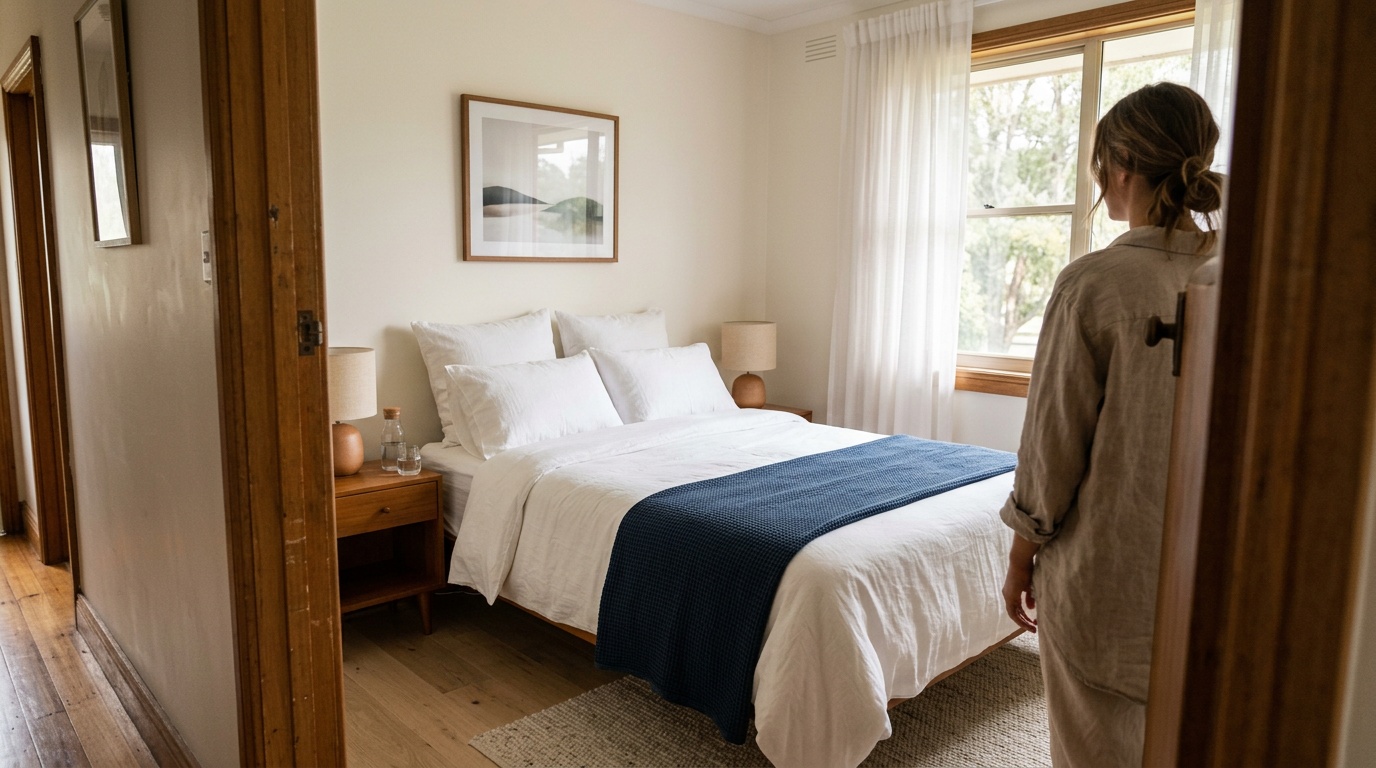
Your listing has been live for three weeks. The views are trickling in. The odd enquiry arrives, then ghosts. Meanwhile, the flat two doors down is booked solid through September. You start to wonder: is the problem you, or is your postcode simply too crowded?
Understanding Airbnb market saturation metrics is the difference between diagnosing the real issue and wasting time on the wrong fixes. This guide walks you through the exact signals that reveal whether your area is genuinely oversaturated, or whether smarter positioning can still win you bookings in a busy market.
What Are Airbnb Market Saturation Metrics?
Airbnb market saturation metrics measure the balance between guest demand and host supply in a specific location. They tell you whether there are too many listings chasing too few bookings, or whether opportunity still exists for well-optimised properties.
The core metrics include:
- Listing density per square mile: how many active Airbnbs compete in your immediate area
- Average occupancy rate: what percentage of available nights are being booked across comparable properties
- New listing growth rate: how quickly supply is increasing month-on-month
- Seasonality patterns: whether demand peaks cover the annual shortfall
- Price erosion trends: whether nightly rates are falling to chase bookings
A saturated market exhibits high listing density, falling occupancy, aggressive discounting, and minimal differentiation between properties. An undersupplied market shows the opposite: rising prices, high occupancy, and new hosts entering profitably.
How to Check If Your Airbnb Market Is Oversaturated
Start by searching your postcode on Airbnb as if you were a guest booking next weekend. Set the dates, guest count, and any filters that match your property type (entire place, one bedroom, pet-friendly, etc.). Now scroll.
Count how many listings appear in the first three pages of results. If you see more than 30 comparable properties within a half-mile radius, and your own listing doesn't appear in the top 20, you're facing stiff competition. But competition alone doesn't mean saturation.
Next, open ten listings similar to yours. Look at their calendars for the next eight weeks. If fewer than half show solid booking patterns (at least four nights booked per week), that's a warning sign. If most calendars are blank or show only scattered one-night bookings, demand is struggling to absorb supply.
Now check the review velocity. A healthy listing in a balanced market accumulates reviews steadily. If comparable properties have been live for six months but show fewer than ten reviews, they're not booking often. That's a saturation signal.
5 Red Flags Your Airbnb Area Is Too Competitive
1. Your Listing Ranks Beyond Page Two in Search
Airbnb's algorithm prioritises listings with strong booking history, high conversion rates, and guest satisfaction. If your listing consistently appears on page three or later, the algorithm has decided guests prefer other options. In a saturated market, climbing out of that position becomes exponentially harder because the properties above you are also fighting for the same bookings.
What to do: Open an incognito window and search your area with your typical guest parameters. Note which listings appear first. Study their titles, hero photos, pricing, and amenity highlights. Identify what they're doing that you're not. If you'd like an expert breakdown, Zugrow's free listing score shows you exactly where your ranking is being held back.
2. Booking Lead Times Are Collapsing
In a healthy market, guests book weeks or even months ahead for peak dates. In a saturated market, last-minute bookings dominate because guests know they'll find availability and discounts if they wait.
Check your booking history. If most reservations arrive within seven days of check-in, and you're seeing few advance bookings beyond two weeks, that suggests oversupply. Guests have learned they don't need to commit early because there's always another listing available.
3. Competitors Are Stacking Discounts
Open five comparable listings and look at their pricing calendars. If you see permanent weekly discounts of 20 per cent or more, plus last-minute discounts, plus monthly discounts, hosts are competing on price because they can't compete on differentiation.
Price wars are the clearest saturation signal. When hosts can't fill calendars through quality or positioning, they resort to discounting. That drags the entire local market down and makes profitability harder for everyone.
4. New Listings Are Launching Every Week
Search your area and filter results by 'newest'. If you see multiple new listings appearing each week, supply is growing faster than demand. That's sustainable only if tourism or business travel is also rising. If visitor numbers are flat or falling (check your local tourism board or council reports), the market is heading toward saturation.
A sudden influx of new hosts often follows media coverage of Airbnb profitability. The problem: those stories reflect conditions from six or twelve months prior, not the current market. By the time new hosts launch, the opportunity has often passed.
5. Your Enquiries Aren't Converting
You're getting views. You're getting enquiries. But guests aren't booking. They're shopping around, comparing, then either booking elsewhere or abandoning the search entirely.
Low conversion despite healthy traffic means guests are finding better value, better positioning, or better trust signals in competing listings. In a saturated market, the margin for error shrinks. A weak hero photo, vague title, or poorly written description costs you bookings because the next listing down offers clarity and confidence.
When Competition Isn't the Same as Saturation
High competition and genuine saturation are not synonyms. A competitive market with strong underlying demand rewards optimisation. A saturated market punishes everyone, regardless of quality.
Here's the test: if the top-performing listings in your area are still achieving strong occupancy and maintaining price integrity, the market isn't saturated. It's competitive. That means better positioning, sharper titles, stronger photos, and smarter pricing will still win you bookings.
But if even the best listings in your area are struggling, if occupancy is falling across the board, and if prices are dropping despite peak season, that's saturation. At that point, optimisation alone won't solve the problem. You may need to rethink your property type, pivot to mid-term rentals, or accept lower returns.
Understanding where your market sits on that spectrum is critical. Zugrow's competitor analysis helps hosts identify whether their challenges are internal (fixable through optimisation) or external (structural market oversupply).
Airbnb Market Saturation Metrics You Can Track Yourself

You don't need expensive tools to monitor your local market. Here's a simple monthly audit you can run in under an hour.
Track Listing Count
On the first of each month, search your postcode for your property type (e.g., entire flat, one bedroom, within one mile). Record the total number of results. Track this over six months. If the count rises by more than ten per cent, supply is growing. If it falls, hosts are exiting.
Sample Competitor Pricing
Pick five comparable listings and record their weekend and weeknight rates for the same target dates each month. Track the trend. Falling prices signal weakening demand. Rising prices suggest strong occupancy and confidence.
Monitor Calendar Availability
Check those same five listings and count how many nights remain available in the next 30 days. If availability is increasing month-on-month, they're struggling to fill calendars. If it's shrinking, demand is healthy.
Review Accumulation Rate
Note how many reviews each competitor has today. Check again in 30 days. Divide the new review count by days elapsed. A healthy listing in a balanced market earns at least one review per fortnight. Slower accumulation suggests infrequent bookings.
Search Rank Movement
Use an incognito browser and search your area with identical filters each month. Screenshot the first page of results. Track whether your listing (and your competitors) are climbing or falling. Rank volatility suggests algorithm uncertainty or low engagement. Stable high ranks indicate strong performance.
These manual checks give you a qualitative feel for market direction. For a more comprehensive view of how your listing compares, run a free performance audit with Zugrow and see where your pricing, photos, and SEO sit relative to local competition.
How to Compete in a Saturated Airbnb Market
If your analysis confirms oversupply, don't panic. Saturation doesn't mean zero bookings. It means you need to be sharper, more targeted, and more strategic than the competition.
Narrow Your Niche
Generic listings drown in saturated markets. Niche listings thrive. Instead of marketing to 'couples and small families', target 'remote workers needing fast Wi-Fi and desk space' or 'pet owners visiting family nearby'. Specificity converts.
Rewrite your title and description to speak directly to that niche. Add the amenities they care about. Tailor your photos to show the features that matter to them. When a guest searches for exactly what you offer, you'll rank higher than the generic competition.
Differentiate on Amenities, Not Price
Discounting is a race to the bottom. Differentiation is sustainable. Identify which amenities are common in your area (Wi-Fi, TV, kitchen) and which are rare (parking, garden access, EV charging, pet-friendly, baby gear).
If you can add a rare amenity that costs little but matters to a specific guest segment, you've just carved out a competitive edge. A £15 travel cot unlocks the family market. A £20 pet bowl and blanket set unlocks pet owners. A desk and monitor unlock remote workers.
Not sure what your listing is missing? Zugrow's audit highlights amenity gaps that competitors are using to rank higher in filtered searches.
Optimise for Instant Book Conversion
In a saturated market, guests comparison-shop aggressively. The listing that communicates clarity, trust, and value fastest wins the booking. That means your hero photo must grab attention in under two seconds. Your title must communicate the core benefit in one glance. Your first description paragraph must answer the guest's primary question (where is it, what's included, who is it perfect for).
Vague, generic, or slow-to-load listings lose to sharp, specific, high-trust competitors. Review your listing as if you'd never seen it before. If you wouldn't book it in five seconds, neither will a guest.
Price Strategically, Not Desperately
Undercutting the market by 20 per cent doesn't guarantee bookings. It signals desperation and devalues your property. Instead, price at or slightly below the local median, then use dynamic weekend uplifts, last-minute fills, and event-based premiums to capture demand spikes.
Flat pricing is passive. Strategic pricing is active. A well-timed £10 reduction three days before check-in captures a last-minute booking without permanently lowering your rate. A £15 weekend uplift during a local festival extracts premium value when demand peaks.
Want to see how your pricing compares to the market? Zugrow's pricing analysis benchmarks your rates against comparable properties and suggests adjustments that improve occupancy without sacrificing revenue.
Should You Exit a Saturated Airbnb Market?
If your market shows genuine saturation (falling occupancy across all competitors, collapsing prices, and no seasonal recovery), you face a choice: adapt or exit.
Adaptation might mean shifting to mid-term rentals (28 days or longer) where competition is lighter and tenant demand steadier. It might mean targeting corporate guests or relocation bookings instead of tourists. It might mean accepting lower returns but maintaining occupancy through aggressive optimisation.
Exiting might mean returning to long-term tenancies, selling the property, or pausing short-term rentals until the market rebalances. There's no shame in recognising when a market no longer supports profitable hosting. Holding on through prolonged saturation erodes capital and energy.
The key is making the decision based on evidence, not hope. If six months of optimisation (better photos, sharper copy, competitive pricing, niche positioning) haven't moved the needle, the market may simply be oversupplied.
UK Cities with Airbnb Market Saturation Challenges
Certain UK markets have experienced rapid supply growth in recent years, leading to increased competition and thinner margins for hosts.
Edinburgh saw aggressive listing growth ahead of festival season, but regulatory changes and licensing requirements have since tightened supply. Hosts who navigated the licensing process now face less competition, but saturation remains an issue in central zones where tourist demand is concentrated into a few peak months.
Brighton attracted a wave of new hosts during the remote-work boom, but year-round demand hasn't kept pace. Outside summer and bank holiday weekends, occupancy drops sharply. Hosts competing on price alone struggle, while those targeting niche segments (pet-friendly, accessible properties, co-working-friendly setups) maintain healthier calendars.
Manchester and Glasgow both show pockets of saturation in city-centre zones, particularly around major transport hubs. Listings within walking distance of universities or business districts perform better due to consistent weeknight demand. Those relying solely on leisure tourism face tougher competition. For a deeper dive into specific market dynamics, see our guides on Manchester's summer market and Glasgow's competitive landscape.
London remains the most complex UK market. Central zones (Westminster, Camden, Southwark) show saturation in budget-to-mid-tier one-bedroom flats, but undersupply persists in family-sized properties, accessible flats, and pet-friendly homes. Success depends on precise niche positioning rather than generic listings. Our guide to identifying market gaps in London offers tactical advice for hosts navigating this complexity.
Tools and Resources for Tracking Airbnb Market Saturation Metrics
Manual tracking works, but dedicated tools save time and reveal patterns you might miss.
AirDNA offers market-level data on supply growth, occupancy trends, and revenue benchmarks. It's expensive (starting around £20 per month for single-market access), but useful if you're deciding whether to enter or exit a market.
AllTheRooms Analytics provides similar insights with a focus on competitive benchmarking. Again, costly, and best suited to multi-property hosts or those making significant investment decisions.
Mashvisor covers UK markets and includes saturation scoring, though its data accuracy varies by region. Better for initial market research than ongoing tracking.
For most hosts, a combination of manual monthly audits (the process outlined earlier) and a free performance diagnostic like Zugrow's listing score strikes the right balance. You'll understand your local market dynamics without paying for enterprise-level analytics you don't need.
What to Do If Your Listing Isn't the Problem
You've optimised everything. Your photos are professional. Your title is sharp. Your pricing is competitive. You're still not booking. At that point, the issue is almost certainly market saturation, not listing quality.
Here's what to consider:
- Expand your radius: can you market to guests visiting a neighbouring town or attraction, rather than competing in the saturated city centre?
- Target longer stays: weekly or monthly bookings reduce turnover costs and often attract less price-sensitive guests.
- Shift to corporate or relocation: business travellers and relocating professionals book outside peak tourist season and value reliability over Instagram appeal.
- Pause and wait: if saturation is temporary (e.g., post-event supply surge), waiting three to six months may allow weaker competitors to exit.
- Exit gracefully: if the market shows no signs of recovery and your capital is better deployed elsewhere, returning to long-term letting or selling may be the rational choice.
Saturation doesn't mean failure. It means the market has changed, and your strategy needs to change with it.
Frequently Asked Questions
How do I know if my Airbnb market is oversaturated?
Check listing density (more than 30 comparable properties within half a mile), competitor calendar availability (mostly empty in the next 30 days), and pricing trends (falling rates or heavy discounting). If occupancy is low across all competitors and new listings keep launching, your market is likely oversaturated.
Can I still succeed in a saturated Airbnb market?
Yes, if you differentiate through niche targeting, rare amenities, and sharp optimisation. Saturated markets punish generic listings but reward those that solve a specific guest need better than the competition. Focus on a narrow guest segment and tailor your entire listing to them.
What's the difference between a competitive market and a saturated one?
A competitive market has high supply but strong demand, so well-optimised listings still perform well. A saturated market has supply exceeding demand, so even strong listings struggle. Test this by checking whether top-ranked competitors maintain high occupancy and stable pricing. If they do, it's competitive, not saturated.
How often should I check Airbnb market saturation metrics?
Run a full audit monthly: listing count, competitor pricing, calendar availability, review velocity, and search rank. Track trends over six months to distinguish seasonal fluctuations from structural saturation. If metrics worsen consistently for three months or more, take action.
Which UK cities have the most saturated Airbnb markets?
Edinburgh, Brighton, and parts of central London show saturation signals, particularly in budget-to-mid-tier one-bedroom properties. Manchester and Glasgow have pockets of oversupply in city-centre zones. Rural and coastal markets vary widely, so local research is essential before concluding saturation.
Should I lower my price in a saturated market?
Only tactically. Permanent price cuts signal low quality and erode your revenue. Instead, use dynamic pricing: modest last-minute discounts to fill gaps, weekend uplifts during high demand, and event-based premiums. Compete on differentiation and positioning first, price second.
Conclusion
Market saturation is real, but it's not uniform. The same city can contain oversupplied zones and undersupplied niches within a single postcode. Your job as a host is to understand which category your listing falls into, then respond accordingly.
Run the manual checks outlined in this guide. Track the key metrics monthly. If your market is genuinely saturated, adapt your positioning, narrow your niche, or consider alternative rental strategies. If competition is high but demand remains strong, optimisation will still deliver results.
Ready to see how your listing measures up? Get your free performance score at Zugrow and discover exactly where your ranking, pricing, and positioning can improve.