

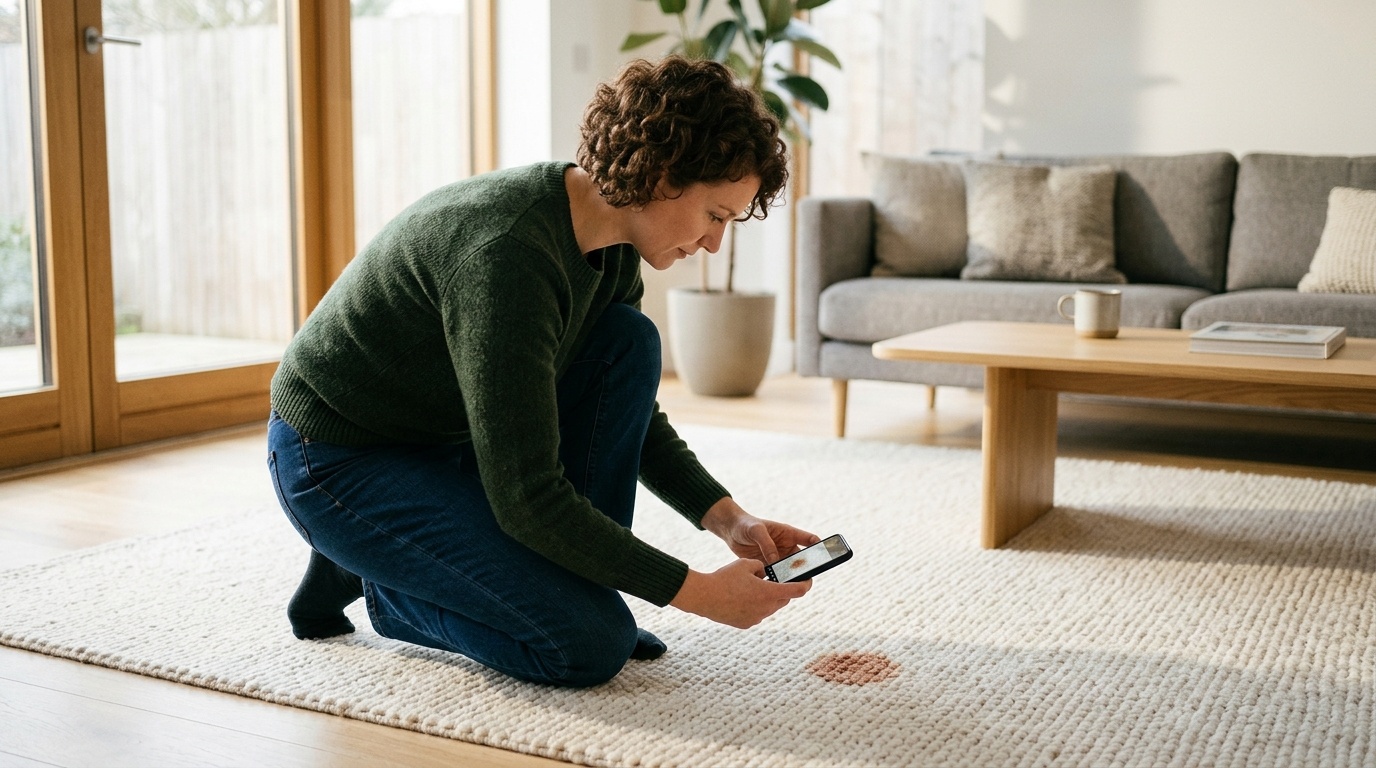
A spilled bottle of red wine on cream carpet. A shattered bathroom mirror. A cigarette burn on the sofa. Guest damage happens, and how you respond in the first hour determines whether you recover the cost or swallow the loss.
This guide walks UK Airbnb hosts through the complete Airbnb guest damage response and claim process, from the moment you discover the damage to closing the claim with Airbnb. You'll learn exactly what to document, what to say (and not say) to the guest, how to file through AirCover, and how to protect yourself if the guest disputes.
What Counts as Claimable Damage on Airbnb?
Claimable damage is physical harm to your property or belongings caused by the guest that goes beyond normal wear and tear. Airbnb distinguishes between reasonable use (a few scuffs on the floor, a stained tea towel) and damage that requires repair or replacement.
Examples of claimable damage:
- Stains or spills that can't be removed with normal cleaning (wine on carpet, grease splatter on walls)
- Broken furniture or fixtures (smashed mirror, snapped bed slat, cracked countertop)
- Burns or holes in upholstery, bedding, or flooring
- Missing items (towels, cookware, remote controls, keys)
- Unauthorised smoking indoors (pervasive smell requiring deep clean or ozone treatment)
- Pet damage when pets were not permitted (scratched doors, chewed skirting boards)
- Excessive cleaning beyond the normal turnover (bodily fluids, glitter, extreme mess)
Not claimable: general dirtiness you'd expect from occupancy, minor scuffs, lightbulb replacement, or items you can't prove were damaged during this specific stay.
Step 1: Document the Damage Immediately (Before You Touch Anything)
The moment you discover damage, stop and photograph everything before cleaning or moving anything. Your photo evidence is the foundation of your claim, and once you've tidied up, you can't recreate the scene.
What to capture:
- Wide shots showing the damaged item in context (the whole room, so Airbnb can see it's your space)
- Close-ups of the damage itself (the stain, the crack, the burn mark)
- Multiple angles to show extent (if a sofa arm is ripped, photograph from front, side, and above)
- Timestamp if possible (most phone cameras embed this in metadata; some hosts take a photo of the damage next to a dated newspaper or their phone screen showing the time)
- Before photos if you have them (from your listing photos, previous turnover, or check-in inspection)
Video walkthroughs are even better. Pan slowly from the door to the damage, narrating what you're seeing ('This is the living room sofa, you can see the cigarette burn on the armrest here'). Video is harder to dispute because it shows continuity.
Don't wait. Airbnb's claim window is tight, and if you delay documentation, the guest can argue the damage happened after their stay.
Step 2: Message the Guest Through Airbnb (Keep It Factual and Calm)
Contact the guest via the Airbnb messaging platform within a few hours of checkout, stay calm, and stick to facts. Do not accuse, threaten, or express anger, your message becomes part of the claim record, and Airbnb reads tone as well as content.
Template message:
Hi [Guest name], I hope you enjoyed your stay. During our post-checkout inspection, we noticed [describe damage: 'a large red wine stain on the bedroom carpet' / 'the bathroom mirror has been cracked']. I've attached photos. I wanted to bring this to your attention straight away. Could you let me know what happened? I'll need to arrange repair/replacement and will be in touch shortly about how to resolve this. Thanks, [Your name]
Why message first? Airbnb's resolution process requires you to attempt direct contact before escalating. It also gives the guest a chance to acknowledge the damage (which strengthens your claim) or offer to pay voluntarily. Sometimes guests genuinely didn't realise, and a polite message resolves everything without involving Airbnb.
Never discuss money amounts in this first message. State the damage, ask what happened, and say you'll follow up. If you demand payment immediately, the guest may feel cornered and become defensive.
For more on crafting effective, professional guest messages, see our guest communication templates for Airbnb hosts.
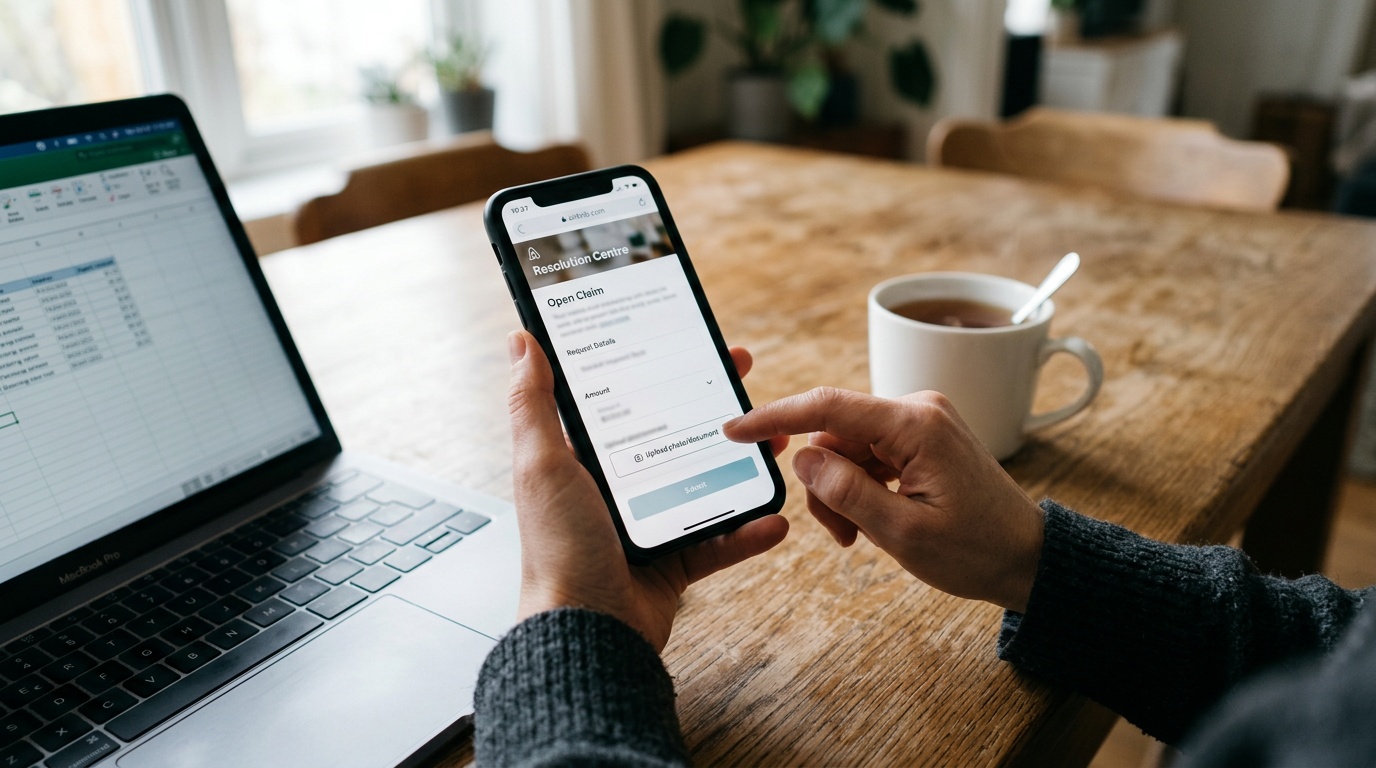
Step 3: Request Money via Airbnb's Resolution Centre (Within 14 Days)
You have 14 days from the guest's checkout to file a damage claim through Airbnb's Resolution Centre. Miss this window and you lose the ability to claim through the platform.
How to file:
- Log in to Airbnb and go to Inbox
- Open the conversation thread with the guest
- Click Send or request money in the top right
- Select Request money
- Choose the reservation from the dropdown
- Enter the amount and select Resolution Centre request as the reason
- Write a clear description: 'Repair cost for [item]. Guest caused [type of damage]. Photos attached.'
- Upload all your photo/video evidence
- Submit
How much to claim: Request the actual cost to repair or replace the damaged item. If a rug is stained beyond cleaning, get a quote from a professional cleaner or look up the replacement cost for a like-for-like item. If a mirror is cracked, screenshot the cost of an identical mirror from the retailer you bought it from. Airbnb won't pay for upgrades, if your £40 Ikea lamp is broken, you can't claim £150 for a designer replacement.
Include receipts or quotes as attachments. If you haven't bought the replacement yet, a screenshot of the product listing with price is acceptable. For professional cleaning or repair, get a written quote on headed paper.
The guest has 72 hours to respond. They can accept and pay, decline, or ignore. If they accept, the money is processed and you're done. If they decline or don't respond, you escalate to Airbnb.
Step 4: Escalate to Airbnb AirCover if the Guest Declines or Ignores
If the guest declines your request or the 72-hour window expires with no response, involve Airbnb immediately. Click Involve Airbnb in the Resolution Centre thread. This triggers a review by Airbnb's claims team, who will assess your evidence and decide whether to approve the claim under AirCover for Hosts.
What Airbnb looks at:
- Photo/video evidence of the damage
- Your description of what happened
- The guest's response (or lack of one)
- Your listing's house rules (if you're claiming for unauthorised smoking, your rules must state 'no smoking')
- Previous reviews of the guest (if other hosts reported damage or rule-breaking, it helps your case)
- Timeliness of your claim (filed within 14 days, documented promptly)
AirCover for Hosts provides up to £1,000,000 in damage protection, but claims are assessed individually. Airbnb may approve the full amount, a partial amount, or deny the claim if evidence is insufficient.
Response time: Airbnb typically responds within a few days to a week. You'll receive an email with their decision. If approved, the payout is processed to your account. If denied, you can appeal by providing additional evidence or clarification.
Common Reasons Airbnb Denies Damage Claims (and How to Avoid Them)
Insufficient evidence is the most common reason claims fail. Airbnb needs to see clear proof that the damage happened during the guest's stay and that it wasn't pre-existing. Blurry photos, photos taken days later, or no before-and-after comparison weaken your case.
Other reasons claims are denied:
- Claimed too late: filed after the 14-day window
- Wear and tear: Airbnb deems the damage normal use (faded fabric, minor scratches)
- No proof of cost: no receipt, quote, or product listing provided
- Rule not listed: you're claiming for a violation (smoking, pets) but your house rules don't mention it
- Guest disputes with counter-evidence: the guest provides their own photos showing the item was already damaged, or claims it was clearly worn before they arrived
- Amount is inflated: you're claiming for a brand-new luxury version of a budget item
How to protect yourself: Take comprehensive before-and-after photos of every area between guests. Store them in a dated folder (cloud storage with timestamps is ideal). If a guest disputes, you can pull out a photo from the previous day showing the sofa was intact. This level of detail takes minutes per turnover but can save you hundreds of pounds in denied claims.
What If the Guest Leaves a Retaliatory Review?
Guests have 14 days to leave a review, the same window you have to file a damage claim. Some hosts worry that claiming for damage will provoke a negative review. It's a legitimate concern, but you have options.
Wait until the review deadline passes before filing your claim if the damage is minor and you're confident you'll win the claim. Once the 14-day review window closes, the guest can no longer post a review. You can then file your damage request without fear of retaliation.
However, this tactic has a downside: you're also waiting to file, which gives the guest more time to argue the damage happened after their stay or that they can't remember the incident. For significant damage, file immediately and accept that a retaliatory review may come.
If you receive a review that's clearly retaliatory (guest mentions the damage claim, threatens you, or makes false accusations), you can flag it to Airbnb for removal. Airbnb's content policy prohibits reviews that discuss resolution claims or violate privacy. Not all retaliatory reviews get removed, but if the guest explicitly references the claim or includes personal attacks, it's worth reporting.
The Role of Your Airbnb Damage Deposit (Security Deposit)
Airbnb no longer offers a traditional security deposit held in escrow. In 2022, Airbnb phased out upfront deposits in favour of AirCover for Hosts, which covers damage claims up to £1,000,000 at no extra cost to hosts or guests.
Previously, hosts could require guests to authorise a deposit (e.g. £200) that would only be charged if damage occurred. This deposit wasn't actually taken from the guest's account unless a claim was approved. Now, all damage claims go through the Resolution Centre and AirCover, with no deposit held.
You can still list a 'damage waiver' or 'security deposit' in your listing settings, but it's informational only, it sets guest expectations and may deter bad behaviour, but it has no binding effect. Airbnb processes damage claims based on evidence, not on whether you've listed a deposit amount.
Preventing Guest Damage: Practical Steps Before They Arrive
The best damage claim is the one you never have to file. While you can't eliminate all risk, clear communication and thoughtful preparation reduce the likelihood of incidents.
Set expectations in your house rules:
- No smoking (including balconies if applicable)
- No parties or events
- Maximum occupancy (additional guests increase wear and damage risk)
- No pets (unless you're pet-friendly, in which case specify size/breed restrictions)
- Shoes off indoors (optional, but reduces floor damage and stains)
- Report spills or breakages immediately (encourage honesty by stating you understand accidents happen)
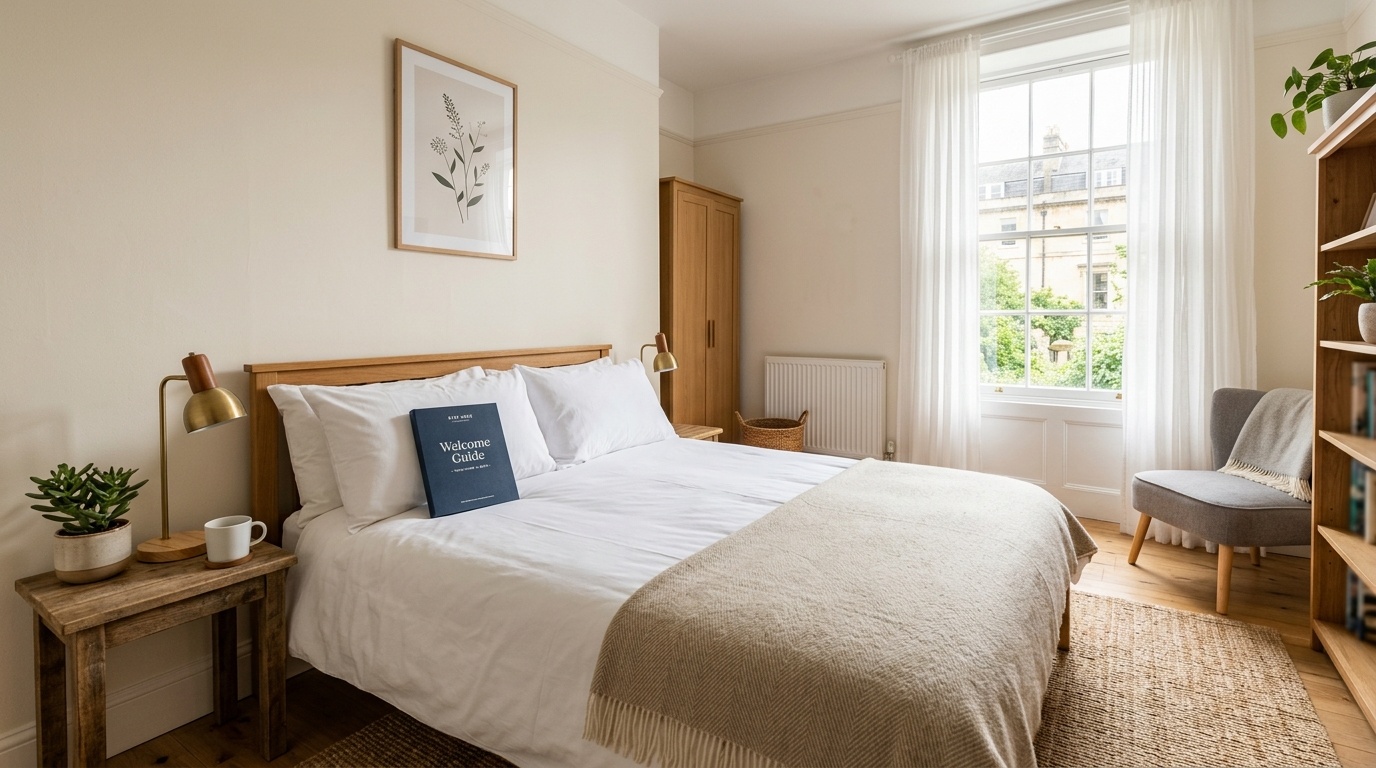
Make sure your house rules are easy to find. Include them in your listing, in your pre-arrival message, and in a printed welcome guide in the property. For a ready-to-use template, see our guest welcome guide UK hosts swear by.
Screen guests carefully. Check profiles for complete information, read previous host reviews, and trust your instinct if a booking request feels off. Guests with no reviews, vague reasons for travel, or a history of rule-breaking are higher risk. Learn more in our guide to Airbnb guest screening legal requirements and best practices.
Remove or secure high-value or fragile items. If you have a family heirloom vase, expensive artwork, or delicate glassware, store it elsewhere. Replace breakables with durable alternatives: melamine plates instead of fine china, laminate instead of marble, washable throws over silk cushions.
Inspect between every stay. Walk through each room as soon as the guest checks out. Catching damage early makes it easier to attribute to the correct guest and file your claim while memories and evidence are fresh.
When to File a Police Report for Theft or Vandalism
If a guest steals high-value items or deliberately vandalises your property, file a police report in addition to your Airbnb claim. Theft and intentional damage are criminal matters, and a police report strengthens your case with Airbnb and your insurer.
Examples that warrant a police report:
- Missing electronics (TV, laptop, tablet) worth over £100
- Jewellery or valuables taken from a locked area
- Deliberate vandalism (graffiti, smashed windows, intentional destruction)
- Break-in or forced entry to locked rooms or safes
Call 101 (the non-emergency police number in the UK) to report the incident. You'll be given a crime reference number. Include this reference in your Airbnb claim, it demonstrates that the incident is serious and that you've taken formal action. Airbnb is more likely to approve high-value theft claims if there's a police report.
Your contents or landlord insurance may also cover guest theft or damage, so check your policy and notify your insurer if the value exceeds your Airbnb claim or if Airbnb denies it.
Using Zugrow to Reduce Risk: Guest Communication and Guidebooks
Clear, proactive communication helps set boundaries and reduces the chance of accidental damage. Guests who understand your house rules, know where everything is, and feel informed are less likely to cause problems.
Zugrow's digital guidebook lets you create a comprehensive welcome guide with house rules, appliance instructions, check-out procedures, and emergency contacts, all accessible on the guest's phone. When guests know how to use the washing machine, where the fuse box is, and what to do if they spill something, they're more confident and careful.
The guidebook costs just £2.95/month and can be updated instantly (no need to reprint). Include a section on reporting damage or breakages, worded gently: 'Accidents happen! If something breaks or spills, please let us know straight away so we can sort it out. We'd much rather hear from you than discover it at checkout.'
This approach encourages honesty. A guest who breaks a glass and tells you immediately is far easier to work with than one who hides it and lets you find shards during turnover.
What Happens If You Can't Prove Who Caused the Damage?
If you host back-to-back bookings and discover damage after the second guest checks out, but you're not sure which guest caused it, you're in a difficult position. Airbnb requires clear attribution, you must prove the damage occurred during a specific reservation.
This is why same-day turnover inspections are critical. Even if you can't deep-clean between guests, do a quick walk-through and photograph each room. It takes ten minutes and creates a timestamped record. If Guest A checks out at 11am and you photograph an intact sofa at 11.15am, then Guest B checks out and the sofa is stained, you can confidently claim against Guest B.
Without this process, Airbnb will likely deny both claims because you can't meet the burden of proof. The first guest can argue they left everything perfect, and the second guest can claim it was already damaged.
How Long Does It Take to Get Paid After a Claim Is Approved?
If your damage claim is approved, Airbnb processes the payout within a few business days. The money is transferred to your linked payout account (the same one you receive booking payments through). You'll see it as a separate line item labelled 'Resolution payout' or similar.
If the guest agreed to pay voluntarily via the Resolution Centre, payment is usually faster (within 24-48 hours). If AirCover steps in and Airbnb is covering the cost, expect 3-7 business days after approval.
You're not required to wait for the payout before making repairs. If the damage affects your ability to host (a broken bed, a stained carpet), fix it immediately and submit the receipts with your claim. Airbnb understands that delays can cost you future bookings.
Should You Accept an Instant Book After a Damage Claim?
Some hosts switch off Instant Book after a bad experience, fearing they'll attract more problem guests. It's an understandable reaction, but blanket changes based on one incident can hurt your booking rate and Superhost eligibility.
Instead, tighten your Instant Book requirements:
- Require government ID verification
- Require positive reviews from other hosts
- Turn on 'No reviews yet' restriction (guests with no history must send a booking request, not instant book)
These settings filter out brand-new, unverified accounts without losing the Instant Book advantage. You still get the ranking boost and the convenience, but with an extra layer of screening.
If you're unsure whether your listing settings are protecting you, Zugrow's free listing score analyses your configuration and flags any risk areas. It's a quick, no-obligation check that shows you exactly where you stand.
Frequently Asked Questions
How long do I have to file a damage claim with Airbnb?
You have 14 days from the guest's checkout date to file a claim through Airbnb's Resolution Centre. Miss this deadline and you lose the ability to claim via the platform. Always document and file as soon as possible after discovering damage.
Can I claim for damage if the guest has already left a review?
Yes. The review and damage claim processes are separate. A guest's review does not affect your ability to file a claim, and Airbnb will assess your claim based on evidence, not on review sentiment. However, some hosts prefer to wait until the review period closes before filing to avoid retaliation.
What if Airbnb denies my damage claim?
If Airbnb denies your claim, you can appeal by providing additional evidence (more photos, receipts, witness statements) or clarification. If the appeal is also denied, you can pursue the guest directly through small claims court, though this is rarely worth the effort for low-value claims. Always ensure your contents or landlord insurance covers guest damage as a backup.
Do I need to take photos before every guest checks in?
It's best practice to photograph the property after every checkout, before the next guest arrives. This creates a timestamped record proving the condition when each guest took occupancy. Store these photos in a dated cloud folder so you can easily pull up before-and-after comparisons if damage occurs.
Can I charge the guest directly for damage outside of Airbnb?
Airbnb's terms require you to use the Resolution Centre for damage claims. Attempting to collect payment outside the platform (via PayPal, bank transfer, or cash) violates policy and could result in account suspension. Always go through Airbnb's official process, even if the guest offers to pay you directly.
Does AirCover for Hosts replace my own insurance?
No. AirCover is Airbnb's damage protection programme and covers up to £1,000,000 in property damage, but it's not a substitute for comprehensive short-term rental insurance. AirCover assesses claims on a case-by-case basis and may deny coverage. Always maintain your own landlord or specialist short-term rental insurance as primary protection.
Final Checklist: Your Airbnb Guest Damage Response Plan
Print this checklist and keep it in your hosting folder so you're ready the moment damage happens:
- Discover damage → stop and photograph immediately (wide shots, close-ups, video)
- Message the guest via Airbnb within hours, stay calm and factual
- Request money through Resolution Centre within 14 days, include all evidence and receipts
- If guest declines or ignores → involve Airbnb and escalate to AirCover
- If high-value theft or vandalism → file a police report (crime reference number strengthens claim)
- Inspect and photograph between every single guest to prove attribution
- Review your house rules and welcome guide to set clear expectations (Zugrow's digital guidebook makes this easy)
- Screen guests carefully and adjust Instant Book settings to filter risk
Guest damage is stressful, but a structured response protects your income and your sanity. Document thoroughly, act quickly, and keep communication on-platform. With the right process, you recover the cost and move on to welcoming the next five-star guest.
Not sure if your listing is set up to minimise damage risk? Get your free Airbnb listing score from Zugrow and see exactly where you stand, house rules, communication, guest screening, and more. No obligation, just actionable insights to protect your property and your revenue.
Starting out as a UK Airbnb host and want the complete roadmap? Head to our starting an Airbnb in the UK guide for everything you need to know, from legal requirements to your first booking.