

Why 'Rental Property Management Software' Can Mean Two Completely Different Things
If you've typed 'rental property management software' into Google, the results probably confused you. Half the tools talk about rent collection, tenancy agreements, and Section 21 notices. The other half promise dynamic pricing, channel management, and guest messaging. Same search term, entirely different worlds.
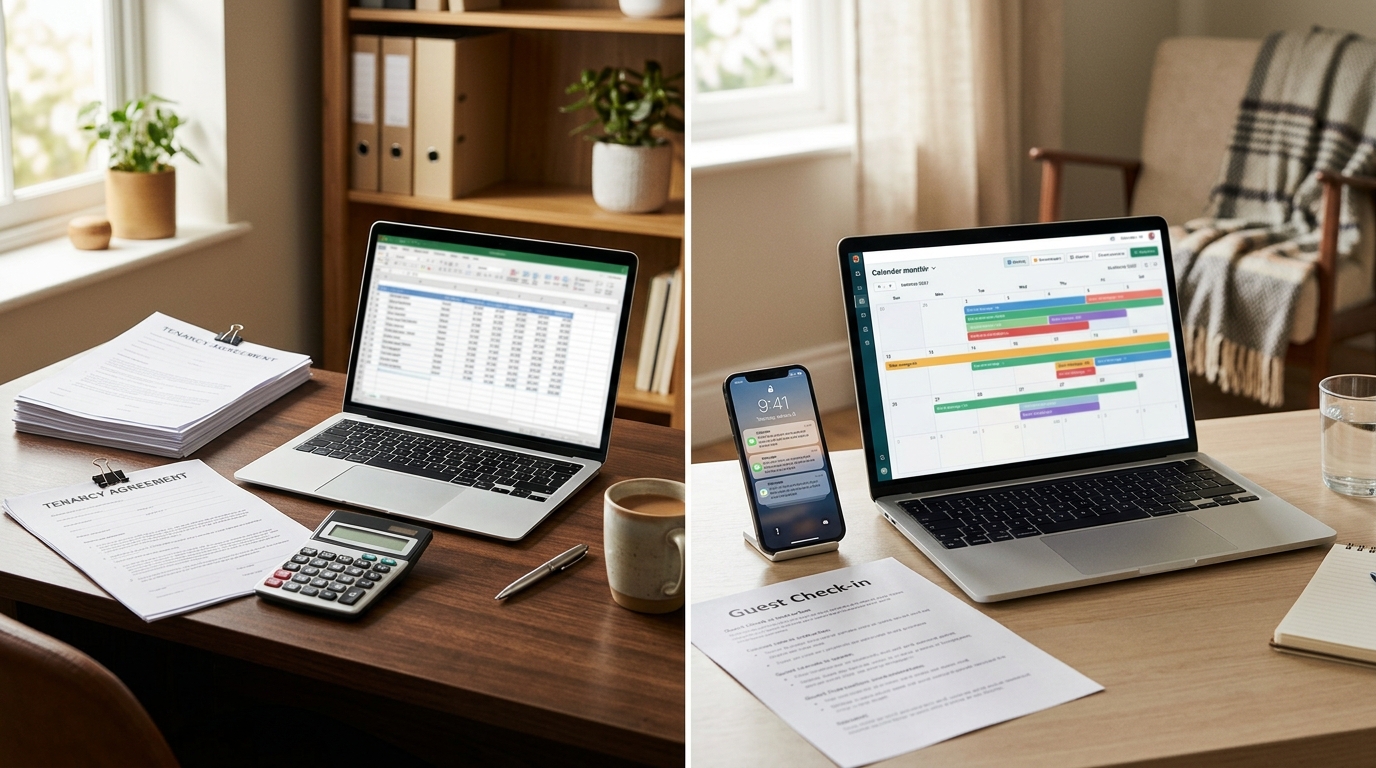
Here's the truth: rental property management software for long-let landlords and short-let hosts solve opposite problems. A long-let landlord needs to collect the same rent on the first of every month from the same tenant for twelve months. A short-let host needs to price tonight differently from Saturday, reply to three guest enquiries before breakfast, and sync calendars across Airbnb, Booking.com, and Vrbo without double-booking.
This article will help you work out which category you belong to, what features actually matter for your rental model, and where to start. If you're running short lets and want to maximise revenue without handing over control to a management company, Zugrow's free Airbnb listing score will show you exactly where your listing is leaking bookings.
Long-Let Rental Property Management Software: What Landlords Actually Need

Traditional buy-to-let landlords rent properties on six- or twelve-month Assured Shorthold Tenancies. Their software priorities revolve around compliance, cash flow, and tenant lifecycle management.
Core Features for Long-Let Landlords
- Rent collection and arrears tracking: Automated payment reminders, direct debit integration, and arrears escalation workflows.
- Tenancy agreement templates: Legally compliant AST contracts, deposit protection scheme integration, and Section 21/Section 8 notice generation.
- Maintenance ticketing: Tenant repair requests, contractor dispatch, and invoice tracking.
- Financial reporting: Profit and loss by property, tax year summaries, and landlord statement exports for accountants.
- Tenant referencing: Credit checks, right-to-rent verification, and employer references, often bundled or integrated.
- Compliance reminders: Gas safety certificates, EPC renewals, electrical inspection deadlines, and smoke alarm regulations.
Popular long-let platforms include Goodlord, Arthur Online, Landlord Studio, and Rent Manager. These tools are built around annual tenancy cycles and predictable monthly income. They don't price by the night, and they don't care about Airbnb search ranking.
When This Software Makes Sense
If your tenant signs a twelve-month contract, pays the same amount every month, and you see them twice a year (move-in inspection and annual gas check), you're a long-let landlord. Your software needs to handle compliance paperwork, not guest messaging.
Short-Let Rental Property Management Software: What Airbnb and Holiday Let Hosts Need
Short-let hosts operate in a different universe. Your property might host fifty different guests in a year. Each booking is a separate transaction with its own pricing, check-in, house rules, and review. Your software needs to handle real-time availability, dynamic pricing, multi-channel distribution, and guest communication, none of which matter to a long-let landlord.
Core Features for Short-Let Hosts
- Channel management: Sync your calendar, rates, and availability across Airbnb, Booking.com, Vrbo, and direct booking sites in real time. A double-booking costs you a cancellation penalty and a furious guest review.
- Dynamic pricing: Adjust nightly rates based on local demand, seasonality, events, day of the week, and competitor pricing. Flat pricing leaves money on the table every weekend and holiday.
- Guest messaging automation: Pre-arrival instructions, check-in codes, checkout reminders, and review requests. Manually typing the Wi-Fi password fifty times a year is not a business model.
- Booking management: Centralised inbox for enquiries across platforms, instant booking rules, and minimum stay filters.
- Guidebook and house rules: Digital welcome packs with local recommendations, appliance instructions, and emergency contacts. Zugrow's digital guidebook costs £2.95/month and eliminates the 'how does the heating work?' messages at midnight.
- Performance analytics: Occupancy rates, average daily rate (ADR), revenue per available night (RevPAN), and competitor benchmarking.
- Listing optimisation tools: Title and description analysis, photo quality scoring, amenity gap detection, and SEO suggestions to improve Airbnb search ranking.
Short-let software is built around nightly volatility and guest turnover. If you're not adjusting your price for the Edinburgh Festival, the Chelsea Flower Show, or a local marathon, you're losing bookings to hosts who are.
When This Software Makes Sense
If your property is listed on Airbnb, Booking.com, or any nightly rental platform, you need short-let software. Your pricing changes by the day, your guests change every few nights, and your biggest revenue risk is underpricing peak demand or getting buried in search results.
Not sure where your listing stands? Get your free Airbnb performance score from Zugrow and see exactly how your title, photos, pricing strategy, and amenities compare to local competitors.
The Features That Don't Overlap (And Why That Matters)
Here's what catches new hosts out: long-let and short-let software share almost no features. Buying the wrong category wastes money and solves none of your problems.
What Long-Let Software Can't Do for Short-Let Hosts
- No channel management: Long-let tools don't connect to Airbnb or Booking.com APIs. You can't sync calendars or pull booking data.
- No dynamic pricing: Rent is fixed monthly. Long-let software has no concept of weekend uplift, seasonal demand, or event-based pricing.
- No guest messaging automation: One tenant per year doesn't need automated check-in instructions. Fifty guests do.
- No listing optimisation: Long-let landlords don't compete in search algorithms. Short-let hosts live or die by Airbnb ranking.
What Short-Let Software Can't Do for Long-Let Landlords
- No AST contract templates: Short-let platforms don't generate tenancy agreements or Section 21 notices.
- No deposit protection integration: Guest security deposits are held by the platform (Airbnb, Booking.com). Long-let deposits must be protected in a government-approved scheme within 30 days.
- No rent arrears workflow: Short-let platforms charge guests upfront. There's no concept of 'tenant hasn't paid this month.'
- No compliance reminders: Short lets have different safety regulations (fire risk assessments, PAT testing for appliances). Long-let compliance (EPC, gas safety, right-to-rent) isn't tracked.
Bottom line: If you try to run a short let using long-let software, you'll manually copy-paste bookings, miss pricing opportunities, and double-book your property. If you try to run a long let using short-let software, you'll have no tenancy agreement, no deposit protection, and no way to chase arrears.
How to Choose the Right Rental Property Management Software for Your Model

Work through this decision tree:
Step 1: What's Your Typical Booking Length?
- Six months or longer: You're a long-let landlord. Look at Goodlord, Arthur Online, or Landlord Studio.
- One night to a few weeks: You're a short-let host. You need software built for Airbnb, Booking.com, and holiday lettings.
- Both (mid-term rentals, serviced accommodation for contractors): You're in the messy middle. Prioritise short-let software with flexible minimum stays, then bolt on separate accounting for compliance.
Step 2: How Many Bookings Do You Process Per Year?
- One or two (same tenant, annual renewal): Long-let software. Your workflow is tenancy lifecycle, not guest turnover.
- Twelve or more (different guests, nightly or weekly bookings): Short-let software. You need automation for messaging, pricing, and calendar sync.
Step 3: Do You List on Airbnb, Booking.com, or Vrbo?
- No, listed on Rightmove, Zoopla, OpenRent, or SpareRoom: Long-let software.
- Yes, listed on any nightly rental platform: Short-let software. Your calendar and pricing must sync across channels, or you'll double-book.
Step 4: Does Your Pricing Change by the Day?
- No, fixed monthly rent: Long-let software. You don't need dynamic pricing.
- Yes, weekends, holidays, and local events cost more: Short-let software. Flat pricing is leaving money on the table.
If you're a short-let host who wants to self-manage but needs expert help with pricing, title optimisation, and amenity strategy, Zugrow's free listing score will tell you exactly where you're losing bookings. We're not a property management company, we help you run your listing better yourself.
The Software Categories Within Short-Let Management (And What Each One Does)
Once you've confirmed you need short-let software, you'll find three distinct tool categories. Most hosts need more than one.
1. Channel Managers (The Plumbing)
Channel managers connect your property to multiple booking platforms and keep everything in sync. When a guest books on Airbnb, the channel manager blocks those dates on Booking.com and Vrbo instantly. Popular options include Hostfully, Guesty, Lodgify, and Smoobu.
What they do well: Prevent double-bookings, centralise your inbox, and distribute your listing across platforms.
What they don't do: Optimise your listing for search ranking, improve your photos, or tell you whether your title is costing you clicks. They keep the pipes flowing; they don't fix leaks.
For a detailed comparison of the leading platforms, read our guide to the best Airbnb management software in 2026.
2. Dynamic Pricing Tools (The Revenue Engine)
Dynamic pricing software adjusts your nightly rate based on local demand, competitor pricing, seasonality, day of the week, and how far in advance the booking is made. Tools like PriceLabs, Beyond Pricing, and Wheelhouse automate what would otherwise require daily manual updates.
What they do well: Capture premium rates during high-demand periods and fill gaps with strategic discounts during low season.
What they don't do: Fix your listing if it's not showing up in search. You can't price your way out of poor SEO.
If you're unsure whether your pricing strategy is working, Zugrow's free analysis includes a competitor pricing benchmark and shows you whether you're leaving money on the table.
3. Listing Optimisation Platforms (The Revenue Multiplier)
Optimisation tools analyse your Airbnb title, description, photos, amenities, and pricing strategy, then tell you exactly what's stopping you from ranking higher and getting more bookings. This is where Zugrow lives.
What they do well: Identify why your listing isn't showing up in search, spot amenities you're missing that guests filter for, rewrite your title for SEO, and score your photos against competitor listings.
What they don't do: Manage bookings, sync calendars, or handle guest check-ins. Optimisation platforms make your listing perform better. Channel managers and pricing tools keep it running.
Most successful short-let hosts use all three categories: a channel manager for multi-platform distribution, a dynamic pricer for revenue management, and an optimisation platform to fix the leaks. If you're just starting out or running a single property, start with optimisation, it's the highest ROI and costs the least. A better title and photo order can double your click-through rate overnight.
Curious where your listing stands? Get your free Airbnb performance score and see your title, photos, pricing, and amenities scored against local competitors.
Do You Need Paid Software at All? (The Free and Low-Cost Options)
If you're running a single property and listing only on Airbnb, you might not need paid software yet. Here's what you can do for free or cheap:
Free Tools and Native Platform Features
- Airbnb's native calendar and messaging: Handles booking management and guest communication for a single listing. No channel sync, no automation, but it works.
- Airbnb Smart Pricing: Free dynamic pricing built into the platform. It's conservative and often underprices, but it's better than flat rates.
- Canva or Pixlr: Free photo editing to brighten images and crop to 4:3 ratio.
- Google Sheets: Track your bookings, revenue, and occupancy manually. Tedious, but free.
- Zugrow's free listing score: Analyses your title, photos, pricing, and amenities with specific suggestions. No card required. Get your score here.
When to Upgrade to Paid Software
You'll know it's time when:
- You add a second property and can't keep two calendars in your head.
- You list on Booking.com or Vrbo and risk double-booking.
- You spend more than an hour a week manually adjusting prices.
- You miss enquiries because you're juggling three inboxes.
- Your occupancy is below your competitors', and you don't know why.
For a breakdown of what different portfolio sizes actually require, read our deep dive on what running 24 properties really takes.
What Zugrow Does (And Why We're Not a Property Management Company)
Zugrow sits in the listing optimisation category. We analyse your Airbnb listing and tell you exactly what's stopping you from ranking higher and earning more. We don't manage bookings, sync calendars, or handle guest check-ins. We help you self-manage better.
What You Get from Zugrow
- Free Airbnb listing score: Title, photos, pricing strategy, amenities, and competitor benchmarking. Delivered in minutes. Start here.
- SEO title and description rewrite: We rewrite your listing copy to rank higher in Airbnb search and convert more clicks.
- Photo optimisation: We score your images against competitors and tell you which shots to reshoot, reorder, or replace.
- Pricing strategy analysis: We benchmark your rates against local demand and show you where you're underpricing or overpricing.
- Amenity gap detection: We identify high-value amenities your competitors have that you're missing, the ones guests actually filter for.
- Competitor analysis: We show you how your listing stacks up and what the top-performing properties in your area are doing differently.
Zugrow is for hosts who want to keep control of their property but need expert guidance on what to fix. If you're choosing between DIY hosting and hiring a full-service management company, we're the middle ground. You stay in charge. We show you what's leaking revenue.
The Biggest Mistake New Hosts Make When Choosing Software
Here it is: buying a channel manager before fixing your listing.
A channel manager will happily distribute a terrible listing across five platforms. You'll pay monthly fees to get low search ranking and poor conversion on Airbnb and Booking.com and Vrbo. Scaling a broken listing doesn't fix it. It just makes the problem more expensive.
Start with optimisation. Fix your title, photos, amenities, and pricing strategy first. Once your listing converts and ranks well on one platform, then invest in distribution and automation.
The free listing score from Zugrow takes three minutes and shows you exactly where to start. No card, no upsell pressure, just a prioritised list of fixes that will move your occupancy and revenue.
Rental Property Management Software: Summary and Next Steps
If you're a long-let landlord, you need software that handles tenancy agreements, rent collection, compliance deadlines, and arrears. Look at Goodlord, Arthur Online, or Landlord Studio.
If you're a short-let host, you need software that handles channel sync, dynamic pricing, guest messaging, and listing optimisation. Start with optimisation (highest ROI, lowest cost), then add a channel manager as you scale, and bolt on dynamic pricing once you've fixed your listing fundamentals.
The single biggest mistake is trying to use long-let software for short lets, or vice versa. They solve opposite problems. Choose the category that matches your booking model, not the one with the prettiest website.
Ready to see where your short-let listing stands? Get your free Airbnb performance score from Zugrow and find out what's quietly costing you bookings.
Frequently Asked Questions
What is the best free rental property management software?
For long-let landlords, OpenRent offers free tenant referencing and rent collection with optional paid add-ons. For short-let hosts, Airbnb's native tools handle single-property booking and messaging for free, though you'll outgrow them quickly. Zugrow's free listing score analyses your Airbnb performance with specific optimisation suggestions at no cost.
Can I use the same software for long lets and short lets?
No. Long-let software handles tenancy agreements, deposit protection, and monthly rent collection. Short-let software handles nightly pricing, channel sync, and guest turnover. The feature sets don't overlap. Trying to use one for the other creates compliance gaps, missed bookings, and manual workarounds.
Do I need property management software if I only have one Airbnb?
Not immediately. Airbnb's native calendar and messaging work fine for a single listing on one platform. But you'll benefit from listing optimisation (better title, photos, pricing) and a digital guidebook to reduce guest questions. Once you list on multiple platforms or add a second property, channel management software becomes essential to prevent double-bookings.
What's the difference between a channel manager and listing optimisation software?
A channel manager syncs your calendar and bookings across Airbnb, Booking.com, Vrbo, and other platforms. It prevents double-bookings and centralises messaging. Listing optimisation software analyses your title, photos, amenities, and pricing to help you rank higher in search and convert more clicks into bookings. Most hosts need both, but optimisation delivers faster ROI.
Is rental property management software worth it for landlords?
If you're managing multiple tenancies, chasing rent arrears, or struggling with compliance deadlines, paid software pays for itself in time saved and penalties avoided. For a single long-let property with a reliable tenant, free tools like spreadsheets and OpenRent may suffice. For short-let hosts, software isn't optional once you scale past one property or list on multiple platforms.
Can property management software help me increase my Airbnb revenue?
Listing optimisation software can, by fixing the structural problems that stop guests from finding and booking your property. Dynamic pricing tools help you capture more revenue from existing demand. Channel managers don't directly increase revenue, they distribute your listing and prevent operational errors. Start with optimisation, add pricing automation second, and scale with channel management third.