

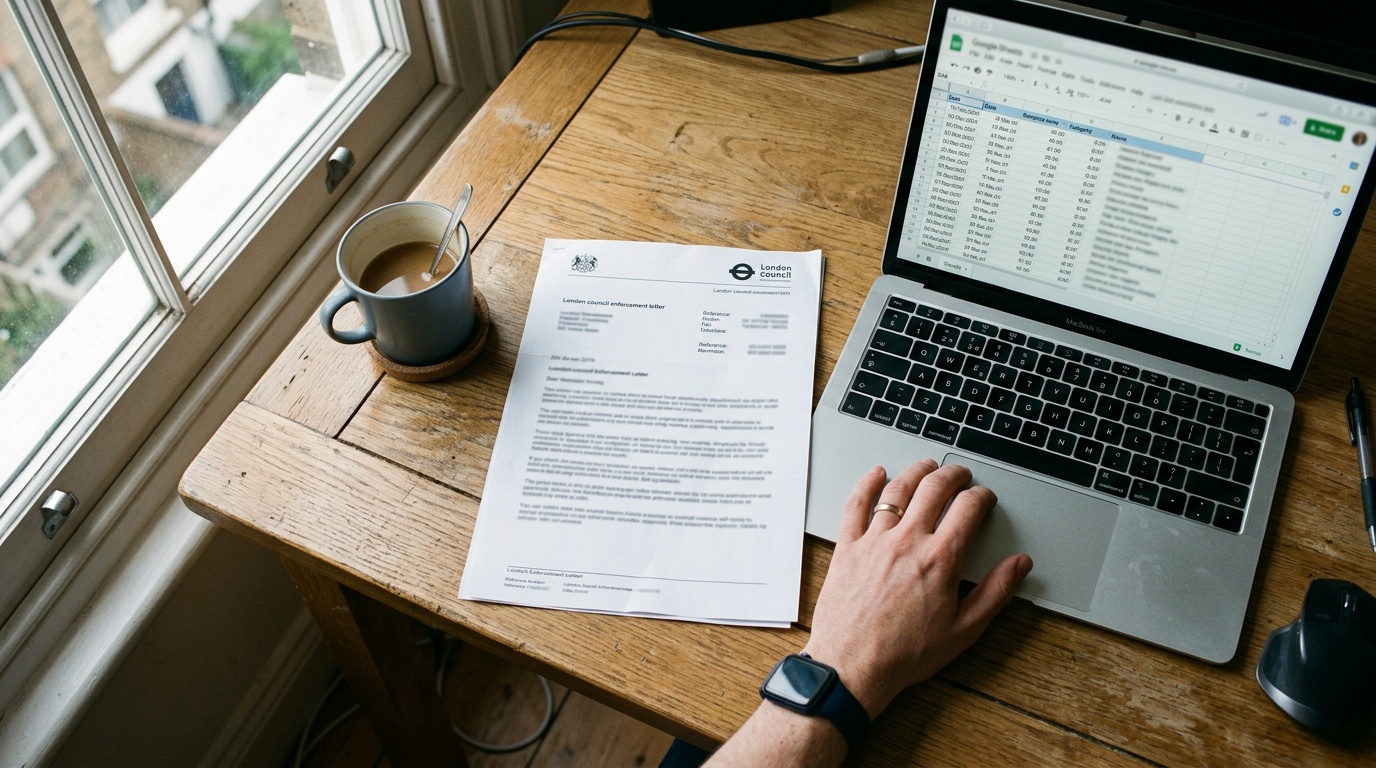
A London host renting their flat for exactly ninety nights a year receives an email from the council asking why their tax return shows more income than ninety nights would generate. The reason? HMRC and local planning enforcement teams can now cross-reference income declarations against booking records, and the assumptions councils make about nightly rates don't always match reality.
If you're a short-term rental host in London, the interplay between the London 90-day rule and HMRC reporting is no longer theoretical. Since the introduction of mandatory digital platform reporting in January 2024, Airbnb and other platforms automatically share host data with HMRC. That data can be shared onwards with local councils for planning enforcement purposes, creating a direct line from your booking calendar to your local authority's inbox.
Here's what actually gets shared, how enforcement works, and what you need to know to stay compliant on both the tax and planning fronts.
What Is the London 90-Day Rule?
The London 90-day rule limits short-term lets of entire homes to ninety nights per calendar year without planning permission. It applies to all London properties used as a primary residence, covering any letting of fewer than ninety consecutive nights to the same guest.
The rule exists to protect residential housing stock. If you want to let your home for more than ninety nights a year, you must apply for a change of use under planning law. Without it, you're in breach, and councils have the power to investigate, fine, and in extreme cases prosecute.
The difficulty for councils has always been enforcement. Until recently, identifying hosts who exceeded the limit required time-consuming detective work: scraping listings, monitoring availability calendars, and cross-referencing addresses. That has changed with the arrival of mandatory HMRC reporting from digital platforms.
What Data Does Airbnb Share With HMRC?
From January 2024, Airbnb and other short-term rental platforms must report host earnings, booking counts, and property addresses to HMRC under the OECD's Common Reporting Standard for digital platforms. This happens automatically. You don't need to opt in, and you can't opt out.
The data shared with HMRC includes:
- Your full name, address, and National Insurance or UTR number
- The address of each property you list
- Total gross earnings for the tax year (before Airbnb's service fee)
- The number of nights booked (not just availability, but actual reservations completed)
- The number of transactions (bookings)
HMRC receives this data annually in a structured digital format. It sits alongside your Self Assessment return, your RTI payroll data if you're employed, and any other income streams HMRC already knows about. The intent is to close the tax gap by making it impossible for hosts to underreport income.
For more detail on how this reporting obligation works and what it means for your tax return, read our guide on whether HMRC checks Airbnb income.
Does HMRC Share Airbnb Data With Local Councils?

Yes. HMRC can share host data with local authorities for the purposes of enforcing planning and licensing regulations, including the 90-day rule. This is permitted under existing data-sharing gateways between HMRC and public bodies, and councils have begun requesting this information as part of targeted enforcement operations.
The legal basis for this sharing is found in the Commissioners for Revenue and Customs Act 2005 and the Crime and Courts Act 2013, which allow HMRC to share taxpayer information with public authorities where it is necessary for the prevention or detection of crime (including planning breaches) or for the discharge of a statutory function.
Councils can request data in two ways:
- Bulk requests: A council asks HMRC for a list of all short-term rental hosts operating within their borough, along with booking counts and income for a given tax year.
- Targeted requests: A council investigating a specific address or host asks HMRC to confirm income and booking records for that property.
Several London boroughs have publicly stated they are working with HMRC to identify non-compliant hosts. Westminster, Camden, Tower Hamlets, and Islington have all referenced HMRC data-sharing in enforcement communications sent to hosts.
How Do Councils Use HMRC Data to Enforce the 90-Day Rule?
Councils cross-reference HMRC income data against the expected earnings from ninety nights to identify hosts who may have exceeded the limit. If the income declared on your tax return is higher than what ninety nights at a reasonable nightly rate would generate, you may receive a formal investigation notice.
Here's a worked example. Suppose you own a one-bedroom flat in Hackney. The council receives HMRC data showing you earned £12,000 in gross Airbnb income last year. The council's enforcement officer looks at comparable listings in your area and estimates an average nightly rate of £100. Ninety nights at £100 equals £9,000. Your £12,000 income suggests you let the property for approximately 120 nights.
The council writes to you requesting evidence of compliance: booking records, a breakdown of your calendar, and proof that any additional income came from longer lets (which don't count towards the ninety-day limit) or multiple properties. If you can't provide satisfactory evidence, the council may issue an enforcement notice requiring you to cease trading or apply for planning permission.
This method is not foolproof. Councils make assumptions about nightly rates that may not reflect reality. If you charge premium rates during peak season, you could legitimately earn £12,000 in fewer than ninety nights. Conversely, if you offer deep discounts or host longer stays, your income might look suspiciously low. The important point is that councils now have a starting point for investigations that previously required manual scraping and guesswork.
What If You Host Multiple Properties?
If you manage more than one property, HMRC data includes the address of each listing. Councils can see that you operate several properties and calculate compliance on a property-by-property basis. This is important: the ninety-day limit applies per property, not per host. If you have three flats, each one can be let for up to ninety nights without planning permission. Your total income might be £36,000, which looks high, but if it's split evenly across three addresses, you're compliant.
The challenge is proving the split. HMRC data may not break down income by property in a format councils find easy to interpret, so you may need to provide your own records: Airbnb's transaction history, booking confirmations, or a spreadsheet reconciling income to addresses and dates.
What Happens If You're Investigated?
If a council believes you have breached the 90-day rule, it will send a formal investigation notice asking for evidence of compliance. This is your opportunity to provide documentation proving you stayed within the limit or that the income arose from exempt lettings (such as stays longer than ninety consecutive nights to a single guest).
What councils typically request:
- A full breakdown of bookings for the calendar year, including guest names, check-in and check-out dates, and nightly rates
- Copies of your Airbnb transaction history or payout statements
- Evidence of any long-term lets (tenancy agreements, emails from guests, booking platform records for stays exceeding ninety nights)
- Proof that you live at the property as your main residence (council tax bills, utility bills, voter registration)
If you can demonstrate compliance, the investigation closes. If you can't, the council may issue a planning enforcement notice. This is a legal order requiring you to stop short-term letting or apply retrospectively for planning permission. Ignoring an enforcement notice is a criminal offence and can result in prosecution, fines of up to £20,000, and an order to repay unlawfully earned income.
For context on other London regulations you need to be aware of beyond the 90-day rule, see our guide on Airbnb regulations in London.
Can You Stay Under the Radar by Not Declaring Income?
No. Airbnb reports your income to HMRC automatically, so HMRC already knows what you earned even if you don't declare it on your tax return. If your Self Assessment return shows no rental income but HMRC's platform data shows £8,000 in Airbnb earnings, you will receive a tax correction notice and potentially a penalty for deliberate underreporting.
This is a common misconception. Hosts sometimes assume that if they don't declare income, the council won't find out. In reality, HMRC's data creates a permanent record, and councils can request it for enforcement purposes regardless of what you filed on your return.
Moreover, underreporting creates a second problem: if the council investigates and you can't produce a credible income trail because you didn't declare it, you lose the ability to defend yourself with documentation. You're simultaneously in breach of planning law and tax law.
If you're unsure how to report your Airbnb income correctly, read our walkthrough on UK Airbnb tax returns and Self Assessment deadlines.
What About Rent-a-Room Relief?
Rent-a-Room relief allows you to earn up to £7,500 per year tax-free from letting furnished accommodation in your main home, but it does not exempt you from the 90-day planning limit. The two rules operate independently: one is a tax relief, the other is a planning restriction.
You can be fully compliant with HMRC by claiming Rent-a-Room relief and still breach the 90-day rule if you exceed ninety nights of short-term letting. Conversely, you can stay within the ninety-night limit but still owe tax if your income exceeds £7,500 or you choose not to claim the relief.
Councils are aware of this distinction and will not accept 'but I'm under the Rent-a-Room threshold' as a defence if you've let your property for 120 nights. The relief affects your tax bill, not your planning compliance.
How to Stay Compliant With Both HMRC and the 90-Day Rule
Track every booking with check-in and check-out dates, and reconcile your calendar against the ninety-night limit monthly. Keep a spreadsheet or use a calendar tool that counts nights automatically. Do not rely on memory or rough estimates.
Here's a simple compliance checklist:
- Count nights correctly: A guest checking in on Friday and out on Sunday counts as two nights (Friday and Saturday). The checkout day does not count unless the guest stays that night.
- Exclude long lets: If a single guest stays for more than ninety consecutive nights, those nights do not count towards the ninety-day limit. Keep proof: booking confirmations, messages, and checkout records.
- Keep records for six years: Councils can investigate retrospectively. HMRC and planning enforcement teams may ask for evidence from previous tax years.
- Declare all income: Even if you're within the ninety-night limit, you must declare income on your Self Assessment return or claim Rent-a-Room relief. HMRC already has the data from Airbnb.
- Respond promptly to council enquiries: If you receive an investigation notice, reply within the deadline (typically 28 days) with full documentation. Ignoring it does not make the problem go away.
If you're juggling pricing strategy, listing optimisation, and regulatory compliance, Zugrow's free listing score can help you focus on the things that actually drive bookings while staying on top of the rules.
What If You Genuinely Made a Mistake?
If you accidentally exceeded ninety nights and want to regularise your position, stop taking new bookings immediately and consider seeking professional advice. Councils have some discretion in how they handle breaches, and a credible explanation with a clear plan to comply going forward is better received than silence or defiance.
Options include:
- Ceasing short-term letting: If you only marginally exceeded the limit, you can stop hosting and provide evidence that you will not do so again.
- Applying for planning permission: If you want to continue hosting beyond ninety nights, submit a change-of-use application to your council. Approval is not guaranteed, particularly in boroughs with tight housing policies, but it's the lawful route.
- Switching to longer lets: If your business model allows, consider targeting guests who will stay more than ninety consecutive nights. These lets are exempt from the ninety-day rule and still generate income.
Councils are generally more lenient with hosts who self-report and take corrective action than with those who wait to be caught.
Do All London Boroughs Enforce the 90-Day Rule Equally?
No. Enforcement varies significantly by borough. Westminster, Camden, Tower Hamlets, Islington, and Hackney are known for active enforcement, including proactive use of HMRC data, dedicated short-term let enforcement officers, and public communications warning hosts of penalties. Other boroughs take a more reactive approach, investigating only when a complaint is made by a neighbour or resident.
The level of enforcement often correlates with housing pressure. Boroughs with acute affordability issues and high concentrations of short-term lets tend to be more aggressive. That said, even boroughs with historically light enforcement are beginning to request HMRC data as the mechanism becomes easier to use.
Do not assume your borough doesn't care. The infrastructure for enforcement now exists across London, and political pressure to protect housing stock is increasing.
How Can You Prove Compliance if Investigated?
The best evidence is a complete booking log with dates, guest names, and nightly breakdowns, cross-referenced to your Airbnb payout statements and transaction history. Councils will check that the nights you claim match the income you received.
What makes compelling evidence:
- Airbnb's own reports: Download your transaction history from the Airbnb host dashboard. It shows every booking, check-in/check-out dates, payout amounts, and service fees.
- A reconciliation spreadsheet: Create a simple table listing each booking with dates, guest names, number of nights, and total income. Sum the nights column to prove you stayed under ninety.
- Proof of exemptions: If you had long-term guests (stays over ninety consecutive nights), include booking confirmations, messages agreeing the extended stay, and evidence the guest actually remained for the full period.
- Council tax and residency proof: To qualify for the ninety-day allowance, the property must be your main home. Councils may ask for council tax bills showing a single-occupancy discount, utility bills in your name, or voter registration.
The more detailed and cross-referenced your records, the harder it is for a council to dispute your compliance. If you're investigated and your records are incomplete, the council may estimate your letting activity based on HMRC income data and calendar scraping, and that estimate is unlikely to be in your favour.
For guidance on managing guest data compliantly and what records you're required to keep, see our article on Airbnb data protection and GDPR for UK hosts.
What About Other Platforms Like Booking.com and Vrbo?
All digital platforms facilitating short-term accommodation in the UK are subject to the same HMRC reporting rules as Airbnb. If you list on Booking.com, Vrbo, or a direct booking site that processes payments, those platforms must also report your income and booking data to HMRC.
This means you cannot avoid the London 90-day rule by spreading bookings across multiple platforms. HMRC receives data from all sources, and councils investigating your compliance can request the combined total. If you take sixty nights via Airbnb and forty via Booking.com, you've exceeded the limit, and both platforms will have reported your activity.
Hosts considering direct bookings to avoid platform reporting should note that payment processors and banks are also increasingly required to report business income. The direction of travel is towards full transparency, not less. If you're exploring direct booking tools to diversify away from Airbnb's fees and policies, our guide to the best direct booking software with no commission covers the practical side.
Frequently Asked Questions
Does HMRC automatically tell councils if I exceed 90 days?
No, HMRC does not automatically flag individual hosts to councils. Councils must request the data, either as part of a targeted investigation or a bulk enforcement sweep. However, the infrastructure for sharing now exists, and many London boroughs are actively using it.
Can I appeal if the council's income estimate is wrong?
Yes. If a council accuses you of breaching the 90-day rule based on an income estimate and you believe the estimate is incorrect, you can provide your own records showing actual nightly rates and booking dates. Councils are required to consider evidence you supply before issuing an enforcement notice.
What if my income came from multiple properties?
HMRC data includes property addresses, so you can demonstrate that income was spread across multiple listings, each of which may be compliant individually. You will need to provide a breakdown showing which bookings relate to which address.
Do I need to declare Airbnb income if it's under the Rent-a-Room threshold?
You must either declare the income and claim Rent-a-Room relief, or declare it and pay tax on profits, or tick the Rent-a-Room relief box on your Self Assessment return and provide no further detail if your total rent-a-room income is under £7,500. You cannot simply omit the income from your return, because HMRC already knows about it from Airbnb's reporting.
Can the council fine me for exceeding 90 days?
Yes. If you breach the 90-day rule and ignore an enforcement notice, you can be prosecuted in the magistrates' court and fined up to £20,000. Councils can also seek a confiscation order requiring you to repay income earned from unlawful letting.
How do councils know my nightly rate if Airbnb only reports total income?
Councils estimate nightly rates by scraping your listing or comparing your property to similar listings in the area. These estimates are not always accurate, which is why it's important to keep your own detailed records so you can challenge an incorrect assumption.
Final Thoughts
The era of councils relying on neighbour complaints and manual detective work to enforce the London 90-day rule is over. HMRC data-sharing has handed local authorities a ready-made compliance tool, and London boroughs are using it. If you earn income from short-term letting, assume that your council either already has your data or can request it at any time.
The key to staying safe is rigorous record-keeping. Track every booking, reconcile your income against your calendar monthly, and keep documentary evidence for at least six years. Declare all income to HMRC, even if you're claiming Rent-a-Room relief. And if you receive a council investigation notice, respond promptly with complete records.
If you're managing compliance alongside the day-to-day challenge of maximising occupancy and revenue, Zugrow's free listing score can help you see where your listing stands and what you can improve. We analyse your title, photos, pricing, and amenities to show you exactly where you're losing bookings. No obligation, just actionable insights.