


You've just checked your calendar and spotted a gap. Two nights that should've been yours went to the listing three doors down, again. You open their page and discover they've quietly dropped their weekend rate by £15 while you were standing still. By the time you notice, they've already captured the booking.
This is the hidden cost of treating competitor pricing as a one-time check. The hosts who consistently fill their calendars aren't the ones who glanced at rival listings once during setup. They're the ones who've built a rhythm, a disciplined, repeatable system for tracking what comparable properties charge, when they change it, and why.
Airbnb competitor price tracking isn't about obsessively matching every move your neighbours make. It's about spotting patterns, understanding market behaviour, and positioning your listing in the narrow window where you're neither invisibly expensive nor leaving money on the table. In this guide, we'll show you exactly how to build that system, what to track each week, and how to turn pricing intelligence into bookings.
Why One-Off Competitor Checks Miss Half the Picture
Most hosts treat competitor research as a launch-day task. You pick five similar listings, note their nightly rates, set yours somewhere in the middle, and move on. The problem? Those prices are a snapshot, a single frame from a film that never stops moving.
Pricing on Airbnb is dynamic. The host who charged £95 last Tuesday might drop to £78 this Friday because a guest cancelled, or leap to £140 next weekend because a festival was just announced. If you checked their rate once in March and never looked again, you're flying blind.
The hosts who outperform you aren't necessarily better at pricing, they're better at noticing. They know when the flat on the corner slashed rates to fill a gap. They see when the serviced apartment down the road adds weekend uplift. They catch the moment a new listing enters the market and undercuts everyone to build reviews.
A weekly competitor price tracking routine gives you that visibility. It transforms pricing from guesswork into a deliberate, evidence-based decision. You're no longer reacting to mystery gaps in your calendar, you're watching the market move and adjusting before you lose bookings.
What to Track (and What to Ignore)
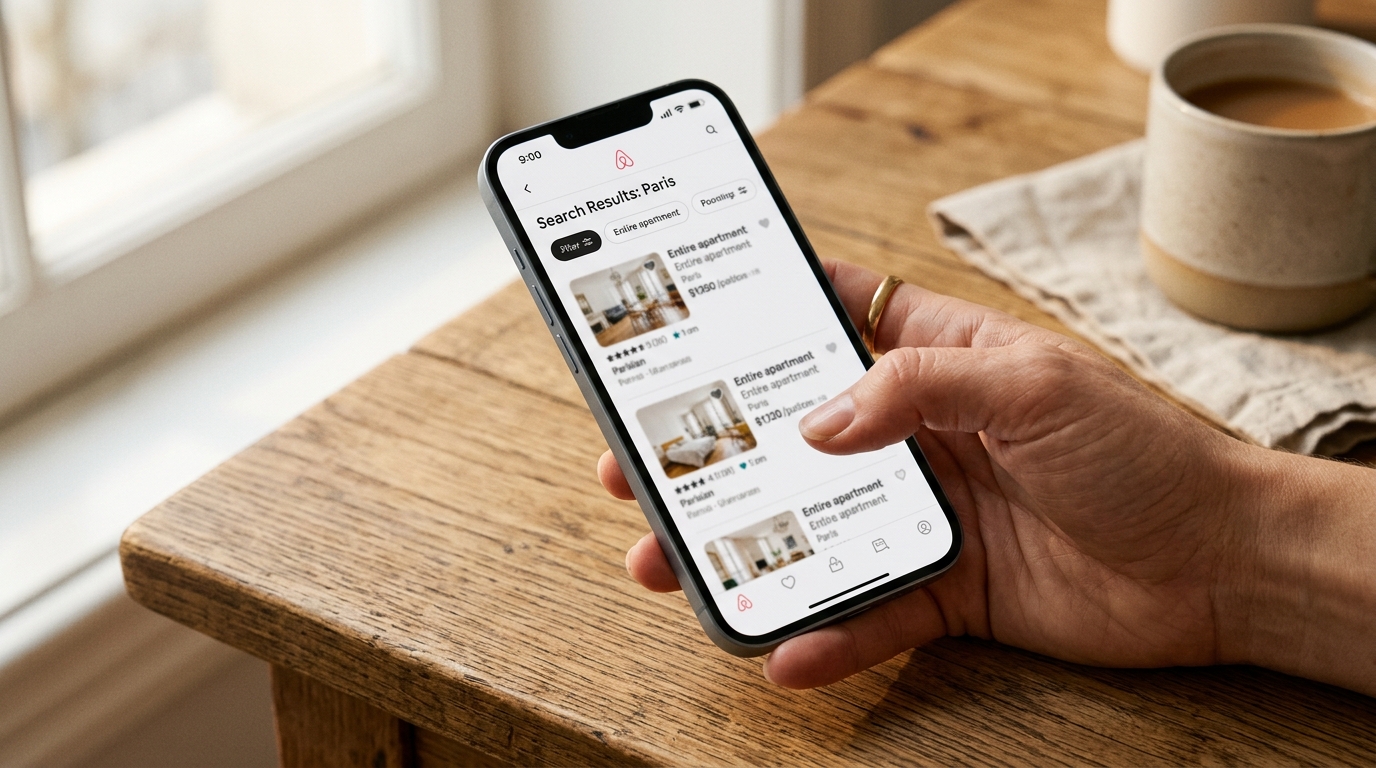
Not every competitor price change matters. A luxury penthouse dropping from £400 to £350 tells you nothing useful if you're running a budget studio. The key is tracking the right properties and the right metrics, consistently, without drowning in noise.
Pick 5-8 True Comparables
Your competitor shortlist should include listings that genuinely compete for the same guests. Same neighbourhood (within 1-2 miles), same property type (flat vs. house matters), similar guest capacity, and comparable amenities. If your one-bedroom apartment has parking and they don't, they're still a rival, but a weaker one.
Look for properties with at least 10 reviews and a rating above 4.5. These are the listings guests actually book and trust. Ignore outliers: the suspiciously cheap listing with two reviews and no photos, or the designer showcase priced at double the market. They're not your competition, they're distractions.
Track These Four Numbers Weekly
Weeknight base rate: What they charge Sunday-Thursday for a standard booking window (e.g. arrivals in 3-4 weeks).
Weekend base rate: Friday-Saturday pricing for the same window. The gap between weeknight and weekend tells you whether they're capitalising on leisure demand.
Calendar availability: How many nights in the next 30 days are still open? A competitor with 80% availability who suddenly drops prices is reacting to low demand. One with 20% availability who raises them knows they can afford to be selective.
Instant Book status: Did they switch it on or off? Turning on Instant Book often signals a push for volume. Turning it off suggests they're being pickier or dealing with problem bookings.
You don't need to track every promotional discount, cleaning fee tweak, or length-of-stay offer. Focus on the headline numbers that shape how guests compare you in search results.
How to Monitor Competitor Airbnb Prices Without Wasting Hours
Manual tracking works, but it's tedious. The trick is building a sustainable routine that takes 15-20 minutes per week, not two hours.
The Spreadsheet Method (Free, But Manual)
Create a simple tracker in Google Sheets with columns for: Date | Listing Name | Weeknight Rate | Weekend Rate | Availability (next 30d) | Notes. Every Monday (or whichever day you choose), open each competitor listing in a private browser window, check their calendar for a date 3-4 weeks out, and log the rates.
Why private browsing? Airbnb personalises pricing based on your search history and location. Opening competitor listings in Incognito or Private mode strips out that noise, so you see closer to what a neutral guest sees.
After four weeks, you'll have enough data to spot trends. Is the serviced apartment raising rates every Friday? Does the boutique flat drop prices when availability climbs above 50%? These patterns reveal strategy, not just numbers.
Use Saved Searches and Alerts
Airbnb doesn't offer a 'watch this listing' feature, but you can repurpose saved searches. Run a guest-side search with your property's location, dates, and filters (guests, amenities, price range). Save it. Each week, re-run the search and note which competitors appear at the top, and at what price.
This method shows you relative positioning, where you rank in search results compared to rivals, which is often more useful than raw price comparisons. If you've dropped from page one to page two, it's a signal that your pricing, reviews, or Instant Book status need attention.
Automate with Zugrow's Competitor Analysis
If manual tracking feels like a second job, Zugrow's free listing score includes competitor positioning analysis. It scans comparable properties in your area, highlights where you sit on pricing, and flags opportunities to adjust before you lose bookings. You get the insight without the spreadsheet fatigue.
Weekly Price Competitor Analysis: A Practical Routine
Here's a realistic weekly workflow you can complete in under 20 minutes, every Monday morning (or whichever day suits your schedule).
Step 1: Log the Numbers (5 minutes)
Open your competitor shortlist. For each property, check the nightly rate for a midweek arrival (e.g. Tuesday) and a weekend arrival (Friday) in 3-4 weeks' time. Note availability for the next 30 days. Drop it all into your tracker.
Step 2: Spot the Changes (3 minutes)
Compare this week's numbers to last week's. Did anyone raise or lower rates by more than 10%? Did a competitor who was fully booked suddenly free up half their calendar (potential cancellation)? Did someone new join the market?
Mark significant changes in a 'Notes' column. Don't analyse yet, just flag what moved.
Step 3: Check Your Own Position (5 minutes)
How do your current rates compare? Are you in the top third (premium), middle third (competitive), or bottom third (budget) of the pack? More importantly, does your positioning match your occupancy?
If you're priced in the top third but sitting at 40% occupancy while cheaper rivals are fully booked, the market is telling you something. If you're in the bottom third and still struggling to fill weeknights, price isn't your problem, your photos, title, or reviews likely are.
Step 4: Decide Whether to Move (7 minutes)
Don't react to every wiggle. Ask yourself:
- Has the majority of my competitor set shifted in the same direction? (If three out of six raised weekend rates, that's a market signal.)
- Am I seeing a pattern over multiple weeks, or is this a one-off?
- Is my calendar filling at the pace I want? (If you're hitting your occupancy target, you might not need to move at all.)
Only adjust if the answer to at least two of those questions is yes. Chasing every competitor price change creates whiplash. Ignoring sustained market shifts costs you bookings.
How to Track Rival Pricing Changes Strategically (Not Reactively)

The goal of competitor price tracking isn't to mirror what everyone else does. It's to understand the rules of the game well enough to break them intelligently.
Recognise the Three Pricing Personalities
After a month of tracking, your competitors will cluster into three behaviours:
The Discounter: Consistently undercuts the market, often by 15-20%. High Instant Book adoption, frequent last-minute drops. They're chasing volume and may be over-leveraged or new to hosting.
The Anchor: Rarely moves. Sets a price in January and rides it out. Often an experienced host with strong reviews who doesn't need to compete on price, or someone who isn't paying attention.
The Tactician: Adjusts weekly based on availability and demand signals. Raises rates when calendar tightens, drops strategically to fill gaps. Often uses dynamic pricing tools or has a revenue management background.
You don't need to become a Tactician overnight, but knowing who you're up against helps you decide where to position. If your street is full of Discounters racing to the bottom, you can win by offering better photos, stronger reviews, and a slightly higher rate that signals quality. If you're surrounded by Anchors, small tactical moves give you an edge.
Watch for Demand Signals, Not Just Prices
Pricing data is only half the picture. Combine it with availability trends. If multiple competitors are raising rates and their calendars are filling faster, demand is climbing. That's your cue to test a modest increase.
If competitors are dropping prices and availability is rising across the board, the market is softening. You might need to sweeten last-minute offers, add flexibility (Instant Book, relaxed cancellation), or focus on longer stays to ride out the lull.
For a deeper dive into understanding these shifts, see our guide to tracking price changes strategically.
Know When to Ignore the Market
Sometimes the smartest move is to hold your ground. If your occupancy is healthy, your reviews are strong, and guests are booking without haggling, you don't need to lower rates just because a new listing panics and undercuts everyone.
Trust your calendar over the crowd. Competitor tracking informs your decisions, it doesn't dictate them. You're looking for patterns that explain your performance, not permission to change.
What the Numbers Tell You (and What They Hide)
Competitor pricing data is powerful, but it's also incomplete. A listing might show a £75 weeknight rate on their calendar, but you don't see the 15% weekly discount they're offering, or the last-minute deal they sent to a repeat guest. You're seeing the sticker price, not the transaction price.
That's why occupancy context matters. A competitor charging £90 and sitting half-empty is less threatening than one charging £80 and fully booked. The latter has found the market-clearing price; the former is still guessing.
Similarly, a sudden price drop doesn't always mean weakness. A host might lower rates temporarily to fill a gap caused by a cancellation, then return to normal pricing once the hole is patched. If you panic and drop your own rates in response, you've just cost yourself revenue for no reason.
Track context, not just numbers. Note review velocity (are they getting new reviews weekly, or has it gone quiet?), response rate badges, Superhost status, and whether they're running any visible promotions. These signals complete the picture.
Common Mistakes That Sabotage Your Tracking Efforts
Tracking Too Many Listings
A shortlist of 12 competitors feels thorough, but it's unsustainable. By week three, you'll skip it because it takes too long. Five to eight true comparables is the sweet spot, enough to spot market trends, manageable enough to maintain.
Obsessing Over Outliers
There's always one listing priced absurdly low or high. Ignore them. They skew your perception of the market and distract from the properties that actually matter, the ones guests are booking consistently.
Reacting Too Quickly
You spot a competitor drop their weekend rate by £20 on Thursday and immediately match them. By Monday, they've raised it again, it was a targeted flash sale, not a strategy shift. You've just left £20 on the table for no gain.
Give changes at least one full week before reacting. Patterns matter more than isolated moves.
Forgetting to Track Your Own Performance
Competitor data is useless without a baseline. Track your own occupancy, average nightly rate, and enquiry-to-booking conversion alongside rival pricing. The goal isn't to match the market, it's to find the rate that fills your calendar at the revenue level you need.
Turning Tracking Into Action: Three Scenarios
Let's walk through three real-world situations and how weekly tracking changes your response.
Scenario 1: The Market Softens
You notice four out of six competitors have dropped weeknight rates by 10-15% over three weeks. Availability is climbing across the board. Your own enquiries are down.
Action: Don't race to the bottom. First, tighten your listing optimisation, refresh your title, check your photos are in the right order, ensure your amenities list is complete. If enquiries don't recover within a week, test a modest 8% reduction on weeknights only, leaving weekends untouched. Monitor whether enquiries increase. If they don't, the issue isn't price, it's visibility or appeal.
Scenario 2: A New Listing Undercuts Everyone
A freshly launched property appears in your search, priced 25% below the market. They're chasing their first reviews and filling their calendar fast.
Action: Hold your price. New hosts often undercut to build credibility, then raise rates once they hit Superhost or accumulate 20+ reviews. If you drop to match them, you've just devalued your established reputation. Instead, lean into your review count and rating in your messaging. Guests who care about price will book the newbie; guests who care about reliability will book you.
Scenario 3: Weekend Demand Spikes
Three competitors raise Friday-Saturday rates by 15-20% over two weeks, and their calendars are still filling. Yours is too, but you haven't moved your price.
Action: You're leaving money on the table. Test a 10% weekend uplift starting three weeks out. If bookings slow, dial it back. If they continue, you've just found headroom the market was willing to pay all along.
For more on spotting these gaps, see our guide to finding hidden revenue opportunities.
Tools That Make Weekly Tracking Faster
Manual tracking teaches you the market, but automation frees up time once you understand the rhythm.
Spreadsheets with Conditional Formatting
Set up your Google Sheet so that cells turn red if a competitor's price drops more than 10% week-on-week, or green if it climbs. You'll spot significant moves at a glance without scanning every number.
Browser Bookmarks and Tabs
Save each competitor listing URL in a dedicated bookmarks folder. When it's tracking day, right-click and 'Open All' to load them in separate tabs. Five minutes of clicking through is faster than searching each time.
Zugrow's Competitor Positioning
If you'd rather spend your Monday mornings responding to guests than updating spreadsheets, Zugrow handles the tracking for you. Our competitor analysis scans local comparables, tracks pricing shifts, and shows you exactly where you sit relative to the market, updated weekly, with zero manual input.
What to Do When Tracking Reveals You're Overpriced (or Underpriced)
Competitor tracking will eventually force an uncomfortable conclusion: your price is wrong. Here's how to fix it without panic or guesswork.
If You're Consistently Above Market and Occupancy Is Low
You're priced for a level of quality or convenience your listing doesn't yet signal. Before dropping your rate, audit your photos (are they professional and well-ordered?), your title (does it mention your best amenities?), and your reviews (is there a recurring complaint dragging you down?).
If your listing truly justifies a premium, parking in a city centre, recently renovated, exceptional reviews, hold the line and focus on conversion. Add more photos, rewrite your description to lead with benefits, ensure Instant Book is on.
If honest self-assessment says you're not premium, lower your rate by 10% and measure the impact over two weeks. Small moves, measured response.
If You're Below Market and Still Struggling
Price isn't your problem. Your listing is invisible (poor search ranking, weak title, missing key amenities) or unappealing (bad photos, thin description, low review score). Lowering further just erodes revenue without fixing the root cause.
Focus on the free wins: add missing amenities (a £15 cafetière counts as 'Coffee Maker' on Airbnb and unlocks filtered searches), reorder your photos so the best hero image leads, rewrite your title to front-load location and standout features.
Not sure where to start? Zugrow's free listing score gives you a prioritised list of exactly what to fix first, based on what moves the needle for listings like yours.
If You're Underpriced and Booked Solid
Congratulations, you've found a revenue leak. You're filling your calendar, but leaving profit on the table. Raise your weeknight rate by 8-10% for bookings more than three weeks out. Existing reservations stay locked in; new enquiries pay the higher rate.
Monitor your enquiry rate. If it stays steady, raise again in another month. Keep testing until you find the ceiling, the point where occupancy starts to slip. Then dial back 5%. That's your market-clearing price.
How Airbnb's Search Algorithm Rewards (and Punishes) Pricing
Competitor tracking isn't just about revenue, it's about visibility. Airbnb's ranking algorithm considers your price relative to similar listings. If you're significantly more expensive than comparables without offsetting quality signals (reviews, Superhost status, Instant Book), you'll rank lower in search results.
The algorithm favours competitiveness, not cheapness. Being the cheapest won't automatically put you first, Airbnb also weighs conversion rate (how often searchers who view your listing actually book). If you're cheap but unappealing, your conversion rate tanks and you slide down the results anyway.
The sweet spot is pricing that's defensible, close enough to the market that Airbnb doesn't penalise you, differentiated enough by quality that guests choose you over slightly cheaper rivals.
For a deeper look at how competitors affect your ranking, see our guide to outperforming local hosts.
Beyond Pricing: What Else to Track Weekly
While this guide focuses on price tracking, your weekly routine should include two other quick checks:
Competitor Review Themes
Scan the latest 3-4 reviews on each competitor listing. Are guests raving about something you don't offer (a workspace, blackout blinds, smart TV)? Are they complaining about something you're also guilty of (thin walls, tricky parking)? Reviews are free market research, use them.
Our guide to competitor review analysis walks through exactly what to look for and how to turn guest feedback into your competitive edge.
New Entrants to the Market
Once a month, run a fresh search as if you're a guest. New listings appear constantly, and some will directly compete with you. Add genuine threats to your tracking list; ignore the rest.
A Final Word: Consistency Beats Perfection
You don't need a sophisticated dashboard or a degree in revenue management. You need a simple system you'll actually stick to. A 15-minute weekly check, logged in a basic spreadsheet, will teach you more about your market than a one-off deep dive ever could.
The hosts who win aren't the ones with the most data, they're the ones who show up every week and pay attention. Patterns emerge. Strategies reveal themselves. You start to see moves before they happen, not after you've lost the booking.
Build the habit. Track the numbers. Let the market tell you what's working.
Ready to see how your listing measures up? Get your free Airbnb performance score from Zugrow and discover exactly where you stand against local competitors, no spreadsheet required.
Frequently Asked Questions
How often should I track competitor Airbnb prices?
Weekly tracking strikes the right balance for most hosts. It's frequent enough to catch meaningful market shifts, seasonal demand changes, new competitor strategies, local events, without turning into a daily obsession. Monday mornings work well because you can adjust your rates for the week ahead and catch any weekend changes competitors made. Monthly checks miss too much; daily tracking burns you out and tempts you to react to noise rather than trends.
Should I always match my competitors' prices?
No. Matching competitor prices ignores what makes your listing different. If you have better reviews, more amenities, superior photos, or a more convenient location, you can command a premium. Conversely, if you're new or have fewer reviews, positioning slightly below established rivals can help you build credibility. The goal is to understand the market range and choose where you want to sit within it based on your listing's strengths, not blindly copy what others charge.
What do I do if a competitor suddenly drops their price by 30%?
Don't panic and don't immediately match them. Sudden, steep drops usually signal distress, a cancellation they need to fill, a cash flow crunch, or desperation for reviews. Watch for a week. If they return to normal pricing, it was a one-off tactic and you were right to hold steady. If they stay low and start filling their calendar, assess whether your listing justifies a premium over theirs. Often, the answer is yes, your reviews, photos, or amenities give guests reasons to pay more.
How many competitor listings should I track?
Five to eight true comparables is ideal. Fewer than five and you might miss important market trends; more than eight and weekly tracking becomes a chore you'll eventually skip. Focus on properties that genuinely compete for the same guests: similar location, property type, capacity, and amenities. Exclude extreme outliers, the luxury penthouse and the budget basement flat aren't your real competition and will only distort your understanding of where you should price.
Can I track competitor prices without spending hours every week?
Yes. A disciplined 15-20 minute Monday routine using a simple spreadsheet or saved Airbnb searches is enough to spot trends and inform decisions. Alternatively, tools like Zugrow automate the process entirely, scanning local comparables and showing you where you sit relative to the market without any manual tracking. The key is consistency, not complexity, a basic system you stick to beats a sophisticated one you abandon after three weeks.
What if tracking shows I'm significantly underpriced?
If you're below market and your calendar is filling easily, you've found a revenue opportunity. Raise your rate by 8-10% for new bookings (arrivals three or more weeks out) and monitor enquiry volume. If it stays steady, raise again in a month. Keep testing upward until you notice occupancy starting to dip, then dial back 5%. That's your market ceiling. Don't leap to match the most expensive competitor overnight, gradual, measured increases let you find the sustainable rate without scaring off your audience.